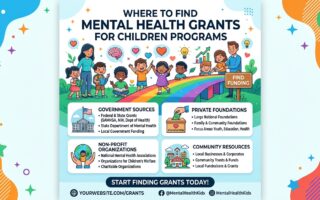
Across the globe, substance use disorders continue to devastate individuals, families, and entire communities, yet the most painful truth is not just the scale of addiction—it is the staggering gap between those who need treatment and those who can actually access it. In the United States alone, tens of millions require substance abuse treatment annually, yet only a fraction receive evidence-based care; in the United Kingdom, rising drug-related deaths have placed unprecedented pressure on public health systems; and across Africa, rapidly growing urban populations and economic stressors are accelerating substance use trends without a commensurate expansion in recovery infrastructure.
This is where mental health grants 2026 become more than just funding—they become lifelines.
For nonprofits, rehabilitation centers, faith-based organizations, and community-based recovery programs, grants are not simply operational support; they are the catalyst for scaling impact, expanding access, and building sustainable systems of care that can reach underserved populations.
Whether you are launching a new recovery initiative, expanding outpatient treatment, integrating mental health services, or building community-based prevention programs, understanding where and how to access substance abuse recovery funding in 2026 is the difference between stagnation and transformation.
This guide is not just a list of opportunities—it is a strategic roadmap to help you identify, interpret, and position your organization for addiction recovery grants USA, UK, Africa, with the depth and insight required to compete at the highest level.
Where the Big Money Is in 2026: Understanding the Funding Landscape
To successfully secure mental health funding opportunities for nonprofits, you must first understand where the capital is flowing and, more importantly, why.
a) Government Funding: The Largest and Most Structured Source
In 2026, government funding continues to dominate the addiction recovery space, particularly in the United States through agencies such as Substance Abuse and Mental Health Services Administration (SAMHSA) and the U.S. Department of Justice (DOJ).
These agencies deploy billions of dollars annually through block grants, discretionary grants, and targeted initiatives focused on prevention, treatment, and recovery support services.
In the UK, funding flows through NHS-aligned programs, local councils, and public health grants, with increasing emphasis on integrated care systems (ICS) that combine mental health, addiction, and social services.
Across Africa, while government funding is often more limited, there is growing support through ministries of health, donor-backed initiatives, and multilateral partnerships that prioritize mental health integration into primary care systems.
b) Foundations and Philanthropy: Strategic and Impact-Driven
Private foundations are becoming more strategic, focusing on scalable models, measurable outcomes, and underserved populations. Organizations like Global Fund for Children and regional African grantmakers are prioritizing youth mental health, community-based interventions, and prevention programs that address root causes.
These funders often provide more flexibility than government grants but demand a higher level of innovation and narrative clarity.
C) Corporate and Social Impact Funding
Corporate social responsibility (CSR) and ESG-driven funding are expanding rapidly, particularly in sectors like healthcare, pharmaceuticals, and technology. These funders are increasingly interested in partnerships that demonstrate both social impact and scalability, especially those leveraging digital health solutions for addiction recovery.
What Funders Are Prioritizing in 2026
Across all funding streams, several clear priorities have emerged:
- Integration of mental health and substance use treatment
- Community-based and culturally responsive care models
- Prevention and early intervention strategies
- Data-driven outcomes and measurable impact
- Workforce development in behavioral health
- Technology-enabled recovery solutions (telehealth, digital therapeutics)
If your program does not align with these priorities, it will struggle—regardless of how well-written your proposal is.
Top Mental Health & Substance Abuse Grants to Apply for in 2026
Below are some of the most impactful and accessible grants for rehabilitation centers and nonprofits operating across the USA, UK, and Africa.
1. SAMHSA Substance Use Prevention, Treatment & Recovery Services Block Grant (SUBG)
- Who it’s for: State agencies and organizations working through state systems
- What it funds: Prevention, treatment, and recovery services
- Funding size: Billions allocated annually across states
- Why it matters: This is one of the largest sources of substance abuse recovery funding in the U.S.
Strategic positioning tip:
Nonprofits rarely apply directly but can secure funding by aligning with state priorities. Build relationships with state behavioral health agencies and position your program as a delivery partner that fills service gaps—such as rural outreach or culturally specific care.
2. Community Mental Health Services Block Grant (MHBG)
- Who it’s for: Public mental health systems and partner organizations
- What it funds: Community-based mental health services, including co-occurring disorders
- Why it matters: Increasingly focused on integrating mental health and substance use treatment
Example alignment:
A nonprofit offering dual-diagnosis treatment programs can position itself as a critical extension of community mental health infrastructure.
3. DOJ Mental Health and Substance Abuse Initiatives
- Who it’s for: Justice-involved populations, reentry programs, diversion initiatives
- What it funds: Treatment programs, drug courts, reentry support
- Why it matters: Targets high-risk populations often overlooked by traditional funding
Strategic insight:
Programs that combine addiction recovery with criminal justice reform—such as reentry support for formerly incarcerated individuals—have a competitive edge.
4. Global Fund for Children Grants
- Who it’s for: Grassroots organizations worldwide, including Africa
- What it funds: Youth-focused mental health and prevention programs
- Funding size: Typically smaller grants but highly flexible
Why it matters:
Ideal for early-stage or community-based organizations seeking credibility and initial funding.
Positioning tip:
Frame your program around youth resilience, prevention, and community empowerment rather than clinical treatment alone.
5. UK National Lottery Community Fund
- Who it’s for: UK-based nonprofits and community organizations
- What it funds: Mental health, addiction recovery, and community wellbeing
- Why it matters: One of the most accessible and flexible UK funding sources
Example:
A local recovery center offering peer support groups and employment reintegration services can align strongly with community wellbeing outcomes.
6. Wellcome Trust Mental Health Funding
- Who it’s for: Research-driven organizations and innovative programs
- What it funds: Mental health research and scalable interventions
Strategic angle:
Programs integrating research, data collection, and innovative treatment models (e.g., digital therapy tools) are highly competitive.
7. African Development Bank & Donor-Funded Health Initiatives
- Who it’s for: NGOs and governments across Africa
- What it funds: Health system strengthening, including mental health integration
Positioning insight:
Frame addiction recovery as part of broader public health and economic development outcomes, not just a standalone issue.
8. Open Society Foundations (Mental Health & Justice Programs)
- Who it’s for: NGOs addressing systemic issues
- What it funds: Programs at the intersection of mental health, human rights, and justice
Why it matters:
Highly aligned with advocacy-driven and policy-focused organizations.
Announcement
We work with nonprofits, NGOs, and mission-driven organizations focused on mental health to support their grant writing, grant research, and proposal review needs.
If your organization is currently preparing applications or exploring funding opportunities in the mental health space, you can reach out for professional support.
📩 grantwritingacademyconsult@gmail.com
📅 Strategy sessions available upon request.
What Funders Actually Look for in Addiction Recovery Programs
One of the biggest misconceptions in grant writing is that funding decisions are based primarily on need. In reality, need is only the starting point—what funders are truly evaluating is credibility, feasibility, and impact potential.
a) Evidence-Based Interventions
Funders expect programs to be grounded in proven methodologies such as cognitive behavioral therapy (CBT), medication-assisted treatment (MAT), and trauma-informed care. Simply stating that your program helps people recover is not enough; you must demonstrate how your approach aligns with established evidence.
b) Measurable Outcomes
Reviewers are not impressed by activity—they are persuaded by outcomes.
Instead of saying:
“We will provide counseling services to 200 individuals,”
You should say:
“Within 12 months, 65% of participants will demonstrate sustained sobriety, measured through follow-up assessments and reduced relapse rates.”
c) Integration of Services
In 2026, siloed programs are increasingly viewed as outdated. Funders want to see integration:
- Mental health + substance use treatment
- Clinical care + social support (housing, employment)
- Prevention + recovery services
d) Community Impact Models
Programs that engage communities—not just individuals—are far more competitive. This includes peer support networks, family engagement, and community education initiatives.
The Reviewer’s Lens
From a reviewer’s perspective, the key question is simple:
“If we fund this program, will it produce meaningful, measurable change at scale?”
Applications that clearly answer this question—with data, structure, and credibility—rise to the top.
How to Position Your Program to Win (Advanced Strategy)
Winning mental health grants 2026 requires more than strong writing—it requires strategic positioning.
a) Frame Your Program as a System-Level Solution
Do not present your program as just another service provider. Instead, position it as a solution to a clearly defined systemic gap.
Example:
Instead of saying, “We provide addiction counseling,” say:
“Our program addresses the critical gap in post-treatment relapse prevention by delivering community-based recovery support that reduces hospital readmissions by 40%.”
b) Use Data and Storytelling Together
Data builds credibility, but storytelling creates emotional connection. The most compelling proposals integrate both.
- Data shows the scale of the problem
- Stories illustrate the human impact
c) Build Strategic Partnerships
Partnerships signal credibility and scalability. Collaborations with hospitals, government agencies, and community organizations strengthen your application significantly.
d) Structure Budgets Strategically
Budgets should reflect strategy, not just expenses. Funders want to see:
- Cost-effectiveness
- Scalability
- Clear linkage between budget and outcomes
Common Mistakes That Kill Funding Chances
Even strong organizations fail to secure funding due to avoidable mistakes.
1. Generic Proposals
Applications that could be submitted to any funder rarely succeed. Tailor every proposal to the specific priorities of the funder.
2. Weak Outcomes
Vague or unrealistic outcomes signal a lack of program clarity. Always define measurable, achievable results.
3. Misalignment with Funder Priorities
If a funder prioritizes prevention and your proposal focuses solely on treatment, your chances drop significantly.
4. Lack of Evidence
Programs without data or proven methodologies struggle to gain trust.
5. Poor Positioning
Many organizations describe what they do but fail to explain why it matters at a systemic level.
Conclusion: 2026 Is a Defining Opportunity—If You Position Correctly
The demand for addiction recovery services is rising globally, and with it, the availability of mental health funding opportunities for nonprofits. However, access to funding is not evenly distributed—it flows to organizations that understand how to align, position, and demonstrate impact at a high level.
If you approach 2026 strategically—targeting the right funders, aligning with priority areas, and presenting your program as a scalable solution—you are not just applying for grants; you are positioning your organization for long-term growth and sustained impact.
FAQs
1. Where can I find mental health grants for substance abuse programs?
You can find grants through government agencies like SAMHSA and DOJ in the U.S., national funding bodies in the UK, and international funders such as the Global Fund for Children and Open Society Foundations. Additionally, grant databases, foundation directories, and specialized funding platforms are essential tools for identifying opportunities.
2. What do funders look for in addiction recovery proposals?
Funders prioritize evidence-based interventions, measurable outcomes, integration of services, and community impact. They also evaluate organizational capacity, partnerships, and the scalability of your program.
3. Are there grants available for nonprofits in Africa?
Yes, although funding may be more competitive, there are increasing opportunities through international donors, development banks, and global foundations. Programs that align with public health priorities and demonstrate community impact are particularly competitive.
4. How do I qualify for SAMHSA or similar grants?
Most SAMHSA funding is distributed through state agencies, so nonprofits often qualify by partnering with state systems or aligning with state-level priorities. For direct grants, eligibility depends on program focus, organizational capacity, and compliance requirements.
5. What makes a mental health grant application successful?
A successful application clearly defines the problem, presents a credible and evidence-based solution, outlines measurable outcomes, and demonstrates alignment with funder priorities—all while positioning the organization as capable of delivering impact at scale.
Call to Action: Join The Mental Health Grants Insider Founding Membership
If you are serious about winning high-value grants and positioning your organization at the top of the funding landscape, then you need more than information—you need strategy, insight, and insider-level guidance.
The Mental Health Grants Insider Founding Membership gives you exclusive access to funding opportunities, advanced positioning strategies, and expert-level insights designed for nonprofits ready to secure real results—not just submit applications.
👉 Join now and start building a pipeline of winning grants.
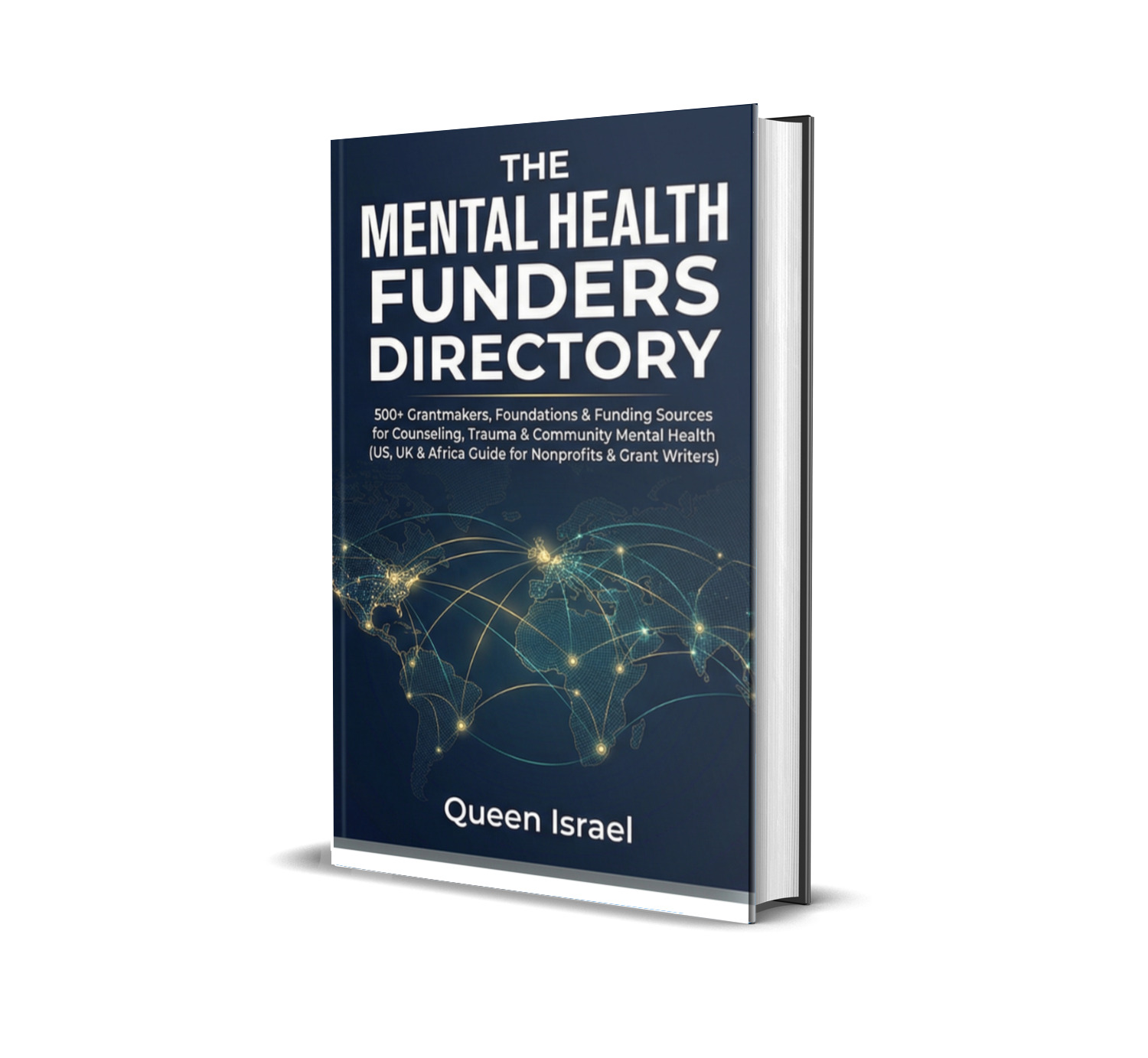
Get The Mental Health Funders Directory (500+ Grantmakers)
Stop guessing where the money is.
The Mental Health Funders Directory: 500+ Grantmakers, Foundations & Funding Sources for Counseling, Trauma & Community Mental Health (US, UK & Africa Guide for Nonprofits and Grant Writers) gives you direct access to the organizations actively funding programs like yours.
Inside, you’ll find:
- Verified funders across the USA, UK, and Africa
- Strategic insights on what each funder prioritizes
- A shortcut to identifying the right opportunities faster
👉 Get the directory today and unlock the funding ecosystem.
Work With Us
Grant Writing Academy provides specialized support to organizations working across key areas of mental health, including community programs, youth mental health, trauma recovery, and faith-based initiatives.
Our services include:
• Grant research
• Proposal writing
• Proposal review and strengthening
If you are looking for structured, professional support in preparing your next grant application:
📩 Email: grantwritingacademyconsult@gmail.com
📅 Book a session to discuss your needs
We respond to serious inquiries within 48 hours.