
If you’ve ever poured hours into a mental health grant proposal for addiction programs only to receive a rejection email that says “not selected for funding,” you already know the frustration that most nonprofits, rehabilitation centers, and community-based organizations silently carry, especially when the need for substance abuse support in your community is urgent, visible, and growing by the day.
The real problem is not always your program. It is not always your passion. It is not even always your impact. The real issue is often how your proposal is positioned, structured, and communicated to funders who are reviewing dozens—sometimes hundreds—of applications under tight criteria and limited time.
Many organizations struggle with how to write a grant for substance abuse programs because they either over-explain the wrong things, under-communicate their impact, or fail to align their proposal with what funders are actually prioritizing in 2026, where outcomes, scalability, and measurable impact matter more than ever.
This guide will take you from confusion to clarity, from weak positioning to strong, fundable applications, and from repeated rejection to significantly higher approval rates by giving you a step-by-step, expert-level framework for building an addiction recovery grant proposal that gets noticed—and funded.
What Funders Look for in Addiction and Substance Abuse Grant Proposals
Before you write a single sentence, you must understand that funders are not just evaluating your program—they are evaluating risk, alignment, and impact potential, and your ability to clearly demonstrate all three will determine whether your proposal moves forward or gets eliminated early in the review process.
Funders providing grants for addiction programs are asking themselves a few critical questions behind the scenes:
- Does this organization deeply understand the addiction problem they are trying to solve?
- Is their intervention evidence-based or at least logically structured?
- Can they deliver measurable outcomes within the proposed timeline?
- Is this the best use of our funding compared to other applicants?
A weak proposal often sounds like this:
“Substance abuse is a growing issue in our community, and we want to help people recover.”
A strong proposal reframes the same idea with precision and authority:
“In our service area, opioid-related hospitalizations have increased by 42% over the past three years, with relapse rates exceeding 60% within six months due to limited access to structured aftercare programs; our intervention addresses this gap through a 12-month, evidence-informed recovery continuum combining clinical support, peer mentorship, and employment reintegration.”
The difference is not just wording—it is credibility, specificity, and strategic positioning.
Insider Reviewer Insight: Reviewers often score proposals within minutes of reading the problem statement and program summary; if clarity, relevance, and outcomes are not immediately obvious, your proposal is already at a disadvantage.
👉 If you want to consistently align your proposals with what funders are actually looking for, this is exactly why high-level support like The Mental Health Grants Insider Founding Membership exists—to help you refine positioning, strengthen narratives, and dramatically increase your win rate.
How to Define a Strong Problem Statement for Addiction Programs
Your problem statement is the foundation of your entire mental health grant proposal for addiction programs, and if it is weak, vague, or overly general, everything built on top of it becomes unstable and less convincing to funders.
A strong problem statement does not simply describe addiction—it frames a specific, urgent, and solvable gap that your program is uniquely positioned to address.
Instead of writing broadly about substance abuse, focus on who is affected, what is happening, why it matters, and what is missing.
Weak example:
“Many people struggle with addiction, and there is a need for more support services.”
Strong example:
“In our region, youth aged 16–24 represent the fastest-growing demographic in substance misuse cases, with a 38% increase in alcohol and prescription drug dependency; however, there are no youth-specific recovery programs that integrate mental health counseling, family support, and educational reintegration, leading to high dropout and relapse rates.”
Notice how the strong version includes:
- Target population
- Data-driven insight
- Service gap
- Consequences of inaction
To strengthen your problem statement further, integrate three layers:
- Data (quantitative evidence) – statistics, trends, reports
- Human impact (qualitative insight) – stories, lived experiences
- System gap (structural issue) – what is missing in current services
Mini case example:
A faith-based recovery center initially described addiction in general terms and failed to secure funding, but after reframing their problem statement to focus on post-rehabilitation relapse due to lack of spiritual and community reintegration support, they secured funding by clearly identifying a niche gap that aligned with a foundation’s priorities.
👉 If you want to avoid wasting time applying to the wrong funders, The Mental Health Funders Directory: 500+ Grantmakers, Foundations & Funding Sources helps you target funders already interested in your specific type of addiction intervention, dramatically improving your chances of success.
Similar Articles:
Step-by-Step Structure of a Winning Mental Health Grant Proposal
A high-performing addiction recovery grant proposal follows a clear, logical structure that guides the reviewer from problem to solution to measurable impact without confusion or gaps.
Here is the proven framework used by successful organizations:
1. Executive Summary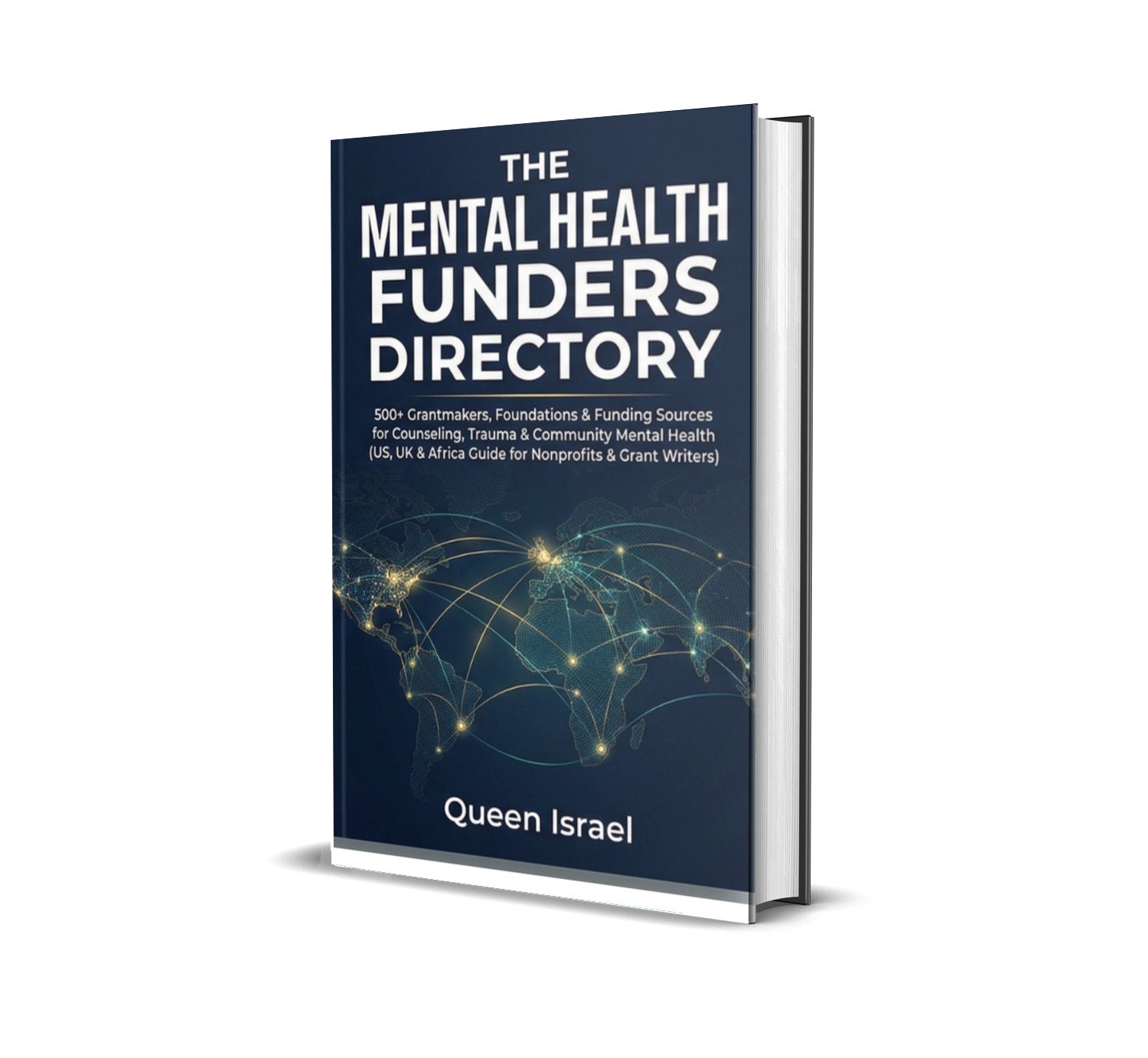
This is not a generic overview—it is a strategic snapshot that clearly communicates the problem, your solution, target population, and expected outcomes in a compelling and concise manner.
2. Problem Statement
As discussed earlier, this section establishes urgency and relevance using data and context.
3. Goals and Objectives
Your goals should be broad but meaningful, while your objectives must be specific, measurable, and time-bound.
Weak objective:
“Improve recovery outcomes.”
Strong objective:
“Reduce relapse rates among program participants by 25% within 12 months through structured counseling, peer support, and job placement services.”
4. Program Description
This is where many proposals fail because they become too vague or too complex; your goal is to clearly explain:
- What your program does
- How it works
- Who it serves
- Why it is effective
5. Evaluation Plan
Funders want to see how you will measure success, not just what you hope to achieve.
6. Budget and Justification
Your budget must align with your program design—any disconnect raises red flags.
7. Sustainability Plan
Explain how your program will continue beyond the grant period.
Insider Reviewer Insight: Reviewers are trained to look for alignment across sections; if your goals, activities, and budget do not clearly connect, your proposal will lose points—even if each section is individually strong.
How to Write Each Section With Powerful Examples (Needs, Goals, Budget, Impact)
Writing a strong proposal is not about filling sections—it is about strategically crafting each component to reinforce your credibility and impact.
Needs Section
Avoid generic descriptions and instead connect data to real-world consequences.
Example:
“Without access to structured recovery programs, individuals exiting detox facilities face a 65% likelihood of relapse within six months, leading to repeated hospitalizations and increased community burden.”
Goals and Objectives
Tie your objectives directly to outcomes funders care about:
- Reduced relapse rates
- Improved mental health outcomes
- Increased employment or reintegration
Budget
A strong budget tells a story of efficiency and intentionality, not just expenses.
Weak:
“$50,000 for program costs.”
Strong:
“$50,000 allocated across clinical staffing (40%), peer support services (25%), program materials (15%), and monitoring and evaluation (20%) to ensure measurable outcomes and program scalability.”
Impact Section
This is where you elevate your proposal from good to fundable by clearly showing what changes because of your program.
Mini case example:
A community-based addiction outreach program increased its funding success by reframing its impact from “serving 200 individuals” to “reducing emergency interventions by 30% through early-stage intervention and continuous support,” which directly aligned with funder priorities.
👉 This level of precision is what separates average applications from winning ones, and it is exactly what you will learn to master inside The Mental Health Grants Insider Founding Membership, where proposals are refined at a strategic level—not just edited.
Announcement
We work with nonprofits, NGOs, and mission-driven organizations focused on mental health to support their grant writing, grant research, and proposal review needs.
If your organization is currently preparing applications or exploring funding opportunities in the mental health space, you can reach out for professional support.
 grantwritingacademyconsult@gmail.com
 Strategy sessions available upon request
Common Mistakes That Get Addiction Grant Proposals Rejected (And How to Fix Them)
Even strong programs lose funding opportunities because of avoidable mistakes that weaken their proposals and reduce reviewer confidence.
Mistake 1: Being Too General
Fix: Use data, specificity, and clear target populations.
Mistake 2: Lack of Measurable Outcomes
Fix: Define clear metrics such as relapse rates, retention rates, or employment outcomes.
Mistake 3: Poor Alignment With Funder Priorities
Fix: Research funders thoroughly and tailor your proposal accordingly.
Mistake 4: Weak Program Design
Fix: Clearly explain how your intervention works step-by-step.
Mistake 5: Budget-Program Disconnect
Fix: Ensure your budget directly supports your proposed activities.
Insider Reviewer Insight: Many proposals are rejected not because they are bad, but because they are unclear, unfocused, or misaligned, which makes them a risky investment compared to stronger, more strategic applications.
👉 This is why having access to targeted funding sources through The Mental Health Funders Directory: 500+ Grantmakers can dramatically reduce rejection rates by ensuring you are applying to the right opportunities in the first place.
FAQs: Mental Health Grant Proposals for Addiction Programs
1. How do I write a grant proposal for addiction programs?
Start by clearly defining the problem using data and context, then present a structured program with measurable outcomes, a realistic budget, and a strong evaluation plan that demonstrates impact and feasibility.
2. What is the most important section of an addiction grant proposal?
The problem statement and program design are the most critical, as they establish both the need and your ability to effectively address it.
3. How do I make my proposal stand out to funders?
Use specificity, data, clear outcomes, and strong alignment with funder priorities, while avoiding generic language and unclear program descriptions.
4. Can small organizations win addiction recovery grants?
Yes, especially when they demonstrate deep community understanding, clear impact, and strong program design, even if they have limited resources.
5. What data should I include in a substance abuse proposal?
Include prevalence rates, demographic trends, relapse statistics, service gaps, and outcome projections that clearly support your proposed intervention.
Conclusion: Strong Proposals Win Funding—Strategic Ones Win Consistently
Writing a mental health grant proposal for addiction programs is not just about presenting a good idea—it is about positioning your organization as the most credible, effective, and strategic solution to a clearly defined problem, and doing so in a way that aligns perfectly with what funders are looking for in 2026.
When you combine a powerful problem statement, a well-structured program, measurable outcomes, and strong alignment with funding priorities, you move from being just another applicant to becoming a compelling investment opportunity that funders are far more likely to support.
The difference between rejection and approval is often not effort—it is strategy, clarity, and positioning.
If you are ready to stop guessing and start winning, take the next step by joining The Mental Health Grants Insider Founding Membership, where you will gain access to expert guidance, advanced strategies, and real-time support to strengthen your proposals and increase your funding success.
And if you want to dramatically improve your targeting and avoid wasted applications, The Mental Health Funders Directory: 500+ Grantmakers will connect you directly to the right funders for your addiction and mental health programs.
Because at the end of the day, strong proposals do not just get written—they get funded.
Work With Us
Grant Writing Academy provides specialized support to organizations working across key areas of mental health, including community programs, youth mental health, trauma recovery, and faith-based initiatives.
Our services include:
• Grant research
• Proposal writing
• Proposal review and strengthening
If you are looking for structured, professional support in preparing your next grant application:
Email: grantwritingacademyconsult@gmail.com
Book a session to discuss your needs
We respond to serious inquiries within 48 hours.