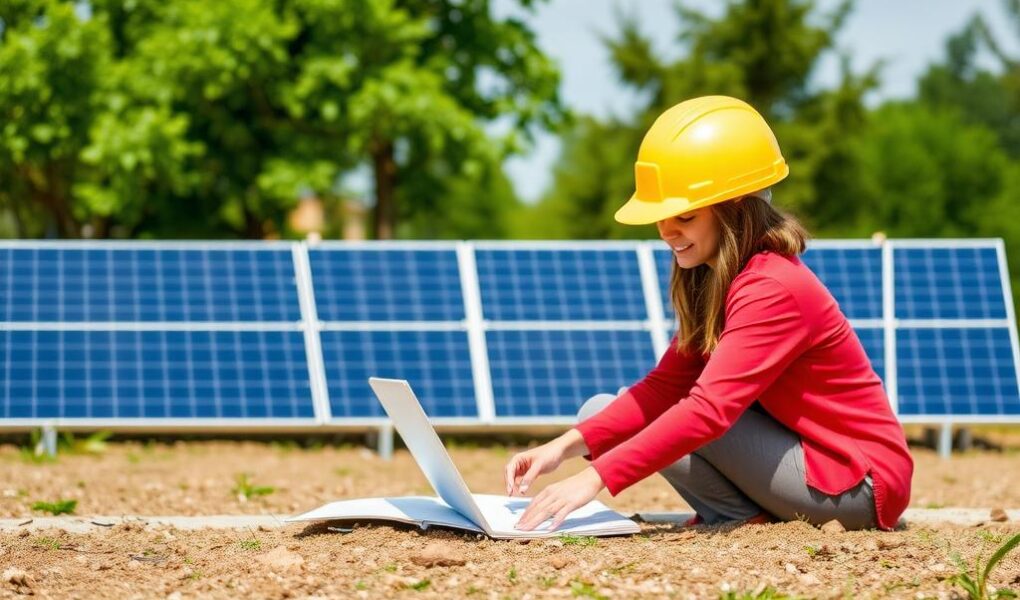
A winning grant proposal becomes the bridge between idea and impact. It convinces funders (governments, foundations, international agencies) that your solar energy project is urgent, feasible, and worth investing in.
In the world of solar energy projects, competition is fierce. Funders receive dozens (if not hundreds) of proposals. Yours must stand out by being crystal-clear, evidence-based, and compelling.
Let’s walk through how to craft that proposal—from initial research to submission and follow-up.
Step 1: Preparation & Research (Lay the Foundation)
Before writing a single sentence, do your homework.
1.1 Research the Funder & Their Priorities
- Read the funder’s mission, past grants, annual report. What themes do they emphasize (e.g. rural electrification, climate resilience, gender equity)?
- Find keywords from their call for proposals, and echo those in your application (but only where genuine).
- Check eligibility criteria (geographic, institutional, budget ceilings, timeline constraints).
1.2 Assess Local Needs & Data
Your proposal must rest on evidence. Collect data on:
- Current energy access (how many households without reliable electricity).
- Solar potential (e.g. solar irradiance in your region).
- Costs of grid expansion in remote areas (to show solar may be more cost-effective).
- Social & economic impacts (health, education, small business opportunities).
You might use surveys, government datasets, or peer-reviewed studies. Don’t rely only on anecdotes.
1.3 Understand Constraints & Risks
- Technical (e.g. grid stability, degradation of panels, maintenance).
- Regulatory (permits, utility rules, tariffs).
- Financial (currency risk, operation & maintenance, component warranties).
Document these constraints early so you can address them in your proposal (makes you look credible and realistic).
Step 2: Structure & Key Sections of the Proposal
Most funders expect certain standard sections. Below is a “map” you can adapt. A winning proposal is both structured and narratively engaging.
| Section | Purpose / What to Include | Tips & Example Snippets |
|---|---|---|
| Cover Letter / Letter of Intent | A brief persuasive “hook” to introduce your organization and project. | “We at Green Light Solar propose to install a 100 kW mini-grid solar system to power 200 homes in XYZ. This grant request of USD 250,000 will reduce energy costs by 40% and reduce CO₂ emissions by 85 tons annually.” |
| Executive Summary | Condensed overview: problem, solution, objectives, budget, impact. | Although it appears first, write it after all other sections. Keep it one page. |
| Problem Statement / Needs Assessment | Describe the challenge your target area faces (lack of reliable electricity, cost, environmental harm). | Use data and quotes: “In this region, over 60% of households lack 24/7 electricity; many rely on kerosene lamps, costing ≈ $5/month—equivalent to 10% of monthly income.” |
| Project Goals & Objectives | Broad goal + SMART (Specific, Measurable, Achievable, Relevant, Time-bound) objectives. | Goal: “Promote sustainable solar energy access.” Objective: “Install 100 kW of solar capacity across 5 community centers within 18 months.” |
| Project Description & Methodology / Implementation Plan | The “how”: steps, phases, logistics, technology, staffing. | Break into phases: site assessment → procurement → installation → testing & training → M&E (monitoring & evaluation). Describe who will do which tasks, timeline, and deliverables. |
| Technical Approach / System Design | Detail the solar system: panels, inverters, battery storage (if any), wiring, layout. | For instance: “We will deploy 400 units of 250 W mono-crystalline panels, paired with 50 kWh lithium-ion battery storage and hybrid inverter systems. The layout optimizes tilt & orientation to maximize yield.” |
| Budget & Financial Plan | Detailed cost breakdown (materials, labor, overhead). Also co-financing or cost share. | Use tables. E.g. Panels: $60,000; Inverters & batteries: $30,000; Installation labor: $20,000; Training & maintenance: $10,000; Contingency (10%): $12,000; Total $132,000. |
| Sustainability & Maintenance Plan | How will the system keep running after the grant ends? | Propose local capacity building, maintenance contracts, spare parts plan, tariff or user fee if applicable. |
| Monitoring, Evaluation & Impact Measurement (M&E) | Key performance indicators (KPIs), data collection, reporting, baseline & targets. | Examples: “kWh generated per month; number of households served; reduction in fossil fuel consumption; income increase per household.” |
| Organizational Capacity & Team | Why your organization is qualified. Bios, track record, experience with solar/energy projects. | Emphasize prior successes, relevant staff, partnerships (universities, local govt). |
| Risk Analysis & Mitigation | Identify major risks and how you plan to manage them. | E.g. “Risk: inverter failure → mitigation: warranty + spare in stock; risk: permit delays → mitigation: start permit process early.” |
| Timeline (Work Plan / Gantt Chart) | Chronological sequence of tasks and milestones. | E.g. Month 1–2: site survey & permitting; Month 3–4: procurement; Month 5–6: installation; Month 7: commissioning & handover. |
| Appendices / Supporting Documents | Maps, site photos, letters of support, technical schematics, CVs, legal documents. | Use it for supplementary but relevant material. |
Step 3: Writing Approach & Tone (Conversational but Professional)
You want your proposal to feel human—not robotic. Use a friendly, respectful tone. Avoid over-jargon (explain technical terms). Write in active voice.
Hooks & Narrative
Start with a story or scenario: “Imagine a school that closes at sunset because it lacks electricity.
With solar, children can study into the night.” A brief human story engages the reviewer.
Then weave narrative around data. Don’t just list numbers—interpret them: “This means a 60% drop in energy costs, freeing families to spend on education or health.”
Clarity & Brevity
- Use headings & subheadings.
- Use bullet points and tables where possible.
- Keep paragraphs short (3–5 sentences).
- Number your objectives, risks, etc.
- Use visuals (charts, graphs) to break text and clarify complex ideas.
Step 4: Example Excerpt (Mini Sample)
Here’s a short fictional sample of a Problem Statement + Objectives section to show tone and format:
Problem Statement
In Sunvale County, more than 3,000 households in the rural outskirts lack reliable access to electricity. Many rely on kerosene lanterns emitting harmful fumes and costing up to $6/month—equivalent to 8% of a family’s disposable income.
The national grid cannot be extended economically to these remote villages (estimated cost: $10,000 per kilometer). Meanwhile, Sunvale receives average solar irradiation of 5.2 kWh/m²/day—ideal for solar energy deployment.
Without clean energy access, schools cannot run evening programs, small businesses are constrained, and indoor pollution continues to affect respiratory health.
Project Objectives
- Install 150 kW of solar PV capacity across 10 village micro-grids within 18 months.
- Provide 24/7 electricity to at least 2,500 households, 5 schools, and 2 health clinics.
- Train a local maintenance team of 12 technicians to manage operations and repairs.
- Reduce CO₂ emissions by 120 metric tons annually vs baseline fossil fuel usage.
- Increase women’s income-earning opportunities in the villages by 20% through new evening micro-enterprises.
That short sample demonstrates clarity, measurable objectives, and integration of the solar energy context.
Step 5: Budgeting & Financials
The budget section often makes or breaks a proposal. Mistakes here can derail even a strong concept.
Best Practices for the Budget
- Line-item detail: Break costs down (equipment, installation, labor, training, operations, overhead, contingency).
- Justify costs: For each line, include a sentence explaining why it’s essential.
- Reasonable estimates: Use vendor quotes or market rates, not speculative numbers.
- Include contingency (often 5–10 %) to absorb unexpected costs.
- If you’re contributing co-funding or in-kind support, show that too.
- Don’t pad excessively—be honest and realistic.
- Convert currency as required by the grant (e.g. USD, EUR).
Example:
| Category | Amount (USD) | Justification |
|---|---|---|
| Solar panels & inverters | 60,000 | Based on vendor quote, includes shipping |
| Batteries & storage | 25,000 | For 80 kWh capacity to support nighttime loads |
| Installation labor & civil works | 20,000 | Local labor rates × 4 months |
| Training & capacity building | 10,000 | Workshops, manuals, stipends for trainees |
| Operation & maintenance (2 years) | 8,000 | Spare parts, technician salaries |
| Overhead & admin | 5,000 | Office costs, field coordination |
| Contingency (7%) | 9,000 | Buffer for unplanned costs |
| Total | 137,000 |
Justifying each line and ensuring the “ask” is credible shows you know your stuff.
Step 6: Monitoring, Evaluation & Impact (M&E)
Funders want to see how you’ll measure success. This section assures them you won’t just install and vanish.
KPIs & Metrics You Could Use
- Electricity generated (kWh/month)
- Number of households / institutions served
- Reduction in fossil fuel usage (liters or CO₂ equivalent)
- Average hours of electricity availability / uptime
- Number of people trained / jobs created
- Increased income or business growth in the served communities
- User satisfaction surveys
Baseline & Targets
You must define a baseline (the “before” scenario) and targets (expected outcomes). E.g.:
- Baseline: current electricity access = 4 hours nightly; target = 24/7 supply.
- Baseline: 0 businesses open after sunset; target: 20 micro-businesses operating by month 12.
Data Collection & Frequency
Specify who collects data (monitoring officer, NGO partner, local community), how (smart meters, surveys, logs), and frequency (monthly, quarterly).
Finally, specify reporting: “We will report quarterly to the funder and submit a final evaluation at project end.”
Step 7: Risk Analysis & Mitigation
No ambitious project is risk-free. Be courageous and transparent in acknowledging risks—but always pair with mitigation strategies.
Examples:
| Risk | Likelihood & Impact | Mitigation Strategy |
|---|---|---|
| Delay in permit approvals | Medium / High | Start obtaining permits early; engage regulatory agencies from project inception |
| Equipment supply chain disruption | Medium | Use vetted suppliers; maintain buffer stock; link contracts to delivery guarantees |
| System failure / hardware defect | Low / Medium | Include warranties; train local technicians; maintain spare parts inventory |
| Community resistance / vandalism | Low | Conduct stakeholder engagement; local awareness campaigns; sign community MOUs |
| Currency fluctuations (if equipment priced in foreign currency) | High | Hedge costs; stagger payments; maintain reserve fund |
Well-thought risk sections prove the project is likely to succeed, not just idealistic.
Step 8: Writing, Editing & Review
8.1 First Draft & Iteration
- Don’t aim for perfection on first draft—get all content down.
- Use the section map above to guide you.
- Let subject-matter experts (engineers, finance, community liaison) contribute their parts.
8.2 Peer Review / Feedback
- Let someone unfamiliar with the project read it. If they can’t understand, refine clarity.
- Check for consistency: e.g. your objectives must align with budget and timeline.
- Check that keywords (solar energy projects, grant proposal, etc.) are present naturally.
8.3 Proofreading & Formatting
- Correct spelling, grammar, formatting.
- Use page numbers, headers, consistent fonts.
- Ensure all tables, figures, and appendices are properly labeled and cited.
- Check word limits (if the funder gives one).
8.4 Final Executive Summary & Cover Letter
Write these after your draft is complete. They should clearly reflect all other sections, packaged in crisp form.
Step 9: Submission & Follow-Up
- Submit all required documents (checklist, forms, attachments).
- Use the submission method required (online portal, email, hard copy).
- After submission, send a polite confirmation note.
- Be ready to respond to clarifications or questions from the funder.
- Always ask for feedback—even if your proposal is rejected, you can learn for next time.
Putting It All Together: Sample Proposal Title & Hook
Project Title: “SunPower Communities: Deploying 100 kW Solar Mini-Grids for Rural Villages in Region X”
Hook / Opening Sentence (in cover or executive summary):
“Imagine children reading by solar lamps instead of kerosene, small businesses thriving on clean power, and a village freed from the cycle of energy poverty—that’s the vision behind SunPower Communities.”
Then immediately: “Through this grant proposal, we request USD 180,000 to deploy and sustain solar energy projects across 5 off-grid communities in Region X over 24 months.”
Why Many Grant Proposals Fail (So You Don’t Make Those Mistakes)
- Vague objectives or non-measurable goals.
- Weak or unrealistic budgets.
- Ignoring the funder’s priorities.
- Overly technical language with no narrative.
- No sustainability plan beyond the grant period.
- Failure to identify risks or mitigation.
- Poor alignment between sections (budget, timeline, objectives).
- Weak organizational capacity or lack of proof of experience.
When you avoid these pitfalls, your proposal moves from “just another application” to “strong contender.”
Final Thoughts & Next Steps
Writing a winning grant proposal for solar energy projects is both art and science. You need compelling storytelling, rigorous data, solid technical plans, and a realistic budget. But most importantly: alignment with the funder’s priorities and clarity in how you’ll deliver — and sustain — results.
If you’re ready to master this skill, here’s what you can do next:
➡ Join The Climate Proposal Academy to get structured mentorship, templates, peer reviews, and feedback specifically tailored to renewable energy & climate change proposals.
➡ For personalized proposal writing support or review of your solar project grant proposal, reach out to us at grantwritingacademyconsult@gmail.com. We offer paid services where we co-write, refine, and polish your proposal to maximize your funding chances.
Your vision of clean, sustainable energy deserves funding—and with a well-written grant proposal, you increase your odds significantly. Let’s bring your solar energy project from idea to impact.