

Churches and ministries across the world are standing at the frontlines of a silent crisis, where anxiety, depression, trauma, addiction, and emotional burnout are rising faster than many communities can respond, yet the painful reality is that most faith-based organizations deeply desire to launch counseling programs, trauma healing ministries, or community wellness initiatives but remain stuck at the same barrier—lack of funding, lack of clarity, and repeated rejection from grant opportunities they were never properly positioned to win in the first place.
What makes this even more frustrating is that billions of dollars in mental health funding are being distributed annually across the USA, UK, and Africa, yet many churches assume they are either ineligible, underqualified, or too “religious” to be considered competitive applicants, when in fact the opposite is true—faith-based organizations are uniquely positioned to deliver high-impact, culturally relevant, trust-based mental health interventions that many funders are actively seeking to support in 2026.
This guide will take you from confusion to clarity, from underfunded ideas to fundable programs, and from missed opportunities to strategic funding success by showing you exactly how churches can get mental health grants, how to structure fundable faith-based mental health programs, and how to position your ministry in a way that aligns with what funders are actually looking for—not what most churches assume.
Why Faith-Based Organizations Are Uniquely Positioned for Mental Health Funding in 2026
The global mental health funding landscape is undergoing a profound shift, where funders are no longer prioritizing only clinical institutions but are increasingly investing in community-rooted organizations that have trust, access, and cultural influence, which places churches and ministries in an extraordinarily powerful position when it comes to securing mental health grants for faith-based organizations.
Faith-based organizations often have direct, ongoing relationships with underserved populations, including youth, families, survivors of trauma, and individuals dealing with stigma around mental health, which gives them an advantage that many traditional providers simply cannot replicate, particularly in regions where mental health services are either inaccessible or culturally misunderstood.
However, the key insight that most churches miss is this: funders are not funding “religion”—they are funding outcomes, impact, and access, which means your faith identity is not a barrier unless you present it incorrectly, and instead becomes a strength when framed as a community trust mechanism that enables effective mental health delivery.
For example, a church that frames its program as “delivering faith-based counseling rooted in scripture” may face rejection from secular funders, while the same program reframed as “providing culturally responsive mental health support through trusted community networks” becomes highly fundable, even if the underlying structure still incorporates faith elements.
Insider Reviewer Insight:
Grant reviewers are trained to assess alignment, scalability, inclusivity, and measurable outcomes, not theological depth, so the success of your application depends less on what your program believes and more on how clearly you demonstrate impact, accessibility, and evidence-informed approaches.
👉 CTA: If you want insider-level breakdowns of how funders evaluate applications and what makes proposals win, join The Mental Health Grants Insider Founding Membership, where you get monthly coaching and real grant-winning frameworks.
Types of Mental Health Grants Available for Churches and Ministries
Understanding the categories of funding available is critical because many churches apply blindly without realizing that different funders have entirely different expectations, priorities, and eligibility structures, which leads to avoidable rejection.
There are four major categories of church mental health funding you must understand:
1. Government & Public Health Grants
These grants often focus on large-scale mental health initiatives such as community outreach, youth mental health programs, substance abuse prevention, and trauma recovery services, and while they may appear restrictive, many explicitly include faith-based organizations under “community-based organizations” when programs are non-discriminatory and evidence-informed.
2. Private Foundations
Foundations are one of the most accessible sources of grants for churches mental health programs, particularly those focused on community health, youth development, and underserved populations, and they often prioritize innovation, partnerships, and measurable outcomes over institutional size.
3. Faith-Based Funders
These include religious foundations and denominational grant programs that specifically fund ministries integrating faith and social impact, making them ideal for programs that retain stronger spiritual components.
4. Corporate & CSR Funding
Many corporations are investing in mental health as part of their social responsibility strategies, particularly in areas like workplace wellness, youth mental health, and community resilience, and churches with strong community engagement models can access these funds.
Mini Case Example:
A mid-sized church in Kenya secured funding by positioning its youth ministry as a “community-based mental health resilience program addressing post-pandemic anxiety among adolescents,” rather than a traditional church youth initiative, which aligned perfectly with a foundation’s mental health funding priorities.
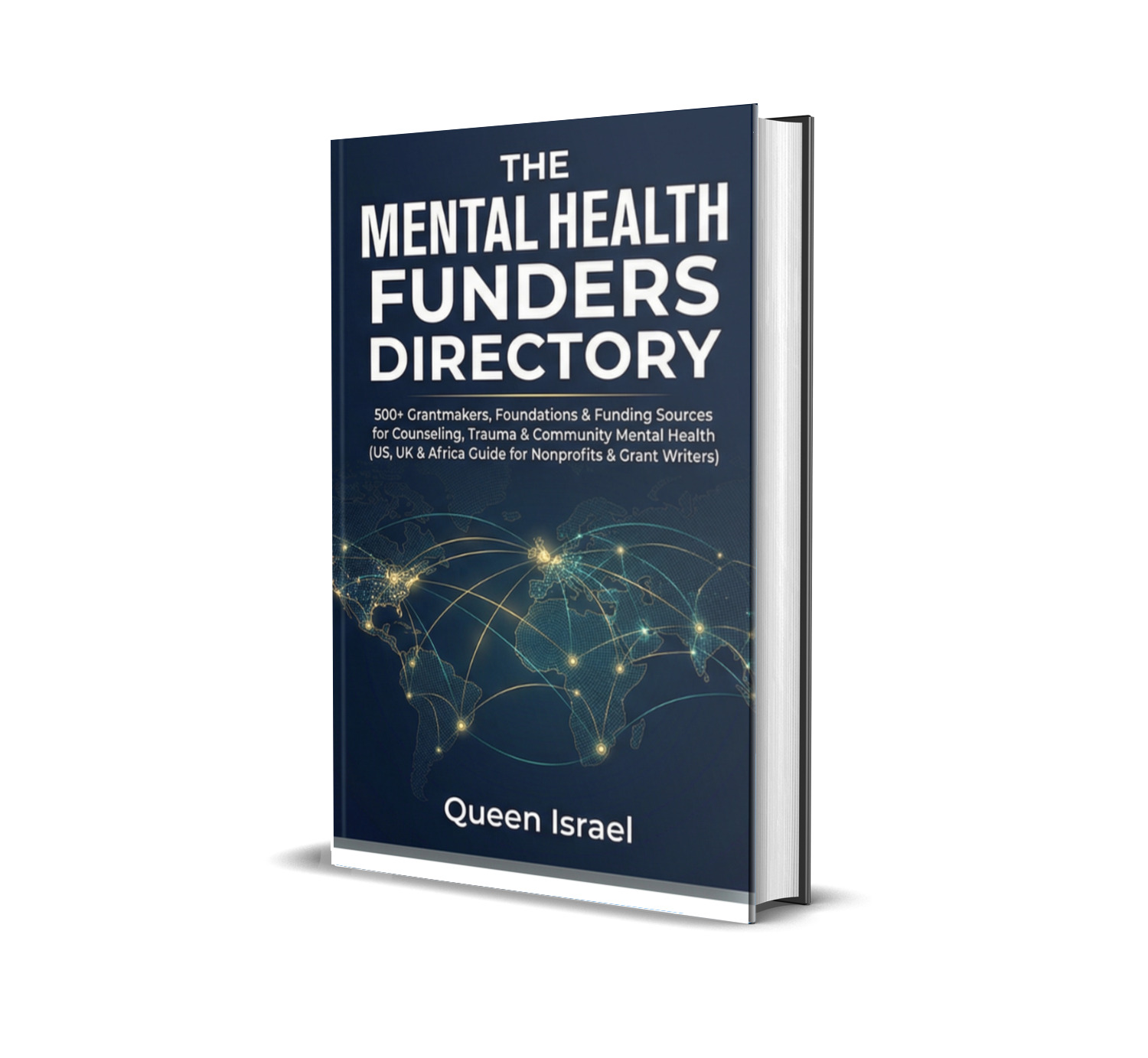
👉 CTA: Instead of spending months searching randomly, get instant access to The Mental Health Funders Directory (500+ funders across the USA, UK, and Africa), designed to help you identify real, active funding opportunities aligned with your mission.
How to Design a Fundable Faith-Based Mental Health Program
One of the biggest reasons churches fail to secure funding is not because funding doesn’t exist, but because their programs are not structured in a way that funders can evaluate, trust, or scale, which makes program design the most critical step in securing faith-based mental health programs funding.
The Fundable Program Framework:
Step 1: Define a Specific Problem
Avoid vague statements like “helping people with mental health” and instead define a clear, targeted issue such as “reducing depression and anxiety among unemployed youth in urban communities.”
Step 2: Identify a Target Population
Funders want clarity, so specify who you are serving, including age group, location, and vulnerability factors.
Step 3: Design Evidence-Informed Interventions
This does not mean abandoning faith, but rather integrating recognized approaches such as group therapy, peer support, psychoeducation, or trauma-informed care alongside spiritual components.
Step 4: Define Measurable Outcomes
For example: “Participants will show a 30% reduction in reported anxiety levels after 12 weeks.”
Step 5: Structure Delivery Mechanisms
Explain how the program will be implemented—workshops, counseling sessions, outreach events, digital platforms, etc.
Strong vs Weak Positioning Example:
- Weak: “We want to provide spiritual counseling to our members.”
- Strong: “We will deliver a 12-week community-based mental health support program combining peer counseling and structured emotional resilience training for 150 underserved adults.”
The difference is clarity, measurability, and alignment with funder expectations.
👉 CTA: Inside The Mental Health Grants Insider Founding Membership, you’ll get templates, frameworks, and real examples of fundable program designs that have secured funding.
How to Write a Winning Grant Proposal as a Faith-Based Organization
Writing a winning proposal is not about sounding impressive—it is about demonstrating alignment, clarity, and impact in a way that matches how funders think and evaluate applications.
The Winning Proposal Structure:
1. Problem Statement
Use data, community insights, and real-life context to show urgency and relevance.
2. Program Description
Clearly explain what you will do, how you will do it, and why it works.
3. Outcomes & Impact
Show measurable, realistic results tied to the problem.
4. Organizational Capacity
Highlight your credibility, community trust, and track record.
5. Budget Justification
Explain how funds will be used effectively and transparently.
Insider Reviewer Insight:
The biggest mistake faith-based applicants make is overemphasizing mission and underemphasizing structure, while funders are asking, “Can this organization deliver measurable results with accountability?”
Mini Case Example:
A church in the UK secured funding by presenting its mental health ministry as a “community wellness initiative” with structured outcomes, partnerships with local therapists, and clear reporting mechanisms, rather than a purely faith-driven program.
👉 CTA: If you want real proposal examples and reviewer-level insights, join The Mental Health Grants Insider Founding Membership and start writing proposals that actually get funded.
Common Mistakes Churches Make When Applying for Mental Health Grants
Despite good intentions, many churches unknowingly sabotage their funding opportunities due to avoidable mistakes that signal risk, lack of structure, or misalignment to funders.
Top Mistakes:
1. Being Too Vague
Lack of clarity around program goals, target population, and outcomes.
2. Over-Spiritualizing the Proposal
Failing to translate faith-based work into funder-friendly language.
3. Ignoring Data & Evidence
Not using statistics or measurable outcomes to support the program.
4. Weak Program Design
Programs that are not structured, scalable, or clearly deliverable.
5. Applying Without Strategy
Submitting proposals without aligning with funder priorities.
Critical Insight:
Funders are not rejecting your mission—they are rejecting unclear, unstructured, or misaligned proposals.
👉 CTA: Avoid these costly mistakes by using The Mental Health Funders Directory (500+ funders across the USA, UK, and Africa) to apply strategically, not randomly.
FAQs
1. Can churches apply for mental health grants?
Yes, churches can apply for mental health grants, especially when they operate programs that serve the broader community in a non-discriminatory manner and demonstrate measurable impact.
2. Are there grants specifically for faith-based mental health programs?
Yes, many foundations and faith-based funders specifically support programs that integrate spiritual care with mental health services, particularly when they address underserved populations.
3. How do you combine faith and mental health in a grant proposal?
You combine them by positioning faith as a community engagement and trust mechanism while framing interventions using evidence-based mental health approaches and measurable outcomes.
4. What disqualifies a faith-based organization from funding?
Organizations may be disqualified if they restrict services based on religion, lack proper structure, fail to demonstrate impact, or present overly religious proposals without clear public benefit.
5. Do churches need nonprofit status to apply for grants?
In many cases, yes, especially for government and large foundation grants, although some funders allow fiscal sponsorship or alternative structures.
Conclusion: The Opportunity Is Real—But Only for Those Who Position Correctly
The reality is that mental health grants for faith-based organizations are not scarce—what is scarce are well-positioned, strategically designed, and funder-aligned programs that meet the expectations of modern grantmakers, which means the opportunity in 2026 is not just about availability but about readiness.
Churches and ministries that take the time to understand how funding works, design programs with clarity and measurable impact, and present their work in a way that aligns with funder priorities will not only secure funding but will also expand their reach, deepen their impact, and become key players in addressing one of the most urgent crises of our time.
The question is no longer whether funding exists—the question is whether your organization is positioned to receive it.
👉 Join The Mental Health Grants Insider Founding Membership today and gain the tools, insights, and strategies to secure funding faster.
👉 Get instant access to The Mental Health Funders Directory (500+ funders across the USA, UK, and Africa) and stop guessing where to apply.
Your mission deserves funding—but only strategy will unlock it.