
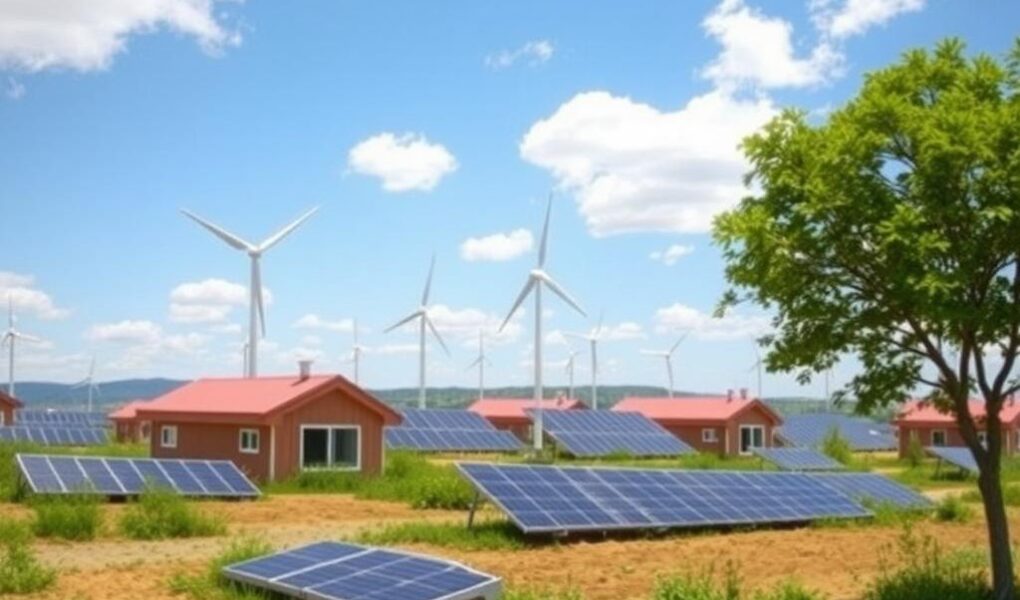
If your U.S.-based NGO works on clean energy, you already know the hunger: deeper impact, bigger projects, and more durable funding.
The good news?
There’s a growing universe of global renewable energy grants that U.S. NGOs can compete for — from multilateral climate funds to regional EU programs and foundation calls.
This guide walks you through where those dollars live, how to qualify, and practical tactics to win them — with real-world examples and step-by-step advice you can apply to your next proposal.
Why U.S. NGOs should (and can) go global
Many U.S. NGOs think international grant pools are only for local organizations in the Global South, governments, or big multilateral institutions. That’s half true — those actors are often primary recipients — but U.S. NGOs can and do participate in many ways: as accredited entities, accredited partners, international sub-grantees, consortium leads, or technical partners.
Competing internationally opens doors to larger budgets, strategic partnerships, and higher-impact projects that scale beyond national borders.
Key reasons to look global:
- Bigger ticket sizes — international funds (multilateral and regional) often fund multi-million-dollar programs impossible to access domestically.
- Strategic leverage — international awards build credibility with governments, private investors, and other donors.
- Cross-border impact — climate and energy solutions are transnational; funding that supports regional grids, utility reform, or cross-border renewables can multiply local wins into systemic change.
Major global grant sources where U.S. NGOs can play
Below are the most practical, high-impact places to start searching — with what they fund and how U.S. NGOs typically engage.
1. Green Climate Fund (GCF)
What it is: The GCF is one of the largest climate funds, financing mitigation and adaptation projects in developing countries. It prioritizes transformative, scaled projects.
How U.S. NGOs can access it: The GCF requires projects to be submitted by Accredited Entities (AEs). AEs include multilateral development banks, UN agencies, national agencies, and some international NGOs.
U.S. NGOs can either:
(a) pursue GCF accreditation (a heavy lift but possible for larger organizations), or
(b) partner with existing AEs as delivery partners or co-implementers.
Practical route: start as a delivery partner and build a track record for a future accreditation push. (greenclimate.fund)
2. Global Environment Facility (GEF) — including the Small Grants Program (SGP)
What it is: GEF funds biodiversity, climate mitigation, sustainable land management, and more. The GEF Small Grants Program supports local CSOs and community groups with smaller but highly relevant grants.
How U.S. NGOs can access it: Larger GEF grants flow through national agencies and GEF Implementing Agencies (UNDP, UNEP, World Bank). U.S. NGOs often engage as technical partners, consortia leads (if internationally registered), or subgrantees to in-country partners — and U.S.-based foundations often co-finance GEF projects.
For community-level pilots, GEF SGP can be a direct pathway when partnering with local NGOs and CBOs. (Global Environment Facility)
3. EU Programs (e.g., LIFE, Horizon Europe, Connecting Europe Facility)
What it is: The EU runs multiple funding programs that support renewable energy, energy efficiency, and transnational infrastructure. Some calls target international cooperation and third-country partners.
How U.S. NGOs can access it: Many EU calls permit non-EU partners as part of consortia. U.S. NGOs can join as research partners, technical assistance providers, or co-applicants.
Pay attention to call eligibility — and recruit an EU-based lead partner when required. (CINEA)
4. Multilateral & Regional Development Banks (World Bank, IFC, regional development banks)
What it is: These banks finance large infrastructure and energy transition projects, often blended with grant components for technical assistance and community benefits.
How U.S. NGOs can access it: Typically as civil society partners, monitoring partners, or technical implementers supporting social safeguards, gender, or community engagement components of loan-funded projects. Being on procurement and consultant rosters helps. (See practical tips below.)
5. Foundations, Prize Funds, and Thematic Donors
What it is: Major foundations and philanthropic programs (as curated by grant portals and networks) regularly issue calls for renewable-tech pilots, distributed energy access, and policy work. These often have more flexible rules and faster timelines.
How U.S. NGOs can access it: Direct applications are common; foundations value innovation, clear outcomes, and strong M&E plans. Many NGOs combine foundation grants with multilateral co-finance to scale pilots.
How U.S. NGOs practically win these grants — a step-by-step playbook
1) Decide your entry mode: Accredited Entity vs. Partner vs. Subgrantee
- Accredited Entity: Go for this only if you have strong finances, E&S systems, and 3–5 years of international climate project experience. Accreditation opens direct access to big funds (e.g., GCF). (greenclimate.fund)
- Partner / Consortium Member: Faster route. Partner with a national agency, UNDP, or an AE. Ideal for NGOs with deep technical or community experience but without theenrr overhead for full accreditation.
- Subgrantee / Implementer: Work with local partners who hold the contract; you provide technical assistance, M&E, or scaling capacity.
2) Build the documentation funders will ask for
Funders increasingly require robust evidence of:
- Financial systems and audited statements
- Safeguards (environmental & social) and gender policies
- Monitoring & Evaluation (logframe / ToC)
- Demonstrated results in target countries
Practical tip: create a “global grants kit” — a one-page capabilities statement, 2–3 impact case studies, audited accounts, and a safeguards checklist. Save this as a rolling appendix for all applications.
3) Use strategic partnerships (not just cheap consortia)
Don’t join a consortium randomly. Seek partners who:
- Add missing capabilities (e.g., in-country reach, procurement, technical expertise)
- Bring complementary funding (co-financing strengthens applications)
- Have experience with the specific funder (e.g., a UNDP office that’s submitted GEF proposals before)
Example: A U.S. NGO with distributed solar tech expertise partnered with a West African NGO (local implementation), a European university (research partner), and a development bank (to structure blended finance). The result: stronger technical credibility + pathway to scale. (This is the model many recent successful projects follow.)
4) Write funder-language without losing your voice
Every funder has priorities — GCF wants transformational outcomes and scalability; GEF emphasizes global environmental benefits; EU programs stress innovation and cross-border cooperation. Map your project outcomes to their priorities in the first two pages of your narrative.
Quick mapping exercise (do this early):
- Funder priority → How your project delivers it (bullet point)
- Metrics to measure success (quantitative where possible)
- Risk mitigation (environmental, social, financial)
5) Show scalable, bankable outcomes
International funds want to know: “How will this pilot become a program?” Include a credible path to scale: policy reforms, utility partnerships, private co-financing, or public procurement arrangements.
6) Invest in local content and co-benefits
Projects that create local jobs, build capacity, and involve communities score higher against safeguards and sustainability criteria. Embed community training, local supply-linkages, and gender-inclusive employment targets into budgets and KPIs.
7) Prepare for long cycles — but be smart about timing
Multilateral windows can take 12–24 months from concept to signature. Use small grants and foundation funds for early pilots while you pursue bigger, slower funds. This staged approach reduces risk and builds a track record.
Case examples
Example A — From pilot to regional rollout
A U.S. NGO piloted a mini-grid plus microgrid controller in two rural districts using foundation seed funding. They partnered with a national utility and an EU research partner to test outcomes. With data and cost reductions, they joined a GEF program as a technical partner — leveraging GEF financing to expand the model across three countries. Outcome: pilot to regional program in 4 years.
Example B — Leveraging accreditation vs. partnership
A mid-sized U.S. NGO chose not to seek direct GCF accreditation (too resource-intensive). Instead, they developed a partnership with a regional development bank already accredited by GCF; they provided gender and community engagement services as a consortium lead. Result: access to larger funds without the accreditation overhead — and a clear path to pursue accreditation later.
Common pitfalls and how to avoid them
- Pitfall: Applying with weak in-country partnerships. Solution: Invest time building genuine relationships (not name-dropping). Funders verify local buy-in.
- Pitfall: Underestimating co-financing needs. Solution: Map realistic project budgets and secure co-finance letters early.
- Pitfall: Ignoring safeguards. Solution: Develop basic E&S and gender policies now, even for small grants; use templates from UN agencies or MDBs.
- Pitfall: Overpromising scale. Solution: Be honest about what can be delivered and show credible, incremental scaling steps.
Quick checklist before you hit “submit”
- Does your project clearly map to the funder’s strategic priorities?
- Is there a documented local partner and letter of support?
- Are financials, safeguards, and M&E plans attached?
- Do you have a realistic co-financing plan?
- Can you show a pathway to scale (policy, private finance, procurement)?
If you can answer “yes” to most of these, you’re in a strong position.
Tools and channels to find calls (practical starting points)
- Multilateral fund websites (GCF, GEF) — check calls, readiness programs, and accreditation guides. (greenclimate.fund)
- EU Funding & Tenders portal / LIFE calls for proposals — for transnational and innovation grants. (CINEA)
- Grant portals and curated newsletters (FundsforNGOs, GrantWatch) — for foundation and mid-size grants. (Funds for NGOs)
Final practical tips — what to do in the next 90 days
- Build or update your “global grants kit” (capabilities sheet, 2 impact case studies, audited statements, safeguards summary).
- Identify 2–3 target funds (one fast foundation call, one EU/international call, one long-term multilateral) and map where your project fits.
- Contact 3 potential in-country partners and draft MOUs or letters of support.
- Start a short “pilot metrics” dashboard to capture data that funds will want to see: kWh produced, people served, jobs created, carbon reduced.
- Subscribe to targeted grant newsletters and set calendar reminders for call deadlines.
Want this done for you — and ongoing curated alerts?
If you found this useful, subscribe to The Climate Proposal Academy Newsletter for curated funding calls, winning proposal templates, and monthly deep dives that help you win more global renewable energy grants. And if you’re ready to go deeper: those interested in joining the Founding Membership should click here to learn more and apply.
Closing — the edge U.S. NGOs bring
U.S. NGOs often bring technical innovation, strong monitoring capacity, and access to transnational networks — all attractive to international funders. With the right partnerships, safeguards, and a clear route to scale, your organization can compete for and win the grants that accelerate renewable energy transitions around the world.

peryaplus https://www.rsperyaplus.net