If you have ever opened ten tabs, searched endlessly for mental health grants for children programs, bookmarked dozens of links, and still ended the day with nothing actionable, you are not alone—and more importantly, you are not the problem.
The real issue is that the funding landscape for children’s mental health is fragmented, poorly labeled, and often hidden behind categories that do not explicitly say what they fund, which leads organizations, schools, and nonprofits into a cycle of time-consuming searches, misaligned applications, and repeated rejection. You are working on critical issues—child trauma, anxiety, behavioral health, school-based interventions—yet the path to funding feels unnecessarily complicated.
But here is the shift that changes everything: the organizations that consistently secure child mental health funding are not searching harder—they are searching smarter, targeting better, and using structured systems to identify the right funders quickly.
In this guide, you will learn exactly where to find grants for youth mental health programs, how to filter them efficiently, and how to position your work so that funders immediately recognize alignment—transforming your process from scattered searching to strategic funding acquisition.
Why Finding Mental Health Grants for Children Programs Feels So Difficult
The frustration around finding funding for children mental health services is not because funding does not exist, but because it is rarely labeled in ways that match how organizations search for it, which creates a disconnect between available opportunities and those actively looking for them.
Most funders do not categorize their work under “mental health grants 2026” or even “child mental health funding.” Instead, they embed children’s mental health within broader priorities such as education outcomes, youth development, trauma recovery, violence prevention, or family support systems, which means if your search is too narrow, you will miss the majority of relevant opportunities.
Additionally, many traditional grant databases are either outdated, overly broad, or require significant time to filter effectively, forcing organizations to manually review opportunities that do not match their geography, program type, or funding needs. From a reviewer’s perspective, one of the most common issues is not weak proposals, but misalignment, where strong programs apply to funders that were never a strategic fit to begin with.
This is why so many organizations feel stuck—they are investing effort without a filtering system, which leads to wasted time and reduced success rates.
This is also where tools like the Mental Health Funders Directory become essential, because instead of forcing you to navigate scattered and inefficient sources, it gives you direct access to pre-vetted funders already aligned with counseling, trauma, and youth mental health, dramatically reducing search time.
The Best Places to Find Children’s Mental Health Grants (That Most People Overlook)
To consistently find high-quality mental health grants for children programs, you must move beyond generic searches and focus on specific, high-value platforms and ecosystems where aligned funding already exists.
1. Candid (Foundation Directory)


Candid’s Foundation Directory is one of the most comprehensive tools available for identifying private foundations that support children, youth, and mental health initiatives. What makes it powerful is its advanced filtering system, which allows you to search using layered criteria such as population focus, geographic eligibility, and funding priorities.
Strategic Insight: Instead of searching broadly for “mental health,” combine terms like “youth emotional well-being,” “school-based mental health,” and “child trauma support” to uncover hidden opportunities that are not explicitly labeled.
2. FundsforNGOs


This platform is especially valuable for organizations in Africa, the UK, and globally, as it aggregates active funding opportunities from foundations, governments, and international agencies. It is one of the fastest ways to discover current, open grants for youth mental health programs without starting from scratch.
Strategic Insight: Many relevant opportunities are listed under broader categories like “child protection,” “health,” or “youth empowerment,” so your ability to interpret categories determines your success.
3. Wellcome Trust


A globally recognized funder, Wellcome Trust invests heavily in mental health, including initiatives that affect children and young people. While often research-driven, it supports programs focused on anxiety, depression, and early intervention—key areas within children’s mental health.
Strategic Insight: Position your program with measurable outcomes and evidence-based approaches, as this funder prioritizes data-driven impact.
These platforms are powerful, but they still require time, interpretation, and filtering—which is why combining them with a curated resource like the Mental Health Funders Directory gives you a significant advantage by eliminating unnecessary searching and focusing only on relevant funders.
High-Impact Funding Sources for Youth and Children Mental Health Programs
To effectively secure child mental health funding, you need to understand not just where to search, but which types of funders consistently invest in children’s mental health—and why.
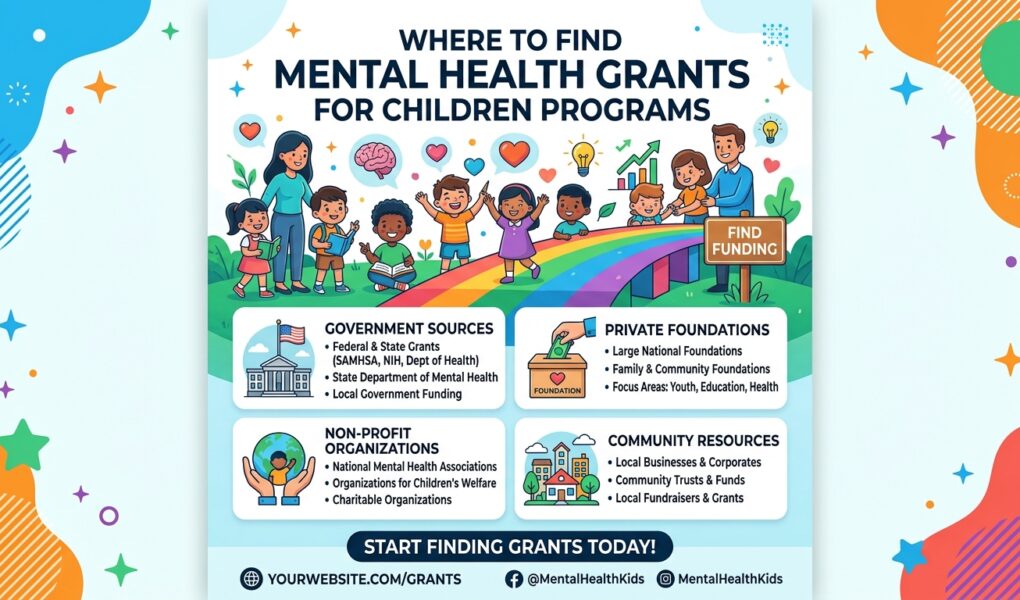
Private foundations remain one of the most reliable sources, particularly those focused on children, education, trauma, and family well-being. These funders often support innovative programs such as school-based counseling, trauma recovery initiatives, and community mental health outreach.
Government and multilateral funders offer larger grants, especially for programs addressing systemic issues like child protection, psychosocial support, and youth resilience. These opportunities are more competitive but provide long-term funding potential.
Community foundations are often overlooked, yet they are deeply invested in local impact and frequently fund grassroots programs supporting children’s emotional well-being, after-school initiatives, and community counseling services.
Corporate foundations are increasingly prioritizing youth mental health, particularly as awareness grows around anxiety, depression, and trauma among children. These funders often look for scalable, high-impact programs with measurable outcomes.
A practical example illustrates this clearly: a school-based mental health program initially struggled to secure funding when applying under “mental health” categories, but successfully obtained grants after repositioning itself under education support and student well-being, targeting foundations focused on academic success and youth development.
This type of strategic alignment is what separates successful organizations from those stuck in the cycle of searching and rejection.
.
🔔 Announcement
We work with nonprofits, NGOs, and mission-driven organizations focused on mental health to support their grant writing, grant research, and proposal review needs.
If your organization is currently preparing applications or exploring funding opportunities in the mental health space, you can reach out for professional support.
📩 grantwritingacademyconsult@gmail.com
📅 Strategy sessions available upon request
Step-by-Step Strategy to Find and Apply Without Wasting Time
If you want to eliminate wasted effort and consistently find mental health grants 2026, you need a system—not just a search habit.
Step 1: Define Your Program in Funder Language
Clarify whether your program is best positioned as education support, youth development, trauma recovery, or community health. This determines where you should search.
Step 2: Apply Layered Filters
Always filter by population (children/youth), outcome (mental health or related), and delivery model (schools, community, healthcare). This instantly removes irrelevant opportunities.
Step 3: Pre-Qualify in Minutes
Scan eligibility, geographic focus, and funding priorities quickly. If alignment is unclear within two minutes, move on.
Step 4: Focus on a Shortlist
Prioritize 10–15 high-fit funders rather than dozens of low-fit ones. This increases both efficiency and success rates.
Step 5: Build a Funding Pipeline
Track recurring funders and patterns. Over time, this becomes your predictable funding ecosystem.
Organizations that implement this system consistently reduce research time while increasing funding success—and tools like the Mental Health Funders Directory accelerate this process by giving you a pre-filtered starting point.
How to Position Your Children’s Program to Attract the Right Funders
Finding the right grants is only half the equation; the other half is positioning your program so funders immediately see its value and alignment.
Funders are not just funding needs—they are funding outcomes. A vague statement about supporting children’s mental health is far less compelling than demonstrating measurable impact, such as improved emotional regulation, reduced trauma symptoms, or increased school attendance.
Programs that secure funding consistently present a clear structure: a defined problem, a targeted approach, and measurable outcomes. They also align their messaging with funder priorities, whether that is education, health, or community development.
Another critical factor is context. Programs operating in Africa, the UK, or the USA must demonstrate how their approach fits local realities, cultural contexts, and system gaps, rather than applying generic models.
From a reviewer’s perspective, the strongest applications are those that show clarity, specificity, and alignment, not just passion or need.
This is why having access to funders already aligned with children’s mental health—such as those listed in the Mental Health Funders Directory—gives you a strategic advantage, allowing you to position your program more effectively from the start.
FAQs: Mental Health Grants for Children Programs
1. Where can I find grants for children’s mental health programs?
You can find them through platforms like Candid, FundsforNGOs, and direct funder websites, as well as private foundations, government agencies, and curated directories focused on mental health funding.
2. Are there grants specifically for youth mental health?
Yes, but many are embedded within broader categories such as education, youth development, and public health, so identifying alignment is key.
3. How do I know if a grant is a good fit for my program?
Evaluate alignment across population, outcomes, and geography. If all three match, it is likely a strong opportunity.
4. What types of children’s mental health programs get funded most?
Programs focused on early intervention, school-based services, trauma-informed care, and community-based support systems are highly prioritized.
5. Are there funding opportunities for children’s mental health in Africa, the UK, and the USA?
Yes, all regions have active funding ecosystems, including foundations, governments, and international organizations, but success depends on strategic targeting.
Conclusion: Stop Searching Blindly—Start Finding Strategically
The difference between organizations that struggle and those that consistently secure mental health grants for children programs is not effort—it is strategy.
When you replace scattered searching with targeted systems, everything changes. You save time, increase alignment, and dramatically improve your chances of success.
You move from frustration to clarity, from guesswork to precision.
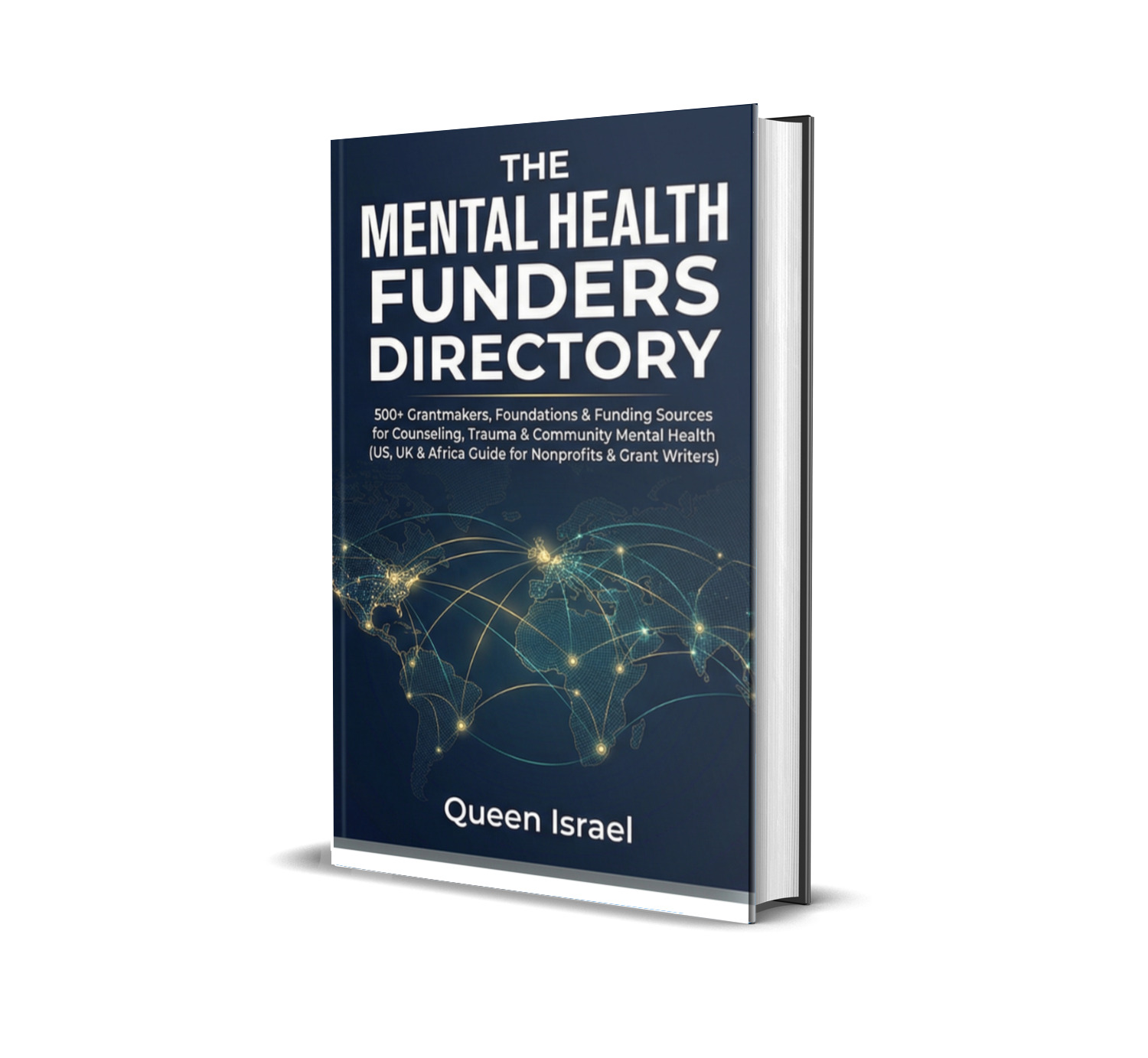
And if you are ready to eliminate wasted hours entirely, the Mental Health Funders Directory: 500+ Grantmakers, Foundations & Funding Sources for Counseling, Trauma & Community Mental Health (US, UK & Africa Guide for Nonprofits and Grant Writers) gives you direct access to verified, relevant funders—so you can apply smarter, faster, and with confidence.
Because the right funding is not hidden—you just need the right strategy to find it.
🔔 Work With Us
Grant Writing Academy provides specialized support to organizations working across key areas of mental health, including community programs, youth mental health, trauma recovery, and faith-based initiatives.
Our services include:
• Grant research
• Proposal writing
• Proposal review and strengthening
If you are looking for structured, professional support in preparing your next grant application:
📩 Email: grantwritingacademyconsult@gmail.com
📅 Book a session to discuss your needs
We respond to serious inquiries within 48 hours.