You’ve spent weeks—sometimes months—crafting what you believed was a strong proposal for children mental health grants, only to receive a rejection email that offers little clarity, vague feedback, or worse, complete silence, leaving you frustrated, confused, and questioning whether your organization is even competitive in the increasingly crowded youth mental health funding landscape.
The painful reality is this: most rejections are not random, and they are rarely about your mission being unworthy; they are almost always the result of strategic misalignment, avoidable mental health grant proposal mistakes, and a fundamental disconnect between what applicants think funders want and what reviewers are actually scoring behind closed doors.
This guide is your turning point. You are going to move from guesswork and repeated rejection into a position of clarity, precision, and strategic confidence, where every section of your proposal is intentionally designed to meet reviewer expectations, eliminate red flags, and significantly increase your chances of approval.
If you are serious about learning how to win mental health grants consistently—not occasionally—this is where everything changes.
The Real Reasons Children’s Mental Health Grant Applications Get Rejected
From a reviewer’s perspective, rejection decisions are rarely emotional; they are systematic, criteria-driven, and often made under time pressure, meaning your proposal is not being read casually—it is being scored against strict benchmarks where even small weaknesses can cost you funding.
One of the most common reasons applications fail is lack of specificity in the problem statement, where organizations describe children’s mental health challenges in broad, generalized terms without grounding them in localized data, making it difficult for funders to understand the urgency, scale, and relevance of the issue within a specific community. For example, stating that “children are struggling with mental health” is far less compelling than demonstrating that “over 38% of adolescents in X district have reported symptoms of anxiety and depression, with no access to licensed counseling services within a 20-mile radius.”
Another critical issue is misalignment with funder priorities, which occurs when applicants apply for funding opportunities that do not closely match their program focus, geographic scope, or target population, often because they are applying widely rather than strategically. This is one of the fastest ways to get rejected, regardless of how strong your program is.
Equally damaging is weak program design, where proposals lack clarity around implementation, outcomes, and measurable impact, leaving reviewers uncertain about how the program will actually work in practice. A vague statement like “we will provide mental health support to children” does not demonstrate operational readiness or credibility, whereas a structured plan detailing session frequency, delivery methods, staffing qualifications, and expected outcomes builds confidence.
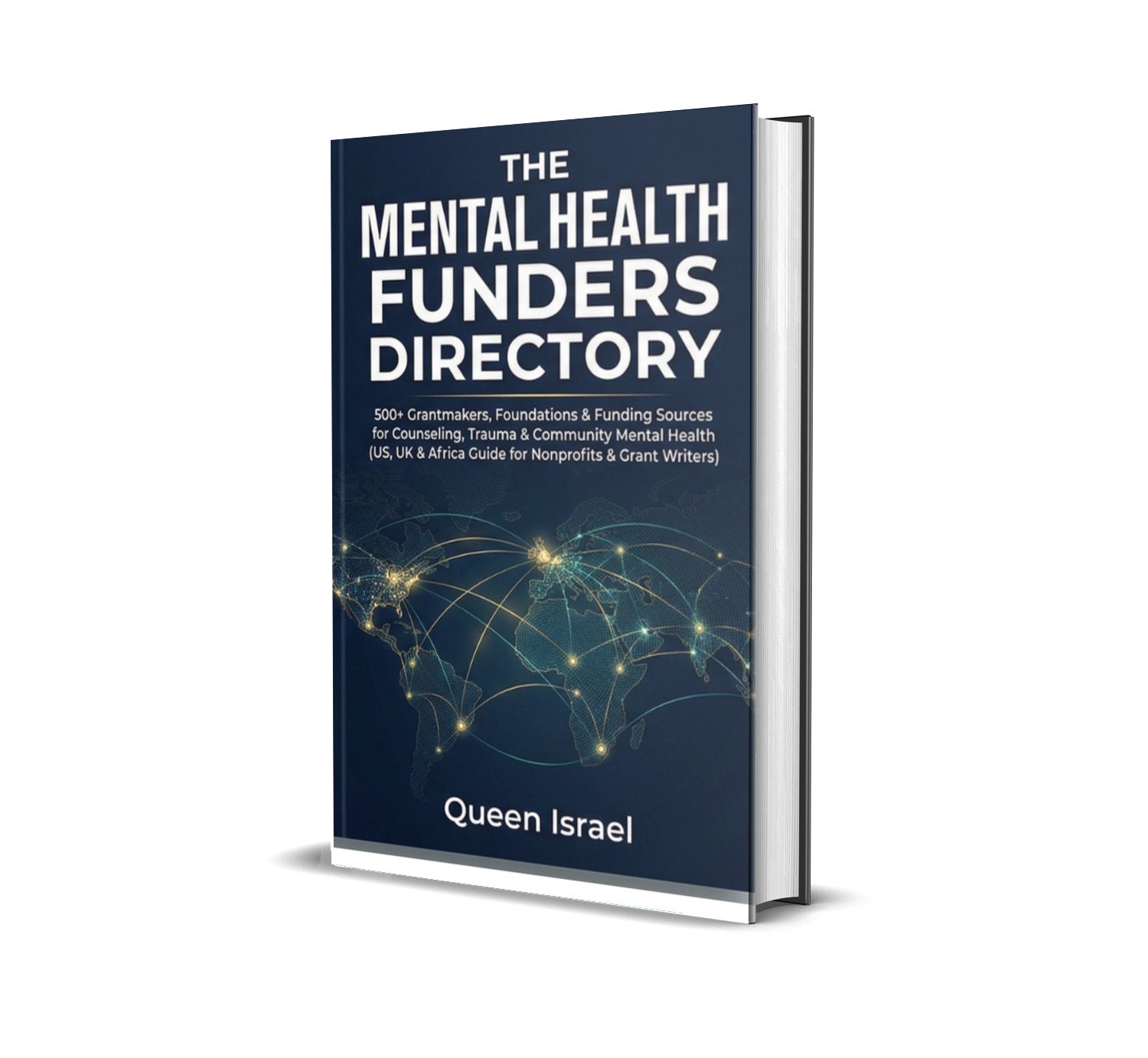
👉 If you are tired of applying blindly and want to start targeting the right funders who are already aligned with your mission, this is exactly why professionals rely on The Mental Health Funders Directory: 500+ Grantmakers, Foundations & Funding Sources—because applying to the wrong funders is one of the most expensive mistakes you can make in both time and opportunity.
What Funders Actually Look for in Youth Mental Health Proposals
Contrary to what many applicants believe, funders are not simply looking for “good intentions” or passionate narratives; they are looking for evidence-backed, strategically designed interventions that demonstrate clear, measurable impact within a defined population.
At the core of every successful proposal is alignment, not just with the funder’s mission, but with their current funding priorities, which may include specific focus areas such as trauma-informed care, school-based mental health services, early intervention, or underserved populations. A strong proposal explicitly mirrors the language and priorities outlined in the funder’s guidelines, making it immediately clear that your program fits within their strategic framework.
Another key factor is credibility, which is established through a combination of past performance, partnerships, and the expertise of your team. For instance, a proposal from a nonprofit partnering with local schools and licensed mental health professionals will carry significantly more weight than one operating in isolation without demonstrated capacity.
Funders also prioritize measurable outcomes, meaning they want to know exactly what success looks like and how it will be tracked. A strong proposal might state that “75% of participating children will show a measurable reduction in anxiety symptoms based on standardized assessments within six months,” which is far more compelling than vague promises of “improvement.”
💡 Insider Reviewer Insight:
When reviewers see a proposal that clearly connects problem → intervention → measurable outcome, it immediately stands out as fundable because it reduces uncertainty and demonstrates that the organization understands how to deliver impact.
👉 This is precisely the level of strategic refinement taught inside The Mental Health Grants Insider Founding Membership, where you learn how to position your proposals in a way that aligns directly with how funders think and make decisions.
Announcement
We work with nonprofits, NGOs, and mission-driven organizations focused on mental health to support their grant writing, grant research, and proposal review needs.
If your organization is currently preparing applications or exploring funding opportunities in the mental health space, you can reach out for professional support.
📩 grantwritingacademyconsult@gmail.com
📅 Strategy sessions available upon request
The Most Common Mistakes (And How to Fix Them Quickly)
Even well-intentioned organizations make predictable mistakes that significantly weaken their applications, and the good news is that these issues can often be corrected quickly once identified.
One major mistake is overloading the proposal with narrative but lacking structure, where applicants focus heavily on storytelling without clearly outlining how the program will be executed. While emotional appeal is important, it must be supported by a clear operational framework that answers key questions about delivery, staffing, and scalability.
Another frequent issue is unclear or unrealistic budgets, where applicants either underestimate costs, fail to justify expenses, or include items that do not align with the proposed activities. A strong budget is not just a financial document—it is a strategic tool that reinforces the credibility of your entire proposal.
Consider this example:
Weak Approach:
“We are requesting $100,000 to support mental health services for children.”
Strong Approach:
“We are requesting $100,000 to deliver a 12-month school-based mental health program serving 200 children, including weekly group therapy sessions, individual counseling for high-risk cases, and training for 15 teachers in trauma-informed practices.”
Another critical mistake is lack of differentiation, where your proposal looks similar to dozens of others, making it difficult for reviewers to justify selecting your program over others. This often happens when organizations fail to highlight what makes their approach unique, whether it is a specific methodology, community partnership, or innovative delivery model.
👉 If you want to eliminate these mistakes quickly and start submitting proposals that stand out immediately, joining The Mental Health Grants Insider Founding Membership gives you access to frameworks, templates, and expert guidance designed specifically to fix these issues fast.
Step-by-Step Fix: How to Strengthen Your Application Fast
Improving your proposal does not require starting from scratch; in most cases, it involves refining and strengthening key sections to align with reviewer expectations.
Start with your problem statement, ensuring that it is data-driven, localized, and clearly connected to the population you serve. Replace general statements with specific statistics, trends, and gaps in services that demonstrate urgency.
Next, refine your program design by breaking it down into clear components, including who will deliver the services, how often they will be delivered, and what outcomes are expected. For example, instead of stating that you will “support children with trauma,” specify that you will provide “weekly trauma-focused cognitive behavioral therapy sessions led by licensed counselors over a 12-week period.”
Then, strengthen your evaluation plan by defining measurable indicators of success and the tools you will use to track them, such as pre- and post-assessments, attendance records, and feedback surveys.
Finally, ensure that your alignment with the funder is unmistakable, using their language, priorities, and funding criteria as a guide for shaping your proposal.
Mini Case Example:
A community-based organization initially submitted a proposal for youth counseling services that was rejected due to vague outcomes and lack of structure. After revising the proposal to include specific service delivery models, measurable outcomes, and partnerships with local schools, the same proposal was resubmitted and successfully funded within the next cycle.
👉 This is exactly why having access to the right funders through The Mental Health Funders Directory: 500+ Grantmakers is critical—because even the strongest proposal will fail if it is not matched with the right funding opportunity.
How to Position Your Children’s Mental Health Program for Immediate Approval
Positioning is what transforms a “good” proposal into a “fundable” one, and it starts with how clearly you communicate the value and impact of your program within the broader context of youth mental health funding priorities.
Successful proposals position their programs as solutions to clearly defined problems, rather than as general services, making it easy for reviewers to see the direct connection between funding and impact. This means framing your program in terms of outcomes, scalability, and long-term benefits, rather than activities alone.
Another key element is demonstrating readiness, which includes having the necessary infrastructure, partnerships, and staffing in place to implement the program effectively. Funders are far more likely to invest in programs that are ready to launch rather than those that are still in the planning stage.
Additionally, strong positioning involves highlighting sustainability, showing how the program will continue beyond the grant period through diversified funding, partnerships, or revenue-generating activities.
💡 Reviewer Insight:
When a proposal communicates clarity, alignment, and readiness within the first few pages, it creates a positive bias that carries through the entire review process, significantly increasing the likelihood of approval.
👉 Inside The Mental Health Grants Insider Founding Membership, you learn exactly how to position your program so that reviewers see it as a high-impact, low-risk investment—making approval far more likely.
FAQs
1. Why do children’s mental health grant applications get rejected?
Most applications are rejected due to lack of alignment with funder priorities, weak program design, vague outcomes, and insufficient data to support the need, all of which reduce reviewer confidence in the proposal.
2. What is the most common mistake in youth mental health proposals?
The most common mistake is failing to clearly define how the program will be implemented and measured, which leaves reviewers uncertain about its effectiveness and feasibility.
3. How can I improve my grant application quickly?
Focus on strengthening your problem statement with data, clarifying your program design, defining measurable outcomes, and ensuring alignment with the funder’s priorities.
4. Do small organizations have a chance of getting funded?
Yes, small organizations can be highly competitive if they demonstrate strong community connections, clear impact, and well-designed programs, often outperforming larger organizations with weaker proposals.
5. How do I know if my proposal is strong enough?
A strong proposal clearly connects the problem, intervention, and outcomes, aligns with funder priorities, and demonstrates credibility, readiness, and measurable impact.
Conclusion: Rejection Is Not the End—It’s a Signal for Strategic Refinement
If you have been facing repeated rejection in your pursuit of children mental health grants, it is not a reflection of your mission’s value, but rather an indication that your strategy needs refinement, alignment, and precision.
The difference between rejection and approval is often not as large as it seems; it is found in the details, the structure, and the clarity of your proposal, all of which can be improved with the right approach and guidance.
Now is the time to stop guessing and start applying with confidence, knowing exactly what funders are looking for and how to position your program for success.
👉 Join The Mental Health Grants Insider Founding Membership to access expert strategies, insider insights, and proven frameworks that help you fix and win grant applications faster.
👉 Get The Mental Health Funders Directory: 500+ Grantmakers to connect with the right funding opportunities, avoid costly misalignment, and dramatically increase your approval chances.
Your next application does not have to end in rejection—it can be the one that gets funded.
Similar Articles to Read:
Work With Us
Grant Writing Academy provides specialized support to organizations working across key areas of mental health, including community programs, youth mental health, trauma recovery, and faith-based initiatives.
Our services include:
• Grant research
• Proposal writing
• Proposal review and strengthening
If you are looking for structured, professional support in preparing your next grant application:
📩 Email: grantwritingacademyconsult@gmail.com
📅 Book a session to discuss your needs
We respond to serious inquiries within 48 hours.