Everyone talks about renewable energy. Few actually get funded.
The difference between a dream and a deal is how fun How to Build a Fundable Clean Energy Projectder-ready your project is.
Whether you’re designing a small hybrid system for rural clinics or a multi-megawatt solar farm, this guide shows you exactly how to turn a clean-energy idea into a fundable, investor-ready project that attracts grants, concessional finance, or commercial capital.
Why “Fundable” Projects Win (and Feasible Ones Don’t Always)
Let’s start with a simple truth: funders don’t fund technology — they fund clarity.
They want to know three things:
- Will this work? (Technical feasibility)
- Who will run it? (Operational capacity)
- Where’s the return? (Financial or social impact)
A project can be technically brilliant and still get rejected if it fails to tick those boxes. Funders are risk managers — not dream chasers. Your job is to prove you can deliver reliable energy, measurable results, and responsible operations.
Step 1 — Start With the Problem, Not the Panels
Here’s a secret: the best proposals don’t start with solar panels or wind turbines — they start with people.
Ask yourself:
- Who is struggling without power?
- What is the real cost of inaction?
- Why haven’t existing solutions worked?
For instance:
“Six rural health centers lose an average of 20 vaccines weekly due to power outages. A 300 kW solar-wind hybrid will save 2,000 vaccines annually.”
That’s a fundable narrative. It connects human impact to technical design.
When you lead with the problem, your solution becomes the obvious answer.
Step 2 — Pick the Right Technology Mix: Solar, Wind, or Hybrid
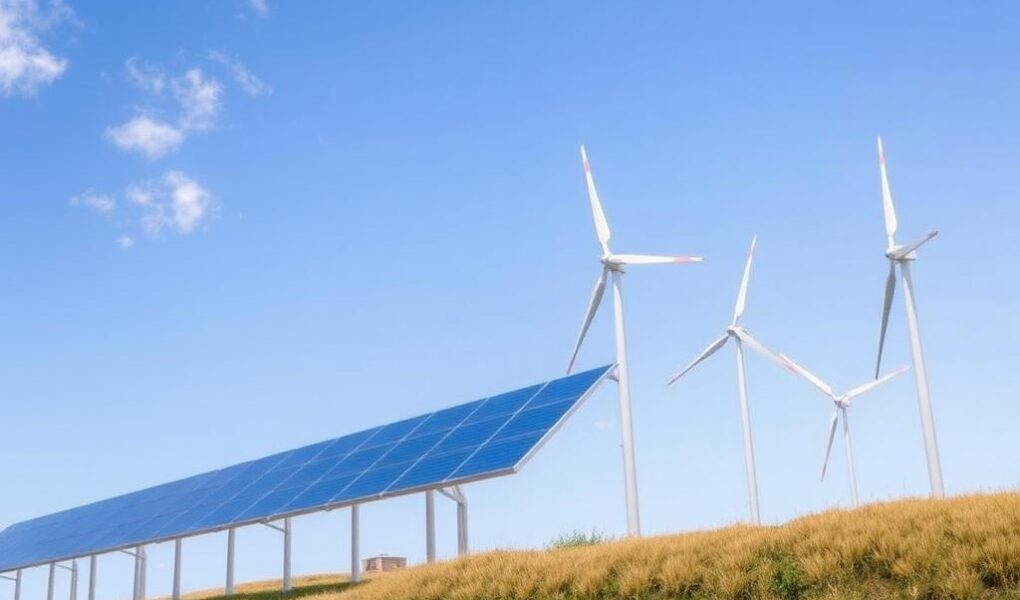
Solar shines in high-radiation zones with predictable daytime loads. Wind thrives in coastal or elevated areas with consistent speeds. But the smartest projects combine them.
Hybrid systems (solar + wind + storage) balance day/night production and smooth power output — making your energy profile more stable and more fundable.
Practical tip: Use real-world data — NASA’s solar irradiance maps or wind-resource atlases — to show funders you’ve done your homework.
Example:
“Wind speed at 10 m hub height averages 6.2 m/s year-round. Solar irradiance peaks at 5.8 kWh/m²/day. A hybrid design optimizes capacity factor to 48%.”
Numbers like that build instant credibility.
Step 3 — Conduct a Full Feasibility Study (It’s Non-Negotiable)
This is where 80% of projects fail — not in engineering, but in documentation.
A strong feasibility study should include:
- Technical: resource maps, load profiles, system design.
- Financial: CAPEX, OPEX, IRR, LCOE, sensitivity analysis.
- Environmental & Social: ESIA summary, community engagement plan.
- Legal: permits, land leases, grid access.
- Risk mitigation: identify what could go wrong — and how you’ll handle it.
Pro tip: Budget 5–10% of your project cost for feasibility. It’s an investment, not an expense.
Step 4 — Build a Funder-Grade Financial Model
Your spreadsheet is your story. Funders want numbers that make sense.
Include:
- CAPEX: equipment, civil works, installation, contingencies.
- OPEX: maintenance, staff, insurance, replacement parts.
- Revenue: power purchase agreements (PPAs), user fees, or cost savings.
- Financing plan: grants, concessional loans, or private capital.
- Sensitivity analysis: what if your load drops 10% or costs rise 15%?
Remember — funders will stress test your assumptions. Give them confidence that your numbers are realistic and your payback is achievable.
Example:
“At $0.12/kWh tariff, DSCR remains above 1.4, ensuring debt service stability even under 15% cost overrun.”
That’s funder-friendly language.
Step 5 — Design Operations That Inspire Confidence
A project is only as strong as its long-term operations plan.
Show you’ve thought through:
- Who will manage daily operations (SPV or local cooperative?)
- O&M strategy (maintenance schedule, spare parts logistics)
- Workforce plan (training for local technicians)
- Procurement process (transparent vendor selection)
When funders see local capacity-building and job creation, their interest doubles — because you’re not just providing energy; you’re fueling community empowerment.
Step 6 — Nail the Environmental and Social Case
No funder wants a “green” project that harms people or ecosystems.
Your ESIA should demonstrate:
- Minimal negative impacts (noise, land use, biodiversity).
- Community engagement (consultations, consent forms).
- Environmental co-benefits (reforestation, pollution reduction).
Bonus tip: Include stakeholder letters or photos from community meetings — they make your proposal feel real and build trust.
Step 7 — Match the Right Funder to the Right Stage
Each stage of your project fits a different type of capital:
| Project Stage | Best Funder Type | Example |
|---|---|---|
| Concept/Feasibility | Grants & Technical Assistance | Global Environment Facility (GEF), UNDP, USAID, GCF readiness funds |
| Pilot/Scale-Up | Blended Finance | Development Finance Institutions (DFIs), regional green funds |
| Commercial Operation | Private Equity or Debt | Banks, Impact investors, ESG funds |
You’ll waste months applying to the wrong funder. Always match your project’s maturity to their mandate.
Step 8 — Craft a Clear, Credible Proposal
Your proposal should read like a business plan plus a social impact story.
Structure it like this:
- Executive Summary — one-page story: problem, solution, cost, and impact.
- Project Description — site, technology, timeline, partners.
- Financial Plan — budget, funding structure, expected returns.
- Implementation Plan — milestones and responsibilities.
- Risk Matrix — identify threats and mitigation.
- Monitoring & Evaluation — KPIs, data tracking, and reporting.
- Annexes — feasibility study, ESIA, maps, permits, letters of support.
Use visuals — maps, infographics, and power-flow diagrams — to help funders grasp complex systems in seconds.
Step 9 — Prove There’s Real Demand
Nothing says “bankable” like a guaranteed buyer.
If you have a signed PPA, that’s gold.
If not, include:
- Letters of intent from potential customers.
- Historical electricity bills (to show savings).
- Local energy audits confirming demand.
Example:
“The five health centers currently spend $3,800 monthly on diesel. Our system reduces this by 60%, saving $27,000 annually.”
That’s measurable, fundable impact.
Step 10 — Use Blended Finance or Guarantees to Reduce Risk
If your market is considered risky — due to currency, policy, or credit issues — explore blended finance or guarantees.
These mechanisms combine grants, concessional loans, and private investment to make your project bankable.
- Guarantees protect investors from losses.
- Concessional loans lower interest rates.
- Equity participation from DFIs signals confidence.
Mentioning these in your proposal tells funders you understand the financing ecosystem — and you’re thinking strategically.
Real-World Example — A 500 kW Hybrid Microgrid
The Problem:
Five clinics in a coastal district faced blackouts up to 12 hours daily. Diesel costs were draining budgets.
The Solution:
A 500 kW hybrid system (300 kW solar + 200 kW wind + 800 kWh battery).
Funding:
- €250,000 grant for feasibility (from a climate fund).
- €1 million blended finance for construction.
- Ministry of Health signed offtake MoU.
The Result:
24/7 power, 70% reduction in diesel use, and 25 local technicians trained.
What made it fundable?
Clear problem → data-backed design → blended finance → social impact.
Common Mistakes That Kill Funding
❌ No feasibility study — “Just trust us” doesn’t work.
❌ Unrealistic budgets — funders know market prices.
❌ Ignoring local context — no community buy-in, no project.
❌ Weak O&M plan — “Who maintains it?” is the #1 lender concern.
❌ Overly technical language — write for decision-makers, not engineers.
Quick Pre-Submission Checklist
✅ One-page summary done
✅ Feasibility report attached
✅ Clear budget & financing structure
✅ PPA or demand evidence
✅ Environmental & social safeguards
✅ Monitoring plan with KPIs
✅ Letters of community or government support
If you can check every box, you’re not just ready — you’re fundable.
Final Thoughts: Your Idea Deserves to Get Funded
From solar to wind — and everything in between — you have the power to bring sustainable energy to communities that need it most.
But remember: it’s not about pitching technology. It’s about presenting clarity, confidence, and credibility.
When you do that, funders listen.
Ready to Turn Your Idea Into a Fundable Clean Energy Project?
If you’re serious about getting your renewable project funded, here’s what to do next:
Join the Climate Proposal Academy Founding Membership
Learn step-by-step how to:
✅ Structure winning renewable energy proposals
✅ Access global funder lists and templates
✅ Build investor-ready feasibility studies
✅ Use AI tools to speed up proposal writing
Become part of a powerful network of African and global clean-energy innovators writing real, fundable projects.
Join the Climate Proposal Academy today — and turn your solar or wind idea into a funded, sustainable success.
[Click here to apply now.]
Because the world doesn’t just need more ideas — it needs more funded ones.