

A pastor may search for “housing grants for pastors” after receiving an appointment that provides no parsonage, learning that local rent is higher than the church’s housing allowance, being rejected for a mortgage because the lender does not understand clergy compensation, or facing an emergency that threatens the family’s housing stability.
What the pastor often finds online is a confusing mixture of grants, mortgages, housing allowances, denominational benefits, government loans, emergency assistance, down-payment programmes, and articles suggesting that churches can obtain free houses for ministers.
These are not interchangeable forms of support.
There is no single federal programme that gives every pastor a free home. Based on the official programmes reviewed for this guide, the strongest housing pathways usually depend on the pastor’s income, location, denomination, employment arrangement, household needs, veteran status, retirement status, and ability to qualify for an affordable mortgage. Some denominational programmes provide need-based grants, but many are limited to enrolled members, retired clergy, surviving spouses, or pastors facing a documented emergency. Mainstream housing programmes may also be available, but they are based on household eligibility rather than religious occupation.
This guide explains what pastor housing assistance really includes, which verified programmes and financing routes may be worth investigating, how churches should structure parsonages and housing allowances, what documents pastors need when approaching lenders, and how to build a realistic 90-day housing plan.
This article is primarily focused on housing pathways in the United States. Pastors in Africa should also read the separate Grant Writing Academy guide to free grants and funding for pastors in Africa, because international eligibility, legal registration, denominational support, and foreign funding restrictions require a different strategy.
What Housing Grants and Assistance for Pastors Really Mean
The phrase housing grants for pastors is commonly used to describe several forms of support, even when no grant is involved.
Before applying for anything, a pastor and church leadership team should determine which of the following needs they are actually trying to solve.
Direct Housing Grant
A direct housing grant is money that does not normally need to be repaid, provided the recipient follows the programme’s terms.
A direct grant might help with:
- A documented housing emergency
- Temporary rental support
- A retired minister’s housing costs
- Necessary home repairs
- Moving into an eligible care facility
- Disaster-related displacement
- Debt relief that improves housing stability
- A denominational assistance programme
- Down-payment or closing-cost assistance
These grants are usually restricted. They may be available only to members of a particular denomination, benefits plan, pension programme, geographic area, or income group.
Clergy Mortgage
A clergy mortgage is still a loan.
It may be offered by:
- A bank familiar with clergy compensation
- A credit union
- A denominational lending institution
- An FHA-approved lender
- A USDA-approved lender
- A conventional mortgage lender
- A community development financial institution
A lender may consider a documented parsonage or housing allowance when calculating qualifying income, but the pastor must still meet the applicable credit, income, debt, property, occupancy, and underwriting requirements.
Fannie Mae’s current selling guide states that a lender evaluating housing or parsonage allowance income generally obtains employment verification or recent payroll documentation, requires at least a 12-month income history, and adds the full allowance to monthly income rather than using it merely to offset a housing expense. Individual lenders and loan products may apply additional requirements.
Housing Allowance
A housing allowance is part of a minister’s compensation. It is not a foundation grant, government grant, or separate payment automatically available to every pastor.
For US federal income-tax purposes, a properly designated ministerial housing allowance may be excluded from gross income up to the lowest of:
- The amount officially designated in advance
- The amount actually used to provide or rent a home
- The home’s fair rental value, including appropriate furnishings and utilities
The IRS also explains that the allowance remains relevant when calculating self-employment tax. The church must designate the allowance before it is paid, and unused or excess amounts may not receive the same federal income-tax treatment.
Pastors and churches should obtain guidance from a qualified tax professional who understands ministerial taxation. A blog article cannot determine the tax treatment of an individual minister’s compensation.
Church-Owned Parsonage
A parsonage, manse, rectory, or church-owned residence is property provided by a congregation, denomination, or religious body for a pastor’s use.
The pastor normally does not build personal equity in the property. The church remains responsible for matters such as:
- Ownership
- Insurance
- Major repairs
- Property taxes when applicable
- Maintenance policies
- Utilities under the employment agreement
- Furnishings
- Capital improvements
- Occupancy terms
- What happens when the pastor leaves
The IRS explains that a minister who receives church-provided housing may be able to exclude the property’s fair rental value from federal gross income, while that value may still be included in net earnings for self-employment tax purposes.
Denominational Emergency Assistance
Some denominations maintain assistance funds for pastors, retired ministers, surviving spouses, church employees, or enrolled benefits-plan members.
These funds may assist with:
- An unexpected housing crisis
- Disaster displacement
- Rent or utility arrears
- Medical hardship affecting housing stability
- Emergency home repairs
- Debt
- Retirement housing
- Care facilities
- Temporary financial assistance
Eligibility is usually narrow. A pastor should not assume that a programme serving one denomination accepts clergy from another.
Down-Payment and Closing-Cost Assistance
State housing finance agencies, local governments, nonprofit housing organizations, and Federal Home Loan Bank programmes may provide assistance to eligible buyers.
These programmes may offer:
- Grants
- Forgivable loans
- Deferred-payment loans
- Second mortgages
- Closing-cost assistance
- Rehabilitation assistance
The assistance is usually based on household income, location, first-time buyer status, property type, lender participation, or completion of housing counselling—not on being a pastor.
Affordable Homeownership Programme
Affordable homeownership programmes may reduce the cost of purchasing a home, but the buyer still has responsibilities.
For example, Habitat for Humanity does not give away houses. Eligible homebuyers work with a local Habitat affiliate, complete financial education and partnership requirements, and repay an affordable mortgage. Applicants generally need to demonstrate a housing need, willingness to partner, income eligibility, and ability to repay.
Home Repair Assistance
An existing homeowner may need repairs rather than a new home.
Repair programmes may address:
- Roofs
- Plumbing
- Electrical problems
- Heating
- Structural safety
- Accessibility
- Weatherization
- Disaster damage
- Health hazards
Some programmes offer grants only to specific groups, such as very-low-income homeowners aged 62 or older in eligible rural locations. Others provide loans or locally administered assistance. Pastors qualify through the same household and property criteria as other applicants; the occupation itself does not create eligibility.
What Pastor Housing Assistance Usually Does Not Mean
Pastors should be cautious of offers claiming to provide:
- Guaranteed free houses
- Government cash exclusively for pastors
- Grants requiring an upfront processing fee
- Secret housing programmes
- Immediate mortgage approval
- Funding without income verification
- Grants available only through a social-media contact
- Assistance that requires sharing banking passwords
- A large personal grant in exchange for a small “release fee”
- A programme that cannot be found on an official website
No legitimate programme can guarantee approval without reviewing eligibility.
Verified Housing Assistance, Mortgage, and Denominational Pathways
The following options are not all grants. They are presented together because people searching for pastor housing grants often need a broader housing solution.
Each pastor should verify current eligibility through the programme’s official source before applying.
1. Presbyterian Church (U.S.A.) Assistance Program
Best for: Eligible PC(USA) benefits-plan members, ministers, retirees, surviving spouses, and qualifying church employees
Support type: Need-based denominational grants
Current status: Available subject to the rules of each assistance programme
The Board of Pensions of the Presbyterian Church (U.S.A.) operates an Assistance Program supported by charitable contributions. Its official programme information identifies multiple grants, including Emergency Assistance, Housing Supplements, Income Supplements, Minister Debt Relief, and other forms of support.
The programme should not be described as a general grant for any pastor seeking to purchase a house.
Housing Supplements are primarily connected to eligible retirees and surviving spouses. Current 2026 enhancements increased maximum monthly supplements for eligible living arrangements, including homes, apartments, retirement communities, assisted living, and qualifying care situations.
Applicants must review the specific grant’s:
- Benefits-plan requirements
- Age or retirement requirements
- Income or financial-need standards
- Employment history
- Denominational status
- Eligible expenses
- Supporting documents
- Application pathway
2. Pension Fund of the Christian Church Ministerial Relief and Assistance
Best for: Eligible ministers, spouses, church employees, retirees, and families connected to participating Christian Church traditions
Support type: Emergency aid and financial assistance
The Pension Fund of the Christian Church operates Ministerial Relief and Assistance to provide support during serious financial need. Its official materials identify Emergency Aid and other assistance for eligible clergy and families facing unexpected crises.
This support may help stabilize a household after an emergency, but it should not be presented as an unrestricted home-purchase grant.
A pastor should ask:
- Does my denomination participate?
- Must I hold a Pension Fund account?
- Does the regional minister need to refer me?
- Is the need considered unexpected?
- Can assistance cover housing arrears or emergency repairs?
- What financial documents are required?
- Is the grant paid to me or directly to a service provider?
3. United Church of Christ Ministerial Emergency Assistance
Best for: Eligible UCC or Congregational clergy within applicable programme rules
Support type: Emergency financial assistance
The United Church of Christ identifies ministerial-assistance and emergency-support pathways through the Pension Boards and related church structures. Some programmes are geographically or denominationally restricted, including emergency assistance described for qualifying clergy connected to Massachusetts.
The importance of this example is not that every pastor should apply to the UCC. It is that pastors should investigate their own denomination’s:
- Pension board
- Ministerial-relief office
- Regional conference
- Diocese
- Presbytery
- Synod
- District
- Church extension fund
- Clergy-wellness programme
Some of the most relevant support may never appear in a public grant database.
4. USDA Section 502 Direct Home Loan
Best for: Eligible low- and very-low-income households purchasing or building a primary home in an eligible rural area
Support type: Direct government loan with possible payment assistance
Current status: Applications accepted on an ongoing basis through USDA Rural Development, subject to funding and local processing
The Section 502 Direct Loan Programme assists eligible low- and very-low-income applicants in obtaining safe housing in qualifying rural areas. Funds may be used to purchase, build, repair, renovate, or relocate a primary residence.
This is not a free housing grant. It is a repayable mortgage.
USDA may provide payment assistance that temporarily reduces the borrower’s mortgage payment. Some or all of the subsidy may have to be repaid when ownership transfers or the borrower no longer lives in the home. Applicants must meet income, property, occupancy, citizenship or eligible noncitizen, repayment, and other programme requirements.
As of July 1, 2026, USDA lists a 5.25% direct-loan interest rate before payment assistance, with modified effective rates potentially reaching as low as 1% for qualifying borrowers. Rates can change, so applicants must verify the current figure before making financial decisions.
A rural pastor may be a suitable candidate when the household:
- Needs safe, adequate housing
- Meets income limits
- Cannot obtain reasonable conventional credit
- Can demonstrate repayment ability
- Plans to occupy the home
- Selects an eligible rural property
5. USDA Single Family Housing Guaranteed Loan
Best for: Eligible low- and moderate-income households purchasing or building a primary home in an eligible rural area
Support type: Mortgage provided by an approved lender and guaranteed by USDA
Current status: Applications accepted through approved lenders
The USDA Guaranteed Loan Programme helps approved private lenders provide mortgages for eligible rural households. Qualifying applicants may receive 100% financing, meaning the programme can permit a purchase without a traditional down payment.
The programme is not limited to pastors, and USDA does not lend the money directly under the guaranteed route. Applicants work with an approved lender and must meet applicable household-income, property, credit, occupancy, and underwriting requirements.
Pastors with documented housing allowances should ask the lender how that income will be evaluated and what employment history is needed.
6. FHA-Insured Mortgage
Best for: Eligible homebuyers who need a lower-down-payment mortgage option
Support type: Private mortgage insured by the Federal Housing Administration
FHA does not give the borrower a housing grant. FHA insures an eligible loan made by an approved lender.
HUD states that an FHA-insured mortgage may require a down payment as low as 3.5% of the purchase price. The basic Section 203(b) programme can finance eligible one-to-four-unit principal residences, subject to credit, property, mortgage-insurance, and lender requirements.
Pastors should account for:
- Upfront mortgage-insurance costs
- Annual mortgage-insurance premiums
- Closing costs
- Property taxes
- Insurance
- Repairs
- Maintenance
- Utility costs
- The lender’s treatment of housing-allowance income
A low down payment does not automatically mean the total housing cost is affordable.
7. FHA Section 203(k) Rehabilitation Mortgage
Best for: Eligible buyers purchasing or refinancing a home that needs substantial repairs
Support type: FHA-insured mortgage combining acquisition or refinancing with rehabilitation costs
The FHA Section 203(k) programme allows an eligible borrower to finance a home and qualifying repairs through one mortgage. Standard and Limited 203(k) options may support different rehabilitation scopes. Eligible improvements can include structural alterations, roofing, plumbing, heating, electrical systems, accessibility, modernization, and other approved work.
This route may be relevant when a pastor can afford a lower-priced property but cannot separately finance necessary repairs.
It is not appropriate to describe Section 203(k) financing as a repair grant. The rehabilitation amount becomes part of a mortgage that must be repaid.
8. Federal Home Loan Bank Affordable Housing Programme
Best for: Income-qualified homebuyers accessing assistance through participating banks, lenders, and community partners
Support type: Down-payment, closing-cost, rehabilitation, and affordable-housing support
The Federal Home Loan Banks operate an Affordable Housing Programme through member financial institutions and community partners. Homeownership set-aside programmes may assist qualifying households with down-payment, closing, or rehabilitation costs.
Availability, amounts, application periods, participating lenders, income limits, and programme names vary by Federal Home Loan Bank district.
A pastor generally does not apply to the national system as a pastor. The household applies through a participating institution or programme and must satisfy the local rules.
9. Habitat for Humanity Homeownership
Best for: Low- and moderate-income households needing affordable homeownership and willing to complete local partnership requirements
Support type: Affordable mortgage and supported homeownership process
Habitat for Humanity’s application and selection process is handled locally. Applicants typically need to demonstrate:
- A need for affordable housing
- Household-income eligibility
- Willingness to partner
- Ability to repay an affordable mortgage
Habitat expressly states that it does not simply give away houses. Homebuyers participate in the process, complete financial education, and repay an affordable mortgage.
A pastor may apply as an individual household member, subject to the same fair and nondiscriminatory rules applied to other applicants.
10. VA Home Loan Benefit
Best for: Eligible pastors who are Veterans, Servicemembers, or qualifying surviving spouses
Support type: Private mortgage backed by a VA guaranty
The VA Home Loan benefit can help eligible borrowers purchase, build, repair, retain, or adapt a home for personal occupancy. VA-backed loans may offer no VA-required down payment, competitive rates, limited closing costs, and no private mortgage insurance, although lenders may impose additional requirements.
A pastor’s eligibility comes from qualifying military service or surviving-spouse status—not from ministry employment.
11. HUD-Approved Housing Counselling
Best for: Pastors needing independent help with homebuying, budgeting, credit, rental problems, foreclosure, rehabilitation, or housing instability
Support type: Counselling and education rather than a housing grant
HUD-certified counsellors can assist with:
- Budgeting and credit
- Pre-purchase preparation
- Homebuyer education
- Mortgage delinquency
- Foreclosure prevention
- Rental problems
- Home-repair options
- Disaster housing
- Predatory-lending concerns
- Homelessness prevention
Foreclosure, eviction, and homeless counselling are free. Other services may carry a reasonable fee.
A pastor who is not yet mortgage-ready may gain more from a housing action plan than from submitting repeated applications to unsuitable programmes.
Get Verified Faith-Based Funding Updates
Pastor assistance programmes can change, and denominational funds often have narrow eligibility rules that are not obvious from a general internet search.
Join the Faith-Based Grants Newsletter for verified Christian funding research, faith-based grant guidance, pastor and ministry resources, practical templates, grant-readiness support, and new programme updates.
JOIN THE FAITH-BASED GRANTS NEWSLETTER
How Pastors and Churches Should Choose the Right Housing Structure
The most important question is not always, “Where can we find a grant?”
It may be:
Who should own the home, who should build equity, who carries the financial risk, and what happens when the pastoral appointment ends?
The church and pastor should compare the following structures before money changes hands.
Option One: The Pastor Purchases a Personal Home
Under this structure:
- The pastor owns the property.
- The pastor signs the mortgage.
- The pastor builds equity.
- The pastor is responsible for payments and maintenance.
- The lender evaluates household income, credit, debts, and property.
- The church may provide a properly structured housing allowance as part of compensation.
This option can provide long-term financial stability, but it may be difficult when:
- The pastor has recently changed employment.
- Income varies.
- The church cannot document compensation consistently.
- The housing allowance was not formally approved.
- The pastor carries substantial debt.
- The appointment may be short.
- Property prices are high.
- The lender does not initially understand ministerial income.
Current Fannie Mae guidance permits qualifying lenders to consider documented housing or parsonage allowance income, generally with at least a 12-month history and employment documentation. This does not guarantee approval because the complete mortgage file still must satisfy underwriting requirements.
Option Two: The Church Provides a Parsonage
A church-owned residence can reduce a pastor’s immediate housing burden and make it easier for a congregation to recruit leadership in an expensive or rural area.
However, the arrangement should address:
- Who owns the property
- Who pays utilities
- Who handles routine maintenance
- Who pays for major repairs
- Whether the pastor may make alterations
- Whether pets are allowed
- Whether furnishings are provided
- Whether the house may be used for church activities
- How much notice is provided when employment ends
- What insurance applies
- How privacy will be protected
- Whether the pastor receives retirement compensation to offset the lack of home equity
A parsonage can help the current pastor while creating a long-term wealth disadvantage if the minister serves for many years without building personal housing equity.
Option Three: The Church Purchases a Residence for the Pastor
This is different from giving the pastor grant money to buy a personal home.
The church becomes the property owner and should complete:
- Governing-board approval
- Review of bylaws
- Denominational approval where required
- Legal review
- Title review
- Inspection
- Appraisal
- Financing analysis
- Conflict-of-interest review
- Insurance
- Occupancy agreement
- Repair and reserve policy
- Succession plan
The property should not be transferred informally to the pastor or treated like a private gift without legal, governance, compensation, and tax review.
Option Four: The Church Provides a Housing Allowance
A housing allowance can help a pastor rent or own a home, but the church must treat it as part of a properly structured compensation arrangement.
Leadership should document:
- The total compensation package
- The amount designated as housing allowance
- The approval date
- The period covered
- Governing-body authorization
- The pastor’s employment status
- Payroll treatment
- Recordkeeping
- Annual review
The IRS requires the allowance to be officially designated in advance, and the minister’s exclusion is limited by actual expenses and fair rental value.
Option Five: The Pastor Rents Housing
Renting may be appropriate when:
- The appointment is temporary.
- The pastor is rebuilding credit.
- The housing market is unstable.
- Down-payment savings are limited.
- The church has not established long-term compensation.
- The pastor needs time to understand the community.
- A suitable home cannot yet be purchased.
A rental-assistance programme may be more useful than a mortgage when the pastor’s immediate problem is housing stability rather than homeownership.
Option Six: A Separate Nonprofit Develops Affordable Clergy Housing
A church or denomination may consider creating or partnering with a nonprofit housing entity to develop affordable units.
This is a major housing-development project, not a simple ministerial grant.
It can involve:
- Land-use approvals
- Housing law
- Fair housing
- Tax credits
- Rental policies
- Tenant selection
- Public funding restrictions
- Financing
- Property management
- Conflict-of-interest controls
- Long-term affordability requirements
An organization should obtain experienced legal, financial, and housing-development advice before pursuing this model.
Pastor Housing Decision Scorecard
Score each area from 1 to 5:
- 1: Serious problem or no evidence
- 2: Major gaps
- 3: Partially prepared
- 4: Strong position
- 5: Fully prepared
| Decision area | Score |
|---|---|
| Stable pastoral employment | /5 |
| Documented compensation | /5 |
| Housing-allowance records | /5 |
| Household income | /5 |
| Credit readiness | /5 |
| Debt affordability | /5 |
| Emergency savings | /5 |
| Down-payment resources | /5 |
| Denominational support | /5 |
| Church governance | /5 |
| Property affordability | /5 |
| Long-term appointment fit | /5 |
| Repair and maintenance capacity | /5 |
| Retirement and equity impact | /5 |
| Professional advice obtained | /5 |
| Total | /75 |
Interpreting the Score
- 61–75: Ready to compare carefully matched housing options.
- 46–60: Potentially ready, but important gaps remain.
- 31–45: Focus on documentation, affordability, debt, and structure before applying.
- 15–30: Do not rush into a mortgage or property purchase. Begin with counselling and stabilization.
The scorecard supports planning. It does not predict loan or grant approval.
Illustrative Example
Pastor Daniel is a fictional full-time pastor earning US$42,000 in cash salary plus a US$18,000 formally designated housing allowance. He has received the allowance for three years, maintains consistent payroll records, has moderate student debt, and serves a rural congregation.
His household should not begin by searching for a foundation that gives pastors free houses.
A better process would be to:
- Meet a HUD-approved housing counsellor.
- Review the household budget and credit.
- Ask an approved lender how the housing allowance will be documented.
- Check USDA rural eligibility.
- Compare USDA, FHA, conventional, and local down-payment programmes.
- Confirm whether the denomination offers assistance.
- Decide whether the pastoral appointment is stable enough to support a home purchase.
Prepare Before Pursuing Pastor Housing Assistance
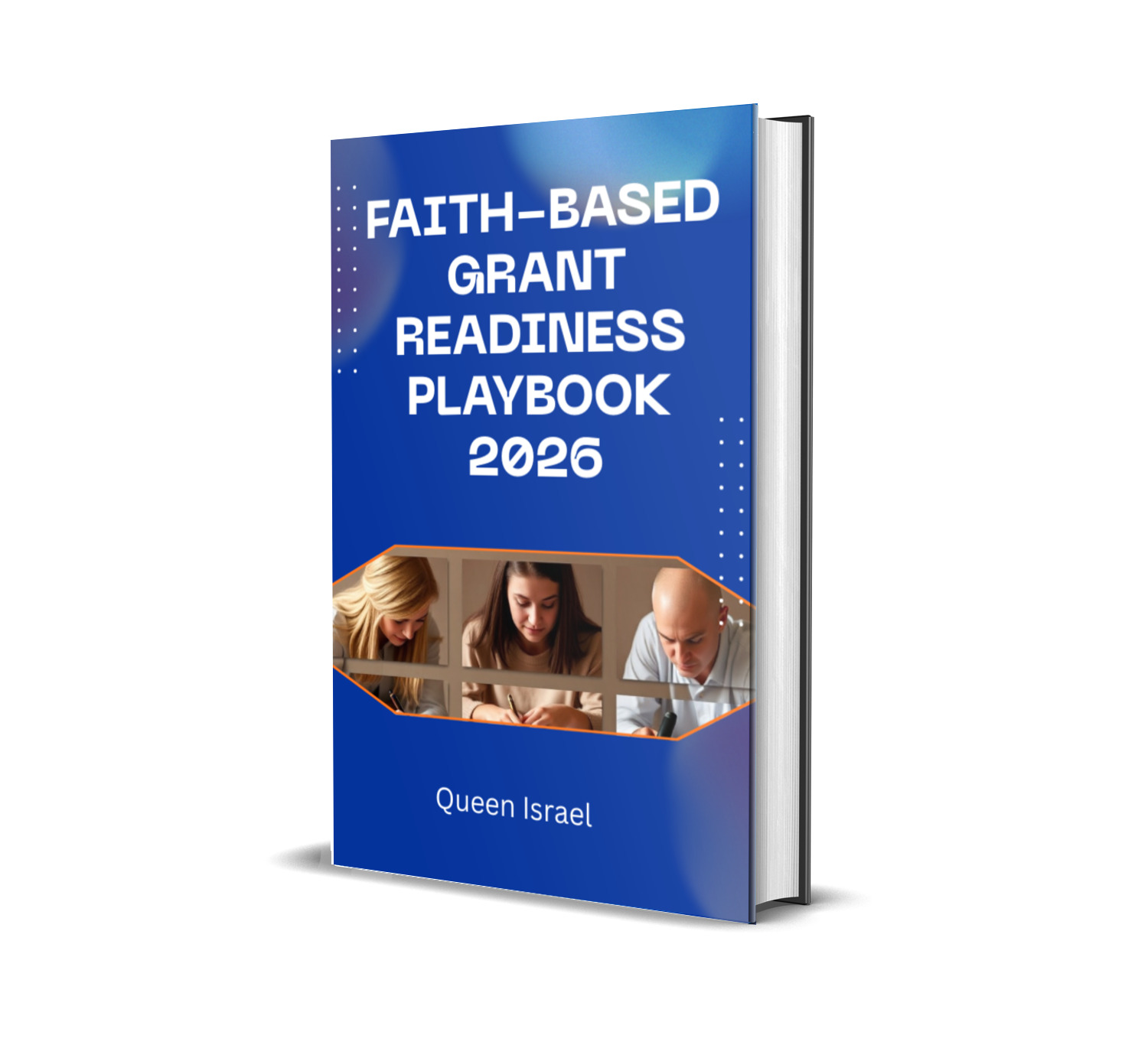
The Faith-Based Grants Readiness Playbook 2026 helps faith-based organizations examine governance, compensation systems, financial records, policies, budgets, documents, partnerships, and organizational readiness before pursuing grants or assistance programmes.
GET THE FAITH-BASED GRANTS READINESS PLAYBOOK
How to Prepare a Strong Housing Assistance or Mortgage Application
Pastors are sometimes disadvantaged not because their income is unacceptable, but because it is poorly documented.
A lender or assistance programme should not have to reconstruct the pastor’s compensation from bank deposits, verbal explanations, love offerings, reimbursements, irregular transfers, and informal church promises.
Step 1: Separate Salary, Housing Allowance, Reimbursements, and Gifts
Create a clear compensation record showing:
- Cash salary
- Housing allowance
- Parsonage value
- Accountable reimbursements
- Benefits
- Retirement contributions
- Health insurance
- Bonuses
- Love offerings
- Other income
Do not label every church payment as salary.
A lender will need to understand which income is:
- Regular
- Documented
- Expected to continue
- Taxable or tax-advantaged
- Reimbursement rather than income
- Personal gifts
- Self-employment income
- Employment income
Step 2: Document the Housing Allowance Correctly
Keep:
- Church resolutions
- Board or congregation minutes
- Compensation agreements
- Payroll records
- Pay statements
- W-2 forms
- Tax returns
- Bank statements
- Employment verification
- Appointment letters
- Denominational records
Fannie Mae’s 2026 guidance generally requires mortgage lenders using housing or parsonage allowance income to verify the income through employment documentation and establish at least a 12-month history.
Weak Income Explanation
The church pays the pastor about US$5,000 each month, but some of it is salary, some is housing, and some comes from offerings.
Why It Is Weak
The explanation does not establish:
- Regular income
- Payment history
- Housing-allowance designation
- Continuance
- Payroll treatment
- Which payments are gifts
- Which payments reimburse ministry expenses
Stronger Income Explanation
The pastor receives an annual cash salary of US$48,000 and a separately designated annual housing allowance of US$18,000 under a board-approved compensation resolution adopted before the beginning of the calendar year. Both amounts are paid through payroll twice monthly. The pastor has held the position for four years, and the church has approved the compensation package for the next year. Pay statements, W-2 forms, bank records, board minutes, and employment verification are available.
Step 3: Define the Exact Housing Need
Determine whether the household needs:
- Emergency rent assistance
- Utility assistance
- Foreclosure prevention
- A down payment
- Closing costs
- A lower-rate mortgage
- Credit improvement
- Home repairs
- Accessibility modifications
- Disaster assistance
- Temporary housing
- A permanent home
- Retirement housing
- A parsonage
Different needs require different programmes.
Weak Assistance Request
I am a pastor who has served people for many years, and I need someone to give me a house.
Stronger Assistance Request
The applicant is a full-time denominational pastor with a household income of US$46,500 who must relocate following the closure of a church-owned parsonage. The household is seeking US$6,000 in eligible down-payment and closing-cost assistance toward the purchase of an owner-occupied home priced within the local programme limit. The household has completed homebuyer education, saved US$4,200, received lender prequalification, and meets the programme’s preliminary income and residency requirements.
Step 4: Review Affordability Before Loan Approval
A lender may approve a mortgage that still places pressure on the household.
Calculate:
- Principal and interest
- Property taxes
- Homeowners’ insurance
- Mortgage insurance
- Utilities
- Repairs
- Maintenance
- Association fees
- Commuting
- Furnishings
- Emergency reserves
- Expected income changes
Do not build affordability around uncertain offerings or payments that have no reliable history.
Step 5: Check Credit Reports and Debt
Review:
- Payment history
- Credit-card balances
- Student loans
- Vehicle loans
- Collections
- Judgments
- Tax debt
- Co-signed obligations
- Identity errors
- Recent applications
- Monthly debt payments
A HUD-approved housing counsellor can help create a personalized action plan for budget, credit, homebuying, renting, foreclosure, or housing instability.
Step 6: Investigate Denominational Support
Ask the denomination:
- Is emergency assistance available?
- Is there a clergy-relief fund?
- Are there housing supplements?
- Is there a church extension fund?
- Does the pension board provide grants?
- Is financial counselling available?
- Can the region provide a loan guarantee?
- Are parsonage funds available?
- Are there programmes for retired pastors?
- Is assistance limited to enrolled benefits-plan members?
Step 7: Compare Mortgage Programmes
Compare:
- Interest rate
- Fixed versus adjustable rate
- Down payment
- Closing costs
- Mortgage insurance
- Loan term
- Income limit
- Geographic restrictions
- Property condition
- Repair financing
- Occupancy rules
- Subsidy repayment
- Servicing
- Prepayment rules
- Total projected cost
USDA Direct, USDA Guaranteed, FHA, VA, Habitat, and conventional financing solve different problems. The programme with the lowest initial cash requirement may not always produce the lowest long-term cost.
Step 8: Protect the Pastor From Predatory Lending
The Equal Credit Opportunity Act prohibits credit discrimination based on protected characteristics including religion. Lenders may still evaluate legitimate factors such as income, debts, credit history, and repayment ability.
Warning signs include:
- Being discouraged from applying because of ministry employment
- Being pushed toward a more expensive loan without explanation
- Being told that housing-allowance income can never be considered
- Being charged an unexplained fee
- Being pressured to sign immediately
- Being asked to misstate income
- Being promised approval before underwriting
- Being directed to send money to an individual
- Being denied written disclosures
A pastor who suspects unlawful discrimination may seek assistance from HUD, the Consumer Financial Protection Bureau, a housing counsellor, or an appropriately qualified lawyer.
Pastor Housing Document Checklist
Prepare the documents applicable to the programme:
- Government identification
- Social Security number or required identification
- Employment agreement
- Appointment letter
- Compensation resolution
- Housing-allowance designation
- Recent pay statements
- W-2 forms
- Tax returns
- Bank statements
- Retirement records
- Proof of additional income
- Credit authorization
- Debt statements
- Rental history
- Current lease
- Utility bills
- Denominational membership
- Benefits-plan membership
- Emergency documentation
- Medical or disaster documentation where relevant
- Purchase contract
- Property information
- Home inspection
- Repair estimates
- Homebuyer-education certificate
- Gift-fund documentation
- Down-payment assistance approval
- Board approval when the church is purchasing
- Property deed when the church owns a parsonage
- Insurance records
- Legal review where appropriate
Get Deeper Faith-Based Funding Guidance
Paid Faith-Based Grants Newsletter subscribers receive deeper funder research, grant-readiness guidance, faith-safe proposal strategies, budget breakdowns, templates, application clinics, and practical implementation lessons.
UPGRADE TO THE PAID FAITH-BASED GRANTS NEWSLETTER
A 90-Day Pastor Housing Assistance Plan
A pastor facing immediate homelessness should contact local emergency services, a denominational leader, a HUD-approved housing counsellor, or a housing provider without waiting for this 90-day process.
For a non-emergency homeownership or parsonage decision, use the following plan.
Days 1–15: Define the Housing Problem
Complete:
- Identify whether the need is emergency, rental, purchase, repair, or retirement related.
- Review the pastoral appointment.
- Confirm the expected length of employment.
- Document the compensation package.
- Confirm the current housing allowance.
- List household income and debts.
- Review current rent or housing costs.
- Estimate the affordable monthly payment.
- Contact the denomination.
- Decide whether the church or pastor may own the property.
Required output: A one-page housing-needs statement.
Days 16–30: Organize Financial Documentation
Collect:
- Pay statements
- W-2 forms
- Tax returns
- Housing-allowance resolutions
- Bank statements
- Appointment letters
- Employment verification
- Debt records
- Credit reports
- Rental history
- Savings
- Gift-fund documentation
- Denominational benefits information
Required output: A complete pastor housing file.
Days 31–45: Obtain Independent Guidance
Meet with:
- A HUD-approved housing counsellor
- A qualified tax adviser familiar with clergy taxation
- A lender familiar with parsonage allowances
- A denominational benefits representative
- A lawyer when the church may purchase or transfer property
Discuss:
- Mortgage readiness
- Credit
- Income documentation
- Housing allowance
- Property ownership
- Parsonage policies
- Tax implications
- Emergency assistance
- Long-term affordability
Required output: A written action plan listing the most suitable pathways.
Days 46–60: Compare Programmes
Research:
- Denominational assistance
- USDA Direct
- USDA Guaranteed
- FHA
- FHA 203(k)
- VA eligibility
- Habitat for Humanity
- State housing finance assistance
- Local down-payment programmes
- Federal Home Loan Bank partner programmes
- Local housing rehabilitation support
For each option, record:
- Programme name
- Official source
- Support type
- Grant or loan
- Eligibility
- Income limit
- Location restriction
- Down payment
- Closing costs
- Repayment
- Required counselling
- Application period
- Participating lender
- Next action
Required output: A housing-programme comparison sheet.
Days 61–75: Strengthen Readiness
Address:
- Credit errors
- High credit-card balances
- Missing payroll documentation
- Inconsistent compensation
- Undesignated housing allowance
- Insufficient reserves
- Unaffordable property target
- Incomplete denominational approvals
- Unclear parsonage ownership
- Weak emergency plan
Required output: A corrected budget and readiness checklist.
Days 76–90: Apply to the Best-Fit Pathway
Complete only the most suitable applications.
Possible next steps include:
- Mortgage preapproval
- Housing-counselling plan
- Denominational emergency application
- Down-payment assistance application
- Habitat enquiry
- USDA eligibility review
- Parsonage proposal to church leadership
- Rental-assistance application
- Home-repair assistance enquiry
Required output: A documented application, preapproval, or formal church housing decision.
Final Pastor Housing Readiness Checklist
Before proceeding, confirm that:
- The need has been defined correctly.
- A grant is not being confused with a loan.
- The applicant is eligible.
- Denominational programmes have been checked.
- Compensation is documented.
- Housing allowance was properly designated.
- Income history is available.
- Household debt is understood.
- Credit reports have been reviewed.
- The monthly cost is affordable.
- Maintenance costs are included.
- Property ownership is clear.
- Church governance approvals are complete.
- A parsonage occupancy agreement exists where needed.
- A tax professional has been consulted where appropriate.
- A housing counsellor has reviewed the plan.
- Loan terms have been compared.
- Assistance repayment requirements are understood.
- No advance-fee scam is involved.
- The household has an emergency reserve plan.
Need Help Identify a Realistic Faith-Based Funding Pathway?
Grant Writing Academy provides faith-based funding strategy support for organizations that need help reviewing grant readiness, denominational opportunities, funder research, programmes, budgets, applications, and sustainable support systems.
Mortgage underwriting, tax advice, property law, and individual financial planning should be handled by appropriately licensed or qualified professionals.
BOOK A FAITH-BASED FUNDING STRATEGY CONSULTATION
Grant Writing Academy and Faith-Based Grants do not award housing grants, approve mortgages, act as lenders, provide legal or tax advice, influence funder decisions, or guarantee assistance.
Frequently Asked Questions
1. Are there free housing grants specifically for pastors?
Some denominational programmes provide need-based grants to eligible ministers, retirees, surviving spouses, or enrolled benefits-plan members. However, there is no universal federal grant that gives every pastor a free home.
Most pastors will need to investigate a combination of:
- Denominational assistance
- Housing allowances
- Parsonages
- Affordable mortgages
- Down-payment programmes
- Emergency aid
- Housing counselling
- Mainstream homeownership programmes
Eligibility is usually based on income, location, denomination, household circumstances, service history, or a documented emergency.
2. Can a church buy a house for its pastor?
A church may be able to purchase a residence for pastoral use, subject to its governing documents, denominational rules, financing requirements, state law, tax considerations, conflict-of-interest controls, and formal approval procedures.
The church should clarify:
- Who owns the property
- Whether it is a parsonage
- Who pays expenses
- What happens when employment ends
- Whether the arrangement forms part of compensation
- Whether the pastor has any ownership interest
- How major repairs will be funded
A church should not purchase or transfer housing informally without legal, tax, governance, and financial review.
3. Can a pastor’s housing allowance count as mortgage income?
It may be considered, depending on the mortgage product and lender requirements.
Fannie Mae’s March 2026 guidance says lenders evaluating housing or parsonage allowances generally verify the income through employment or payroll documentation, require at least a 12-month history, and add the allowance to qualifying monthly income.
Pastors should prepare:
- Housing-allowance resolutions
- Pay statements
- W-2 forms
- Tax returns
- Employment verification
- Appointment letters
- Evidence that compensation is expected to continue
A lender must still evaluate the full application.
4. Can pastors apply for FHA, USDA, VA, or Habitat housing programmes?
Yes, pastors may apply when they meet the same programme requirements as other eligible applicants.
Ministry employment does not automatically qualify or disqualify the applicant.
Eligibility may depend on:
- Household income
- Credit
- Debt
- Rural location
- Military service
- Property type
- Occupancy
- Ability to repay
- Housing need
- Willingness to complete counselling or partnership requirements
Religion is protected under federal fair-lending laws, but lenders may still evaluate legitimate creditworthiness factors.
5. Is a pastor’s housing allowance taxable?
US federal tax treatment is specialized.
The IRS explains that a properly designated housing allowance may be excluded from gross income for federal income-tax purposes up to applicable limits. However, the allowance is generally relevant to self-employment tax, and excess or unused amounts may need to be included in income.
The exact result depends on facts such as:
- Formal designation
- Actual housing expenses
- Fair rental value
- Compensation
- Ministerial status
- Ownership or rental arrangement
- Self-employment tax
- State law
Pastors and churches should consult a qualified tax adviser familiar with clergy compensation.
Conclusion
The biggest mistake pastors make when searching for housing assistance is assuming that every affordable housing programme is a grant and every clergy benefit is available to all ministers.
The realistic pathway may be a denominational emergency grant, a church-owned parsonage, a properly structured housing allowance, an affordable mortgage, down-payment assistance, a rural housing programme, a Habitat partnership, or a housing-counselling plan.
Begin by defining the need. Separate personal housing from church property. Document compensation clearly. Ask the denomination about assistance. Review affordability before choosing a property. Compare programmes through their official sources, and involve qualified housing, tax, legal, and lending professionals where necessary.
The immediate next step is to create one complete pastor housing file containing the employment agreement, compensation records, housing-allowance resolutions, tax documents, debts, savings, credit information, and denominational benefits. That file will make every future conversation more accurate and productive.
Build Your Faith-Based Funding Strategy With Year-Round Support
The Faith-Based Grants Founding Membershipis designed for faith-based organization leaders, pastors, grant writers, programme directors, board members, consultants, and outreach teams that need continuing support with grant readiness, funder research, programme development, proposal writing, budgets, application review, and sustainable funding strategy.
Members receive practical resources, strategic guidance, coaching support, and accountability throughout the year.

98jili https://www.98jilig.com