
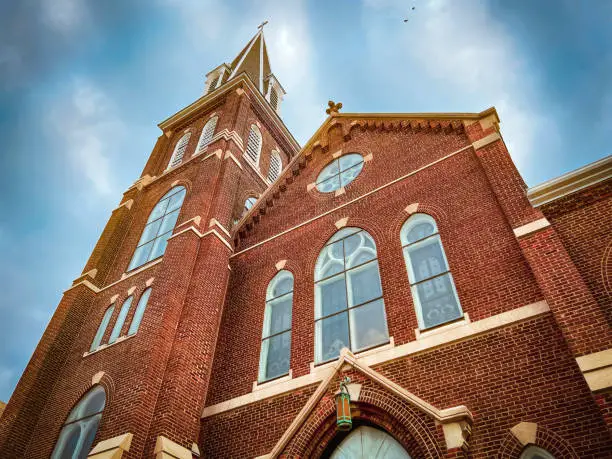
A church may discover a serious roof leak, unsafe electrical wiring, structural cracks, an inaccessible entrance, or a heating system that can no longer serve the people using its building. Leaders may then search for grants to help build churches and expect to find one national programme willing to pay the entire construction cost.
That is rarely how church capital funding works.
Most foundations do not provide unrestricted grants for constructing new worship buildings. Some preservation programmes support historic houses of worship, but they may exclude new construction, land purchases, parking lots, audio-visual equipment, routine maintenance, debt repayment, or improvements used exclusively for worship.
Government programmes may support eligible community facilities or historic sites, but public funding normally comes with strict eligibility, public-benefit, procurement, preservation, and compliance requirements.
Churches therefore need to search by the purpose and public value of the project, not simply by typing “free church construction grants” into Google.
A historically significant congregation repairing a damaged roof may have a different funding route from a new church seeking land and construction money. A rural faith-based organization converting underused rooms into a food pantry, counselling centre, childcare facility, or community classroom may need to investigate community-facility financing. A historically Black church may qualify for preservation programmes that would not apply to a recently constructed congregation.
This guide explains what church building grants can realistically support, which programmes and pathways should be investigated, how to determine whether a church is eligible, what application documents funders expect, and how to build a practical 90-day capital-funding plan.
Funding cycles, guidelines, award amounts, and application dates can change. Always verify current requirements through the funder’s official website before beginning an application.
What Church Building and Renovation Funding Really Covers
The phrase grants to help build churches brings together several different funding needs that should not be treated as one category.
A church may be seeking money for:
- Construction of an entirely new worship building
- Expansion of an existing facility
- Structural stabilization
- Roof repair or replacement
- Foundation work
- Electrical or plumbing repairs
- Fire and life-safety improvements
- Heating, ventilation, and air-conditioning systems
- Accessibility improvements
- Historic preservation
- Restoration following a disaster
- Community kitchens
- Food pantries
- Classrooms
- Childcare facilities
- Counselling rooms
- Shelter space
- Youth centres
- Health or recovery programmes
- Renovation of vacant or underused rooms
- Architectural or engineering services
- Building-condition assessments
Each need may lead to a different funding route.
What Church Capital Grants May Support
Depending on the programme, church capital funding may support:
- Urgent structural repairs
- Roofs and building-envelope work
- Masonry and exterior stabilization
- Historic windows and architectural features
- Fire-protection systems
- Accessibility improvements
- Architectural drawings
- Engineering assessments
- Preservation planning
- Rehabilitation of community-serving spaces
- Disaster recovery
- Capital-campaign planning
- Preservation of historically important buildings
- Equipment connected to an eligible community service
For example, the National Fund for Sacred Places supports significant capital projects at historic houses of worship in the United States and its territories. Eligible work can include urgent repairs to structural components, walls, roofs, and other parts of the building envelope.
Accessibility and community-outreach renovations may also qualify when the building’s urgent preservation needs have been identified and appropriately addressed.
What These Grants Often Do Not Support
Many capital-grant programmes exclude:
- Purchasing land
- Purchasing an existing church
- New construction
- Routine maintenance
- Work already completed
- Mortgage payments
- Refinancing debt
- Parking lots
- Fencing and landscaping
- New pews
- Musical instruments
- Audio-visual equipment
- Worship technology
- Decorative upgrades
- Staff salaries
- General overhead
- Projects without professional estimates
- Projects that benefit only members
- Projects without a realistic maintenance plan
The National Fund for Sacred Places, for example, does not fund new construction, property purchase, parking lots, landscaping, pipe organs, audio-visual equipment, staff salaries, debt repayment, or expenses incurred before programme approval.
That does not mean a church can never raise money for those expenses. It means the organization may need a different strategy, such as:
- A congregational capital campaign
- A denominational loan
- A community development financial institution
- A bank loan
- Major donors
- Corporate in-kind support
- A property-development partnership
- A phased construction plan
- An equipment-donation campaign
- Earned income from appropriate facility use
New Construction Versus Preservation
This distinction is essential.
A preservation grant is not automatically a church construction grant. Preservation programmes generally protect an existing building that has historic, architectural, or cultural significance. They may support stabilization, repair, restoration, rehabilitation, and adaptive use, but they often prohibit demolition or entirely new construction.
A congregation planning a new sanctuary on vacant land should not spend weeks applying to a programme that explicitly describes itself as a historic-preservation fund.
Religious Use Versus Community Use
Funders may also distinguish between:
- Space used primarily for worship
- Space used for public or charitable programmes
- Shared community space
- Historic architectural features
- Administrative offices
- Income-generating space
- Residential space
A request to renovate classrooms used for tutoring, food distribution, counselling, adult literacy, disability services, or youth development may have a stronger public-benefit case than a request limited to upgrading the appearance of a sanctuary.
This does not require a church to hide its religious identity. It requires the applicant to explain precisely:
- Who uses the space
- Whether nonmembers are served
- What programmes operate there
- How often the building is used
- What safety or accessibility problem exists
- What public value the completed project will create
- How religious and grant-funded activities will be separated when required
Who Is Most Likely to Qualify?
Church capital funding is most realistic for organizations that can demonstrate several of the following:
- The applicant owns or has long-term control of the property.
- The church or affiliated nonprofit has an appropriate legal status.
- The building is historically, culturally, or architecturally significant.
- The congregation serves people beyond its membership.
- The project addresses a documented health, safety, structural, accessibility, or preservation need.
- Professional assessments or estimates support the request.
- The church has stable leadership and financial controls.
- The board or governing body has approved the project.
- The congregation can contribute matching funds when required.
- The organization has a plan to maintain the facility.
- The project has a realistic scope, budget, and timeline.
- Partners and community members support the project.
Passion for the building is not enough. Funders need evidence that the project is necessary, feasible, properly governed, and financially sustainable.
Verified Church Repair, Preservation, and Facility-Funding Pathways
There is no single universal grant that pays to build any church anywhere. The strongest opportunities are usually tied to historic preservation, Black heritage, civil-rights history, rural community services, disaster recovery, accessibility, or a specific denominational programme.
The following programmes and pathways illustrate where eligible churches and faith-based organizations should begin their research.
1. National Fund for Sacred Places
Best for: Significant capital projects involving historic, community-serving houses of worship in the United States and its territories
Applicant type: Active religious congregations or closely affiliated nonprofit organizations
Support type: Matching capital grants, planning assistance, training, and technical support
Grant range: Generally £38,000–£380,000 equivalent in value, based on the programme’s published US-dollar range of $50,000–$500,000; applicants should use the original US-dollar figures in their applications
Current status: The 2026 application closed on March 3, 2026; final notifications are expected in October 2026
The National Fund for Sacred Places is one of the most significant nationwide church-preservation programmes in the United States. It supports purpose-built historic houses of worship owned by active faith communities.
Applicants must normally demonstrate:
- Historic, cultural, or architectural importance
- Community service beyond the congregation
- Urgent capital needs
- Organizational health
- Financial need
- Fundraising readiness
- Commitment to long-term property stewardship
The programme requires a 1:1 cash match. At least one-quarter of that match must be raised or pledged before grant funds can begin to be disbursed, and funds raised before formal acceptance into the programme generally cannot count toward the required match.
Formal listing on the National Register of Historic Places is not required, but the congregation should be able to explain the building’s significance. Projects must respect the building’s historic character and follow applicable preservation standards.
The programme is not suitable for:
- New construction
- Property acquisition
- Ordinary maintenance
- Sanctuary technology
- Debt repayment
- Projects that have already been completed
A church considering the next application cycle should begin now with a building-condition assessment, leadership consensus, community-use documentation, preliminary estimates, and a capital-campaign strategy.
2. National Fund Intervention Fund
Best for: Historic sacred places facing an unanticipated emergency
Applicant type: Stewards of eligible historic sacred places that meet the programme’s core criteria
Support type: Emergency planning or capital assistance
Maximum support: Up to $100,000, according to current programme information
Matching requirement: No cash match is required
The Intervention Fund may assist eligible historic sacred places following emergencies such as extreme weather, vandalism, property destruction, water intrusion, or an urgent safety threat.
This is not a general deferred-maintenance fund. A congregation that ignored a known roof problem for ten years should not automatically describe the situation as an unexpected emergency.
The organization should be prepared to document:
- What happened
- When it happened
- Why the situation was unanticipated
- The immediate threat
- Temporary stabilization already completed
- Professional findings
- Insurance coverage
- The amount needed
- What will happen without intervention
The National Fund states that its Intervention Fund can provide up to $100,000 for eligible short-term response, planning, or capital projects following an unanticipated emergency.
3. Preserving Black Churches
Best for: Historically Black churches and organizations stewarding historically Black church buildings
Applicant type: Historically Black churches with active or inactive congregations, eligible nonprofit stewards, and certain public agencies
Support type: Capital projects, project planning, organizational capacity, programming, interpretation, endowment, and financial sustainability
Grant range: Current programme information describes grants ranging from $50,000 to $500,000
2026 application period: Opens August 5, 2026, and closes September 11, 2026
Preserving Black Churches is an initiative of the African American Cultural Heritage Action Fund at the National Trust for Historic Preservation.
The programme supports historically Black sacred places as centres of faith, culture, history, community service, and civic life. Eligible applicants may include active congregations, nonprofit organizations stewarding historically Black church buildings, and public agencies. Formal historic designation is not always required, although applicants must demonstrate the site’s importance.
Preserving Black Churches has supported:
- Capital preservation
- Planning
- Interpretation
- Organizational capacity
- Financial sustainability
- Emergency response
- Stewardship planning
The 2026 programme lists an application opening date of August 5 and a deadline of September 11, 2026.
Unlike some preservation programmes, Preserving Black Churches may consider restoration of certain historic sanctuary features, including original pews, pulpits, altars, baptismal fonts, and baptismal pools, when they form part of the property’s historic significance.
The programme awarded substantial funding to historically Black churches in 2026, with announced awards supporting capital projects, planning, capacity, interpretation, and long-term sustainability.
4. National Trust Preservation Funds
Best for: Early-stage preservation planning, professional advice, and small catalytic preservation activities
Applicant type: Public agencies and eligible nonprofit organizations, subject to programme requirements
Support type: Small preservation grants
Typical range: $2,500–$5,000
National Trust Preservation Funds generally provide smaller awards than major capital programmes. They can be valuable for work that helps a church become ready for a larger application, such as:
- Consultant support
- Preservation planning
- Feasibility work
- Community engagement
- Early professional guidance
The programme describes grants generally ranging from $2,500 to $5,000 and uses multiple annual deadlines. Geographic availability and membership requirements must be reviewed carefully.
A £3,000-equivalent planning grant will not replace a £500,000 roof. However, it may help a congregation obtain the professional information needed to define the roof project correctly and approach larger funders.
5. African American Civil Rights Grants
Best for: Historic sites directly connected to African American civil-rights history
Applicant type: States, tribes, local governments, and nonprofit organizations
Support type: Preservation, planning, documentation, interpretation, and physical repair
Current status: Not accepting applications as of the most recent official update
The National Park Service’s African American Civil Rights grant programme supports sites and stories connected to the African American struggle for equal rights. Eligible work may include:
- Architectural services
- Historic-structure reports
- Preservation planning
- Physical building preservation
- Documentation
- Interpretation
- Education
Churches have played central roles in civil-rights history, but being a Black church does not automatically make a property eligible. The applicant must show a direct and significant connection to the programme’s historic purpose.
The programme is currently listed as not accepting applications. It does not require a non-federal match, although community commitment, partnerships, and other support may strengthen competitiveness.
For physical preservation projects, official application guidance has required properties to meet specific historic-designation conditions and comply with federal preservation requirements.
Applicants should read the current Notice of Funding Opportunity carefully when another cycle opens.
6. State Historic Preservation Offices and Certified Local Governments
Best for: Historic churches seeking local or state preservation pathways
Applicant type: Varies by state and programme
Support type: Planning, surveys, historic designation, preservation advice, pass-through grants, or local preservation support
Every US state has a State Historic Preservation Office. Some states and Certified Local Governments administer grants or can help churches identify:
- Historic-preservation funds
- Building-assessment resources
- Local landmark programmes
- Tax-credit considerations
- Preservation professionals
- National Register eligibility
- Emergency stabilization options
- Local cultural-heritage grants
Availability differs significantly by location. A church should not assume that every state programme allows direct applications from religious organizations.
The National Fund for Sacred Places itself recommends contacting State Historic Preservation Offices or Certified Local Governments when congregations need help identifying resources for comprehensive building assessments.
7. USDA Rural Community Facilities Programmes
Best for: Eligible community facilities providing essential public services in qualifying rural areas
Applicant type: Public bodies, nonprofit organizations, and federally recognized tribes
Support type: Direct loans, loan guarantees, grants, and technical assistance
USDA Community Facilities programmes support essential public-service facilities in eligible rural communities. Examples include healthcare facilities, childcare centres, schools, libraries, public-safety facilities, rehabilitation centres, and other civic services.
A church building is not automatically eligible because it is located in a rural community. A stronger possibility may arise when an incorporated nonprofit or eligible faith-based organization is developing a clearly defined essential community facility, such as:
- A childcare centre
- A food-distribution facility
- A recovery centre
- A community health programme
- A public-service building
- An adult-day programme
- A community education facility
Applicants must confirm whether the proposed owner, facility, activity, and religious use comply with the specific programme’s rules. Churches should speak with the relevant USDA Rural Development office before treating this as an appropriate funding route.
8. Denominational Grants and Loans
Best for: Congregations belonging to denominations with building, mission, accessibility, disaster, or loan programmes
Applicant type: Affiliated congregations
Support type: Grants, low-interest loans, recoverable grants, technical assistance, or capital-campaign support
Some denominations maintain:
- Church extension funds
- Building loans
- Accessibility grants
- Emergency repair programmes
- New-congregation support
- Disaster assistance
- Property-development guidance
- Capital-campaign services
These programmes may not appear in broad public grant databases.
Church leaders should contact:
- Regional denominational offices
- Bishops, dioceses, districts, conferences, or synods
- Church extension funds
- Denominational foundations
- Property departments
- Disaster-response offices
- Mission boards
Ask specific questions:
- Does the denomination offer grants, loans, or both?
- Can funding support repairs or only new congregations?
- Is a congregational contribution required?
- Must the property be owned by the denomination?
- Are financial audits required?
- Does the regional office need to endorse the application?
- Are accessibility or safety projects prioritized?
- Can assistance pay for professional assessments?
9. Local Community Foundations
Best for: Community-serving renovation components rather than worship-only improvements
Applicant type: Usually eligible charitable organizations serving the foundation’s geographic area
Support type: Programme grants, small capital grants, challenge grants, or community-improvement support
A community foundation may decline to pay for a sanctuary expansion but consider funding:
- An accessible entrance used by community programmes
- A food-pantry renovation
- A counselling suite
- A youth learning centre
- A community kitchen
- A warming centre
- A shelter programme
- A disability-accessible bathroom
- Safety upgrades connected to public programming
The request should clearly separate:
- The entire building project
- The eligible community-serving component
- The amount requested from the foundation
- The church’s contribution
- Other confirmed or pending funding
- Who will benefit
- How the space will be scheduled and managed
10. Corporate and In-Kind Support
Best for: Materials, volunteer labour, equipment, professional services, and local community projects
Support type: Donations, discounts, employee volunteering, sponsorships, or in-kind assistance
Churches often focus entirely on cash grants and overlook opportunities to reduce project costs.
Potential in-kind requests may include:
- Building materials
- Paint
- Flooring
- Roofing supplies
- Safety equipment
- Appliances
- Professional inspections
- Architectural support
- Skilled volunteer labour
- Furniture for community rooms
- Technology for charitable programmes
An in-kind request still needs a clear scope, budget, leadership approval, timeline, and explanation of community benefit.
Get Verified Faith-Based Funding Updates
Church construction, preservation, and repair programmes can close, change priorities, limit geographic coverage, or require matching funds. An old funding list may encourage your organization to pursue programmes that no longer accept applications.
Join the Faith-Based Grants Newsletter for verified funder research, church capital-funding guidance, Christian foundation updates, practical templates, grant-readiness resources, and new funding opportunities.
JOIN THE FREE FAITH-BASED GRANTS NEWSLETTER
How to Determine Whether a Church Capital Funder Fits Your Project
A programme’s name may sound perfect while its requirements make your church ineligible.
Before preparing an application, evaluate the opportunity across the following areas.
1. Applicant Eligibility
Confirm whether the funder accepts:
- Churches
- Incorporated religious nonprofits
- Closely affiliated preservation nonprofits
- Denominational bodies
- Public agencies
- Fiscal sponsors
- International organizations
- Organizations without 501(c)(3) recognition
Do not assume that “nonprofit organizations may apply” automatically includes churches. Read the full guidelines or ask the funder directly.
2. Property Ownership
Determine whether the applicant:
- Owns the property
- Holds a long-term lease
- Shares ownership with a denomination
- Uses a building owned by another entity
- Has authority to make structural changes
- Has unresolved title or property disputes
A funder will not want to invest in a property when the applicant lacks legal control or permission to complete the project.
3. Project-Type Fit
Ask whether the programme funds:
- New construction
- Expansion
- Renovation
- Preservation
- Roof repair
- Structural stabilization
- Accessibility
- Community facilities
- Planning
- Emergency response
- Professional services
Do not force a new-construction request into a historic-preservation programme.
4. Historic Significance
For preservation funding, determine:
- When the building was constructed
- Who designed or built it
- Which communities used it
- Which historic events occurred there
- Whether important leaders are associated with it
- Whether original features remain
- Whether the site is listed or eligible for a historic register
- How the property contributes to local or national history
A building is not historically significant merely because it is old.
5. Community Benefit
Document how the property serves people outside the congregation.
Examples may include:
- Food distribution
- Childcare
- Mental health support
- Recovery groups
- Adult literacy
- Youth development
- Shelter
- Warming or cooling centres
- Community meetings
- Health screening
- Disability support
- Immigrant services
- Arts and cultural programmes
- Disaster response
Funders may want participation data, schedules, partner letters, waiting lists, and evidence that nonmembers genuinely use the space.
6. Project Readiness
Determine whether the church has:
- A building-condition assessment
- Architectural or engineering advice
- Contractor estimates
- A defined scope of work
- Phased priorities
- Permits or a permitting plan
- Leadership approval
- A project committee
- A realistic budget
- A fundraising plan
- A maintenance plan
- Adequate insurance
A funder should not have to guess what the church intends to repair.
7. Matching Funds
Review:
- The match percentage
- Whether the match must be cash
- When fundraising may begin
- Whether pledges count
- Whether in-kind contributions count
- Whether another grant can serve as match
- Whether previously raised money counts
- When the match must be available
Do not claim that the match has been secured when the money consists only of informal promises.
8. Financial Capacity
Funders may examine:
- Annual revenue
- Operating reserves
- Debt
- Previous deficits
- Giving trends
- Financial statements
- Internal controls
- Project-management experience
- Ability to maintain the repaired building
A capital grant can become a burden when the church cannot cover insurance, utilities, maintenance, staffing, or future repairs.
9. Timing
Check whether:
- Work has already started
- Expenses incurred before approval are eligible
- Construction can begin within the required period
- Permits will be ready
- Contractors are available
- The project can be completed by the grant deadline
- Seasonal conditions affect construction
Beginning work too early can make otherwise eligible expenses ineligible.
10. Long-Term Stewardship
Explain:
- Who will monitor the property
- How maintenance will be funded
- Whether annual inspections will occur
- Which reserves will be established
- How the space will remain active
- How community partnerships will continue
- How future repairs will be prevented from becoming emergencies
Church Capital Grant Fit Scorecard
Score each area from 1 to 5:
- 1: Serious weakness or no evidence
- 2: Major gaps remain
- 3: Partially prepared
- 4: Strong evidence
- 5: Fully prepared and documented
| Readiness area | Score |
|---|---|
| Applicant eligibility | /5 |
| Property ownership or control | /5 |
| Project-type alignment | /5 |
| Historic significance, where required | /5 |
| Community benefit | /5 |
| Building assessment | /5 |
| Professional cost estimates | /5 |
| Leadership approval | /5 |
| Financial stability | /5 |
| Matching-fund capacity | /5 |
| Project timeline | /5 |
| Maintenance plan | /5 |
| Partnerships | /5 |
| Application capacity | /5 |
| Funder relationship | /5 |
| Total | /75 |
Interpreting the Score
- 61–75: The project may be ready for carefully matched opportunities.
- 46–60: A potentially viable project with gaps that should be corrected.
- 31–45: Significant planning is needed before applying.
- 15–30: The church should focus on readiness, assessments, governance, and project definition before pursuing major grants.
This scorecard helps organize decisions. It does not predict whether a grant will be awarded.
Illustrative Example
New Hope Community Church is a fictional 82-year-old congregation that operates a weekly food pantry, an after-school tutoring programme, and two recovery-support groups.
Its roof is failing, and a professional assessment estimates repairs at $240,000. The church has £30,000-equivalent cash available, a denominational pledge, three community partners, stable financial records, and a board-approved maintenance plan.
A historic sacred-places programme may be a reasonable prospect because the project involves an older purpose-built house of worship, urgent building-envelope work, community use, and documented planning.
However, the church should not assume eligibility. It must still verify the programme’s geographic, historical, organizational-health, matching, and application requirements.
Prepare a Stronger Church Capital Funding Request
The Capital Grant Planning Toolkit helps churches and faith-based organizations organize building assessments, cost estimates, project priorities, community-use evidence, matching funds, timelines, maintenance plans, supporting documents, and capital narratives before approaching funders.
GET THE CAPITAL GRANT PLANNING TOOLKIT- Email: grantwritingacademyconsult@gmail.com for payment link.
How to Prepare a Strong Church Building or Renovation Grant Application
A strong application does not begin with writing. It begins with evidence.
Step 1: Define the Exact Project
Avoid vague descriptions such as:
We need help renovating our church.
Specify:
- The building
- The affected area
- The problem
- The cause
- The safety or service impact
- The proposed work
- The cost
- The timeline
- The amount requested
- Other funding sources
Weak Request
Our church roof is very old, and we urgently need grant money to repair it.
Why It Is Weak
The statement does not identify:
- The roof’s condition
- The date of inspection
- The repair scope
- The estimated cost
- The danger
- Community use
- Matching funds
- The amount requested
Stronger Request
Grace Community Church requests $85,000 toward a $212,000 roof-stabilization and replacement project at its 1928 community facility. A licensed building professional documented active water intrusion, deterioration of structural decking, and damage affecting rooms used each week by a food pantry, youth tutoring programme, recovery groups, and community health partners. The congregation has committed $42,000, secured preliminary contractor estimates, and launched a phased capital campaign for the remaining cost. Work is expected to begin after funding approval and required permits.
The stronger version does not guarantee outcomes. It gives the funder enough information to understand the need, scope, users, cost, readiness, and financial plan.
Step 2: Obtain a Building-Condition Assessment
A professional assessment can identify:
- Immediate safety concerns
- Structural problems
- Water intrusion
- Roof condition
- Masonry failure
- Electrical hazards
- Accessibility barriers
- Mechanical-system problems
- Priority phases
- Recommended professional services
- Estimated costs
A church may believe the roof is its only problem while an architect or engineer discovers structural, drainage, or masonry issues that must be addressed first.
Step 3: Obtain Realistic Estimates
Use:
- Licensed contractors
- Architects
- Engineers
- Quantity surveyors
- Preservation specialists
- Accessibility consultants
- Environmental professionals
Where possible, obtain multiple estimates based on a consistent scope.
Do not build a £400,000-equivalent project budget from informal guesses.
Step 4: Separate Eligible and Ineligible Expenses
Create a budget showing:
- Total project cost
- Eligible grant-funded expenses
- Church contribution
- Matching funds
- In-kind contributions
- Other grants
- Pending requests
- Contingency
- Professional fees
- Permit costs
- Insurance
- Construction management
- Long-term maintenance
A funder may support roof stabilization but not new sound equipment. Those costs should not be combined without explanation.
Step 5: Document Community Use
Record:
- Programme names
- Days and hours of operation
- Annual participants
- Percentage of users who are nonmembers
- Partner organizations
- Subsidized or free space
- Community emergencies supported
- Waiting lists
- Accessibility barriers
- Participant outcomes
Avoid writing:
Everyone in the community uses our church.
Use measurable information.
Weak Community-Benefit Statement
Our church is the centre of the community and helps many people.
Stronger Community-Benefit Statement
During the previous 12 months, the building hosted 47 food-distribution days serving 620 households, 96 youth tutoring sessions, weekly recovery meetings attended by an average of 28 participants, and monthly health-screening clinics operated with two local nonprofit partners. Approximately 72 percent of programme participants are not members of the congregation.
Step 6: Explain the Consequences of Inaction
Explain what will happen without the project:
- Programme rooms may close.
- Insurance coverage may be affected.
- Water damage may spread.
- Structural costs may increase.
- The building may become inaccessible.
- Community services may be displaced.
- A historic feature may be permanently lost.
- Public safety may be compromised.
Do not exaggerate. Support the statement with professional findings.
Step 7: Demonstrate Governance
Include evidence that:
- The governing body approved the project.
- Property ownership has been confirmed.
- Conflicts of interest will be managed.
- Procurement will be competitive.
- Financial oversight is assigned.
- The project committee has clear roles.
- Required denominational approvals have been secured.
- The church has authority to sign a grant agreement.
Step 8: Present a Fundraising Plan
A strong plan may combine:
- Congregational gifts
- Major donors
- Denominational support
- Foundation grants
- Historic-preservation grants
- Local businesses
- Corporate donations
- Community fundraising
- Challenge gifts
- Loans
- In-kind support
Weak Sustainability Statement
We trust that God will provide the remaining money.
A faith-based organization may sincerely believe this. However, it does not function as a capital-financing plan.
Stronger Sustainability Statement
The church will finance the project through a three-year capital campaign, a board-designated building reserve, confirmed congregational pledges, applications to two preservation programmes, a denominational loan request, and local corporate outreach for donated materials. After completion, the church will allocate five percent of unrestricted annual contributions to a restricted building-maintenance reserve and commission an annual facility inspection.
Step 9: Prepare Supporting Documents
A church capital-grant application may require:
- Incorporation documents
- Tax-exempt confirmation
- Governing documents
- Board list
- Property deed
- Lease or ownership agreement
- Denominational approval
- Building-condition assessment
- Architectural plans
- Engineering reports
- Contractor estimates
- Project budget
- Organizational budget
- Financial statements
- Insurance documentation
- Photographs
- Historic documentation
- Community-use schedules
- Programme data
- Letters of support
- Capital-campaign plan
- Matching-fund evidence
- Maintenance plan
- Project timeline
- Permits or permitting plan
- Safeguarding policies
- Procurement policy
- Conflict-of-interest policy
Step 10: Customize the Application
Do not send the same request to:
- A historic-preservation programme
- A community foundation
- A denominational fund
- A corporate donor
- A rural community-facilities programme
Each funder needs a different emphasis.
A preservation funder may prioritize historical significance and preservation standards. A community foundation may prioritize community programmes. A denomination may prioritize congregational growth and stewardship. A government programme may focus on eligible public services and compliance.
Get Deeper Faith-Based Grant Guidance
Paid subscribers to the Faith-Based Grants Newsletter receive deeper funder research, proposal clinics, faith-safe language guidance, budget breakdowns, application templates, grant-readiness tools, and practical implementation lessons beyond the public articles.
UPGRADE TO THE PAID FAITH-BASED GRANTS NEWSLETTER
A 90-Day Church Capital Funding Plan
Major building projects should not begin with a rushed grant application. Use the following 90-day process to prepare a credible funding request.
Days 1–15: Define the Building Need
Complete the following:
- Create a building committee.
- Confirm property ownership.
- Obtain governing-body approval.
- Identify the exact facility problem.
- Collect photographs.
- Review insurance coverage.
- Identify emergency safety issues.
- List all programmes affected.
- Confirm whether work has already begun.
- Contact the denomination about approvals and assistance.
Required output: A one-page project definition.
Days 16–30: Obtain Professional Evidence
Complete:
- A building-condition assessment
- Architectural or engineering consultation
- Preliminary scope of work
- Contractor estimates
- Historic-status research
- Accessibility review
- Environmental or hazardous-material review where needed
- Permit requirements
- Project phasing
Required output: A documented project scope and preliminary budget.
Days 31–45: Document Public Benefit
Collect:
- Participant data
- Programme schedules
- Nonmember usage
- Partner agreements
- Community testimonials
- Letters of support
- Waiting lists
- Referral data
- Facility-use agreements
- Evidence of subsidized or donated space
Required output: A two-page community-benefit statement supported by data.
Days 46–60: Build the Financial Plan
Prepare:
- Total project budget
- Eligible-cost budget
- Match plan
- Capital-campaign goal
- Cash-flow schedule
- Confirmed commitments
- Pending requests
- Loan options
- In-kind donation strategy
- Contingency
- Maintenance reserve plan
Required output: A board-approved capital budget and fundraising plan.
Days 61–75: Research and Score Funders
For every prospect, record:
- Programme name
- Official source
- Applicant eligibility
- Geographic eligibility
- Property requirements
- Project eligibility
- Award range
- Match requirement
- Deadline
- Current status
- Relationship requirements
- Required documents
- Fit score
- Next action
Required output: A prioritized funder pipeline rather than an unqualified list.
Days 76–90: Prepare the First Request
Complete:
- Organizational overview
- Project summary
- Need statement
- Community-benefit statement
- Historic-significance statement where relevant
- Scope of work
- Timeline
- Budget
- Funding plan
- Sustainability plan
- Supporting documents
- Internal review
- Funder questions
- Submission calendar
Required output: One customized application or letter of inquiry for the highest-fit funder.
Final Capital-Grant Readiness Checklist
Before submitting, confirm that:
- The applicant is eligible.
- The church controls the property.
- The project type is eligible.
- The work has not begun prematurely.
- The need is professionally documented.
- The scope is clear.
- Estimates are current.
- The budget is complete.
- Ineligible costs are separated.
- Governing approval is documented.
- Denominational approval is secured where required.
- Community use is measurable.
- Historic significance is documented where required.
- Matching funds are realistic.
- The fundraising plan is credible.
- Procurement requirements are understood.
- Insurance is adequate.
- The timeline is feasible.
- Maintenance is funded.
- Required attachments are ready.
- Official guidelines have been reviewed.
- Current application status has been verified.
Need Help Preparing a Church Capital Funding Strategy?
Grant Writing Academy provides capital-grant strategy support for churches and faith-based organizations that need help reviewing project readiness, eligible funding pathways, building documentation, community-use evidence, budgets, matching funds, application strategy, and funder alignment.
BOOK A CAPITAL GRANT STRATEGY CONSULTATION
Grant Writing Academy and Faith-Based Grants provide education, research, templates, assessments, coaching, proposal review, and consulting support. We do not award grants, control funder decisions, or guarantee funding.
Frequently Asked Questions
1. Are there grants to build a completely new church?
Direct grants for constructing a new worship building are limited. Many major programmes focus on historic preservation, emergency repairs, accessibility, disaster recovery, or community-serving facilities rather than new sanctuary construction.
A church seeking a new building may need to combine:
- Congregational giving
- Major donors
- Denominational loans
- Church-extension financing
- Land partnerships
- Community development financing
- Corporate in-kind support
- A phased capital campaign
Do not describe a loan or mortgage as a grant.
2. Can a church receive government funding for building repairs?
In some circumstances, a church or affiliated nonprofit may qualify for public funding connected to historic preservation, disaster recovery, or eligible community services. However, the property, applicant, expenses, and use of funds must meet the specific programme’s requirements.
Government funds generally cannot be treated as unrestricted money for worship, evangelism, or religious instruction. Applicants may also face procurement, reporting, environmental, preservation, accessibility, audit, and recordkeeping requirements.
3. Do churches need 501(c)(3) recognition to apply for capital grants?
Requirements vary.
Some funders accept churches based on their recognized tax status, while others require a formal IRS determination letter or a separate incorporated nonprofit. International programmes may require national registration, audited financial statements, or a qualified fiscal sponsor.
Always follow the funder’s stated applicant requirements rather than assuming that church status is sufficient.
4. Can church renovation grants pay for a roof?
Yes, some programmes support roof repair or replacement when it forms part of an eligible preservation, structural, emergency, or community-facility project.
The application may require:
- A professional condition assessment
- Photographs
- Contractor estimates
- Architectural or engineering guidance
- Evidence of historic significance
- A matching-fund plan
- Proof that work has not already begun
- A maintenance plan
A roof project should be described as a defined capital need, not merely as “our roof is old.”
5. Can a small church win a building grant?
A small church may be competitive when it demonstrates strong alignment, community value, financial accountability, leadership commitment, project readiness, and an achievable funding plan.
A small congregation may be weakened by:
- Unclear ownership
- No professional assessment
- No matching funds
- Weak financial records
- A project larger than its capacity
- No maintenance plan
- Limited community use
- Applying to programmes that exclude churches
Project readiness and fit matter more than simply presenting the church as small or financially struggling.
Conclusion
The greatest misconception about grants to help build churches is that churches only need to find a foundation that cares about religion.
Capital funders usually evaluate something more specific: historic significance, structural urgency, community value, accessibility, disaster impact, public service, financial readiness, or long-term stewardship.
Before applying, define the project precisely. Confirm whether the funder supports new construction, preservation, repair, planning, or community facilities. Obtain professional evidence. Separate eligible expenses from worship-only improvements. Document how the building serves the wider community. Create a realistic capital plan that does not depend on one grant.
The immediate next step is not to submit ten applications. It is to complete a building assessment, create a reliable project budget, and score each prospective funder against your actual eligibility.
Build Your Faith-Based Funding Strategy With Year-Round Support
The Faith-Based Grants Founding Membership is designed for faith-based organization leaders, pastors, grant writers, programme directors, board members, consultants, and outreach teams that need continuing support with grant readiness, funder research, programme development, proposal writing, budgets, application review, and sustainable funding strategy.
Members receive practical resources, continuing strategic guidance, coaching support, and accountability throughout the year.
EXPLORE THE FAITH-BASED GRANTS FOUNDING MEMBERSHIP



Świetny artykuł, masa cennej wiedzy. Dziękuję za lekturę.