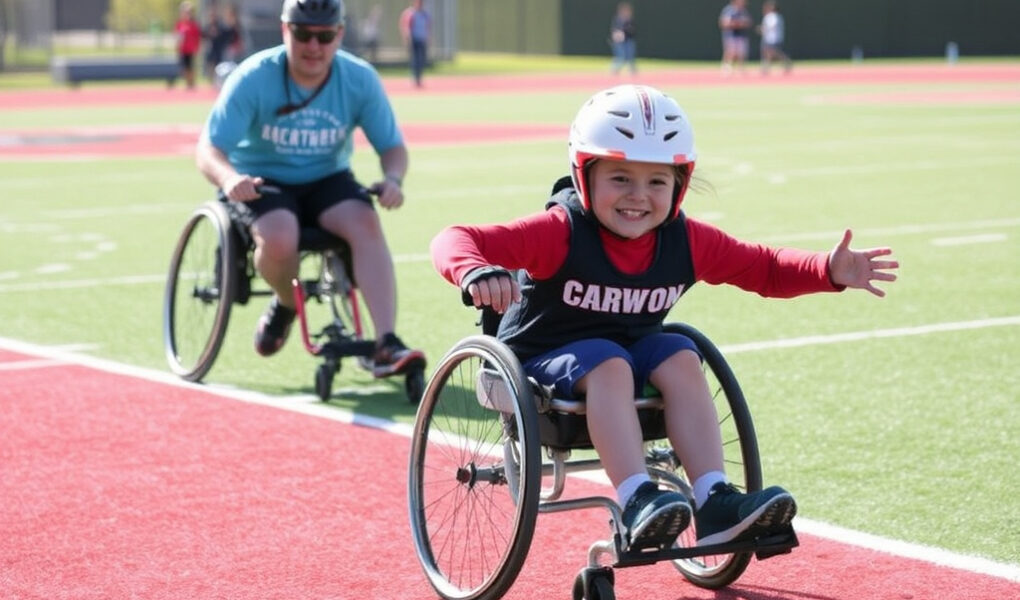
A community recreation director prepares what appears to be a strong equipment request: two sports wheelchairs, an adaptive handcycle, safety equipment, instructor training, and transportation for participants with disabilities. The program is valuable, the need is documented, and local families are waiting. Yet the application is rejected before reviewers fully consider the project because the funder supports individual athletes rather than nonprofit-owned equipment.
This is one of the most common mistakes organizations make when researching grants for adaptive sports equipment. A program may describe itself as an adaptive sports grant, but that does not mean a nonprofit, school, parks department, or faith-based organization can apply.
Some opportunities purchase equipment for individual athletes. Others are restricted to members of a national adaptive sports network, organizations serving veterans, programs focused on spinal cord injury, or youth programs in economically underserved communities.
This guide focuses specifically on funding that may help organizations purchase adaptive equipment, expand inclusive recreation, train instructors, improve accessibility, or connect eligible participants with individual equipment assistance. It is not a general list of every sports grant.
Funding amounts, deadlines, eligibility rules, application portals, and program availability can change. Confirm all current requirements through the official source before preparing an application.
What Funders Support in Adaptive Sports and Inclusive Recreation
Adaptive sports funding is usually connected to a specific population, equipment category, disability type, geographic area, or delivery model. A funder may support wheelchair basketball but not general-purpose wheelchairs. Another may fund adaptive kayaking equipment for a community program but exclude construction of a new recreation center.
A veteran-focused program may permit sports equipment, coaching, program evaluation, supplies, and participant outreach but require applicants to demonstrate substantial experience serving veterans with disabilities.
Commonly supported activities include:
- Sports wheelchairs, racing chairs and throwing chairs
- Handcycles, adapted bicycles and recumbent cycles
- Hockey sleds and power-soccer chairs
- Sit-skis and adaptive snow-sports equipment
- Adapted kayaks, paddleboards and rowing equipment
- Sports prostheses through approved suppliers
- Accessible fitness equipment
- Coaching, instructor certification and volunteer training
- Participant outreach and introductory clinics
- Equipment storage, maintenance or transportation
- Program evaluation, participant surveys and safety systems
- Accessibility modifications connected to recreation
- Inclusive camps, leagues and community recreation sessions
Funders may prioritize children and young adults with disabilities, veterans, people with spinal cord injuries, low-income participants, rural communities, or organizations that involve people with disabilities in program design.
Common exclusions include general mobility devices, equipment unrelated to the proposed sport, major construction, organizational debt, unrestricted equipment resale, medical treatment, unqualified instruction, retroactive purchases, overhead above the permitted rate, or equipment that will become the private property of staff members.
Organizations must also distinguish between program-owned equipment and participant-owned equipment. The Challenged Athletes Foundation’s main adaptive equipment program, for example, supports eligible individual athletes rather than teams or organizations. The Kelly Brush Foundation Active Fund also awards equipment assistance directly to eligible individuals with acquired spinal cord injuries. These can be valuable referral resources, but a nonprofit should not submit its organizational equipment budget to them.
That distinction makes this niche narrower than the broader sports-funding field. An organization needs more than a sports mission. It needs the correct applicant type, disability focus, equipment ownership plan, safety procedures, target population and application route.
Verified Funders and Grant Programs
1. U.S. Department of Veterans Affairs Adaptive Sports Grant Program
What it supports: The VA program funds organizations that plan, develop, manage and implement adaptive sports opportunities for veterans and members of the Armed Forces with disabilities. Allowable activities can include instruction, participation, competitions, training, technical assistance, program development, athlete assessment, equipment, supplies and evaluation.
Who may qualify: Eligible applicants must be non-federal entities with significant adaptive sports experience. The FY2026 notice required applicants to demonstrate two continuous years of relevant experience and meet the federal definition of a large-scale adaptive sports program.
Geographic eligibility: United States.
Funding amount: Up to $16 million was announced for FY2026, with a maximum request of $750,000 per organization.
Current status: Closed as of May 13, 2026. Monitor the official page and Grants.gov for the next announced cycle.
Application route: Applications were submitted through Grants.gov. Applicants needed an Employer Identification Number, Unique Entity Identifier, active SAM.gov registration and the required VA forms.
Important restrictions: This is not an entry-level grant for a newly created recreation activity. Applicants must show substantial experience, eligible participant reach, organizational capacity and federal grant readiness.
What applicants should prepare: Registration records, adaptive sports experience, participant projections, detailed activities, staff qualifications, equipment costs, evaluation measures, federal forms and evidence that the program can safely serve veterans with disabilities.
Official source: VA Adaptive Sports Grant Program and FY2026 funding notice.
2. The Hartford Adaptive Sports Equipment Grant Through Move United
What it supports: This program helps Move United member organizations build adaptive equipment inventories and expand sports participation. Examples include court chairs, racing chairs, hockey sleds, sit-skis, power-soccer chairs, handcycles, adapted cycles, kayaks and paddleboards.
Who may qualify: Move United chapters, Adaptive Clubs, Inclusive Clubs and qualifying affiliates providing direct programming. Organizations that received this grant during the previous five years were not eligible for the 2027 round, although earlier recipients could request equipment not previously funded.
Geographic eligibility: Move United’s United States member network.
Funding amount: $20,000, $30,000 or $50,000, depending on projected participation and community reach.
Current status: Closed as of June 15, 2026. Monitor the official page for a future cycle.
Application route: Eligible Move United member organizations applied through the program form.
Important restrictions: At least 50 percent of the program budget had to support new large-scale adaptive equipment, with an additional 20 percent allocated to other sports equipment and supplies. Overhead was not permitted. Grantees also had to meet participation targets, host an activation event, collect participant information and complete reporting.
What applicants should prepare: Equipment quotes, quantities, supplier links, program schedules, youth recruitment targets, outreach plans, media plans, event dates, participant metrics and a detailed program budget.
Official source: Move United’s 2027 Hartford Adaptive Sports Equipment Grant page.
3. Move United Member Organization Grant Program
What it supports: Move United announces grant opportunities for member programs involving adaptive equipment, youth, veterans, training and education. Most awards supplement an existing program or event rather than paying its entire cost.
Who may qualify: Current Move United member organizations. Individual athletes and organizations outside the member network are not eligible for this program.
Geographic eligibility: Move United’s national member network in the United States.
Funding amount: Award amounts vary by opportunity. Move United reports distributing an average of approximately $2.5 million annually across its member network.
Current status: Existing-member opportunity with grant announcements released on a rolling basis.
Application route: Organizations must first become eligible members and then respond to individual funding announcements.
Important restrictions: Each announcement has its own population, program and reporting requirements. Some opportunities require corporate-partner engagement, activation events or dedicated staff time.
What applicants should prepare: Membership documentation, existing program results, sustainability evidence, sport-protection policies, participant data, equipment needs, partner commitments and a budget showing how the grant will supplement other resources.
Official source: Move United Member Organization Grant Program.
For a broader list of federal, foundation, corporate and public funding sources, read our complete guide to verified sports grants for nonprofits: Sports Grants for Nonprofits—Verified Funding for Youth Programs, Teams, Facilities, and Equipment.
4. Craig H. Neilsen Foundation Creating Opportunity & Independence Grants
What it supports: Community Support Grants may fund recreational and competitive sports, health and wellness, community activities, accessibility projects and adaptive equipment benefiting people with spinal cord injury.
Who may qualify: Eligible nonprofit organizations located in the United States or Canada. Individuals and private foundations are not eligible.
Geographic eligibility: United States and Canada.
Funding amount: Total requests between $25,000 and $200,000 are considered. Funding may cover one or two years, with no more than $125,000 requested in one year. Equipment expenditures cannot exceed $100,000 over the grant’s life.
Current status: Closed for the 2026 cycle. Letters of inquiry were due January 26, 2026, and invited full applications were due April 20, 2026. Awards are scheduled to be announced by September 30, 2026. Monitor for the next annual cycle.
Application route: The process begins with a letter of inquiry through ProposalCentral. Only invited applicants may submit a full application.
Important restrictions: Large capital construction, lobbying, academic scholarships, ongoing rehabilitation as secondary insurance and research involving treatments or medical devices are not supported.
What applicants should prepare: Evidence of commitment to people with spinal cord injury, input from people with lived experience, measurable outcomes, personnel qualifications, safety measures, partnerships, equipment justification and a one- or two-year budget.
Official source: Creating Opportunity & Independence program and 2026 application guide.
5. Christopher & Dana Reeve Foundation Quality of Life Grants
What it supports: Previous Direct Effect Quality of Life grants supported sports wheelchairs, adaptive playground equipment, kayaks, accessible gym equipment, pool lifts, therapeutic riding, transportation and other projects benefiting people living with paralysis.
Who may qualify: Historically eligible applicants included independent 501(c)(3) nonprofits, municipal and state governments, school districts, recognized tribal entities and qualifying hospitals. Fiscal sponsors were not accepted on behalf of organizations without their own eligible status.
Geographic eligibility: All 50 U.S. states and U.S. territories.
Funding amount: Direct Effect grants ranged from $5,000 to $24,999. Other historical tiers offered larger awards for specific priorities.
Current status: Opportunity to monitor for a future cycle. On June 25, 2026, the Foundation described its latest awards as the final Quality of Life grant awards under its then-current federal cooperative-agreement cycle. As of August 1, 2026, organizations should not assume the previous twice-yearly schedule remains available without a new official announcement.
Application route: Future applicants should monitor the Foundation’s nonprofit-grants and funding-update pages.
Important restrictions: Projects must directly benefit people living with paralysis. Previous guidelines contained category-specific restrictions, reporting requirements and limits on repeat awards.
What applicants should prepare: A defined paralysis population, equipment or project budget, implementation period, evaluation indicators, accessibility plan and evidence that the requested item will create practical community benefit.
Official source: Reeve Foundation Quality of Life program and June 2026 funding announcement.
6. Good Sports Equipment Donations
What it supports: Good Sports distributes new sports and fitness equipment, apparel and footwear to established youth-serving organizations. Approved Core Program organizations can request available inventory for two years.
Who may qualify: Established organizations providing consistent physical-activity access for young people. Good Sports does not provide equipment to individual children or families.
Geographic eligibility: United States, including programs previously supported across all 50 states and Puerto Rico.
Funding amount: This is an equipment or product donation, not a cash grant. The value depends on available inventory and approved requests.
Current status: Rolling equipment-support application. The public community-organization application is active and does not list a single national deadline.
Application route: Organizations submit the community-organization application. Approved organizations receive access to the Donation Request Center.
Important restrictions: Equipment availability is unpredictable. Approved organizations generally pay a shipping-and-handling fee equal to five percent of the donation value. Specialized adaptive equipment is not guaranteed, and large items such as playground structures, turf, bleachers and cardio machines are generally unavailable.
What applicants should prepare: Site-specific program information, youth-participation numbers, sports offered, equipment needs and evidence that equipment will remain with the program.
Official source: Good Sports application, program information and equipment FAQs.
GET VERIFIED FUNDING UPDATES AND PRACTICAL GRANT GUIDANCE
Grant opportunities, deadlines, eligibility rules, and application routes can change. Join the Grant Writing Academy newsletter for verified funding directories, grant research guidance, application strategies, templates, and new resources.
JOIN THE GRANT WRITING ACADEMY NEWSLETTER
How to Determine Whether Your Organization Is a Strong Fit
A strong mission does not automatically create funder alignment. An inclusive recreation nonprofit may do excellent work but remain ineligible for a spinal-cord-injury grant when only a small portion of participants have spinal cord injuries. A new program may be appropriate for a local foundation but uncompetitive for the VA program because it lacks the required operating history.
Complete a [comprehensive nonprofit grant readiness assessment] before committing staff time.
Funding Fit Checklist
- Does the opportunity fund organizations, individuals or both?
- Is our legal entity type eligible?
- Does the funder support our state, province or service area?
- Does our participant population match the required disability or demographic group?
- Will the equipment belong to the organization or an individual?
- Is the requested equipment explicitly allowed?
- Do we have qualified coaches, therapists or instructors?
- Can participants use the equipment safely?
- Do we have safeguarding, background-check and incident-response procedures?
- Can we provide supplier quotes and realistic delivery dates?
- Can we collect participation, demographic and outcome data?
- Does the grant require membership, an invitation or a letter of inquiry?
- Can we meet matching, activation, publicity or partnership requirements?
- Is the requested amount proportionate to our program size?
- Can we manage the reporting and financial-control requirements?
Faith-based organizations should review whether the opportunity accepts their legal structure and whether funded activities must remain open to participants without religious conditions. The application should describe the inclusive recreation service clearly rather than assuming the organization’s broader mission proves alignment.
How to Prepare a Competitive Adaptive Sports Equipment Application
Begin with the participation barrier, not the shopping list. Reviewers need to understand who cannot currently participate, why existing equipment is inadequate and how the requested purchase will change access.
Use recent local information where possible: waiting-list numbers, participant surveys, referral data, school special-education enrollment, veteran demographics, poverty indicators, transportation barriers and the number of people sharing limited equipment.
Describe the equipment precisely. Include the item, quantity, cost, supplier, expected useful life, fitting requirements, storage plan, maintenance responsibility and number of projected users. Explain why rental, borrowing or standard equipment cannot meet the need.
Weak:
“Our organization needs adaptive equipment so that people with disabilities can participate in sports.”
Stronger:
“During the 12-month grant period, the organization will purchase six adjustable court wheelchairs and two transfer benches for weekly wheelchair basketball sessions serving 48 young people ages 10–21. The equipment will replace three borrowed chairs that cannot be adjusted safely for younger participants. Two certified coaches will deliver 72 instructional sessions, and progress will be measured through attendance, participant retention, skill assessments, injury records and end-of-season surveys.”
A competitive proposal should also address:
- Instructor qualifications and certification
- Participant assessment and equipment fitting
- Emergency and incident-response procedures
- Equipment inspection and maintenance
- Transportation and accessible venue arrangements
- Recruitment of underserved participants
- Cultural and language accessibility
- Partnerships with rehabilitation hospitals, schools or disability organizations
- Outputs, such as sessions, participants and equipment-use hours
- Outcomes, such as retention, confidence, skill development and continued participation
- Sustainability after the grant period
Use a [nonprofit grant proposal template] to organize the narrative and a [grant budget template with budget narrative guidance] to connect every cost to an activity and outcome.
STOP MANAGING YOUR FUNDER RESEARCH IN RANDOM DOCUMENTS
Finding a promising funder is only the beginning. You still need to record eligibility, deadlines, award ranges, relationship activity, application status, reporting dates, and renewal opportunities.
The Grant Pipeline Command Center helps nonprofits and grant professionals organize funder research and manage the full funding pipeline in one practical system.
GET THE GRANT PIPELINE COMMAND CENTER
How to Build a Strategic Funding Pipeline for Inclusive Recreation
Do not build the pipeline around one expensive equipment request. Separate the total program cost into equipment, coaching, venue access, transportation, outreach, maintenance and evaluation. Different sources may support different parts.
Use a [grant research tracker for nonprofit funding opportunities] and organize prospects into three levels.
Priority A: Apply or Prepare Now
Place active opportunities here only after confirming applicant type, geography, population, equipment eligibility, award size and deadline. Prepare reusable equipment specifications, supplier quotes, organizational documents, safeguarding policies and participant data before the portal opens.
Priority B: Build the Relationship
Place Move United membership opportunities, local foundations, hospital community-benefit programs, rehabilitation partners, corporate sponsors and invitation-only funders here. Record the next relationship action rather than listing only the funder’s name.
Priority C: Monitor
Include closed annual programs, unconfirmed future cycles and opportunities for which the organization needs more experience. Record the expected reopening month and official monitoring page.
Review the pipeline monthly. Remove outdated prospects, record rejection feedback, plan renewal dates and track whether previously purchased equipment is increasing participation. Combine grants with sponsorships, individual equipment referrals, local donors, contracts, participant scholarships and earned revenue where appropriate.
Organizations developing a wider sports-funding strategy can also review [sports grants for girls and underserved youth programs] and [youth sports facility and field improvement grants].
NEED FUNDERS MATCHED TO YOUR ORGANIZATION?
A public article cannot account for every detail of your organization, including your legal structure, location, population, program design, budget, funding history, and current readiness.
Grant Writing Academy provides customized funder research to help organizations identify and prioritize potential opportunities that may align with their work. Research may include eligibility notes, official links, deadlines, restrictions, application routes, and recommended next steps.
REQUEST CUSTOMIZED FUNDER RESEARCH
Learn more about our customized funder research service or explore additional grant research, proposal development and consulting services.
Customized funder research identifies potential matches but does not guarantee eligibility, invitations, or grant awards.
Frequently Asked Questions
1. Can a new nonprofit apply for adaptive sports equipment grants?
A new nonprofit may qualify for some local equipment donations, corporate sponsorships or community-foundation grants, but many specialized programs expect an established operating history. The VA FY2026 opportunity required two continuous years of relevant experience, while Move United’s member grants generally supplement existing programs. A new organization may be more competitive by beginning with borrowed equipment, pilot sessions, a fiscal partnership with an experienced organization, participant data and documented demand.
2. Can faith-based organizations qualify for inclusive recreation grants?
Potentially. Eligibility usually depends on legal status, geography, population, program design and the funder’s rules. A faith-based organization should show that the adaptive sports program provides inclusive community benefit, uses qualified personnel and does not require religious participation as a condition of receiving the funded service. Review every opportunity for restrictions involving religious activities, proselytizing and use of grant-funded equipment.
3. Can grants pay for staff salaries and operating costs?
Some can. The Craig H. Neilsen Foundation’s 2026 guidelines permitted personnel and consultant costs, limited general operating support and substantial equipment expenses. Move United’s Hartford equipment opportunity permitted certain direct program expenses and programmatic salaries but excluded overhead. Never assume that an equipment grant will pay administrative salaries, rent or unrestricted operating expenses.
4. What documents are commonly required?
Organizations should be prepared to provide nonprofit determination documents, financial statements, board information, program budgets, vendor quotes, staff résumés, instructor certifications, safeguarding policies, participant projections, letters of support, partnership agreements, evaluation plans and proof of insurance. Federal applicants may also need a UEI, active SAM.gov registration and Grants.gov access.
5. How can an organization help participants obtain personally owned equipment?
Create a formal referral pathway. Help participants identify programs that fund individuals, understand eligibility, obtain medical verification, test the requested equipment and collect supplier quotes. The Kelly Brush Foundation’s Fall 2026 Active Fund is open through September 23, 2026, for eligible U.S. residents with paralysis caused by acquired spinal cord injury. CAF’s annual equipment grants support eligible individual athletes with permanent physical disabilities, while some CAF military, first-responder and sports-prosthesis programs operate year-round. The organization should support the participant without presenting itself as the applicant.
Conclusion
A verified adaptive sports opportunity is only the beginning. Your organization must still confirm that the correct entity can apply, the target population matches, the equipment is allowable, the program can be delivered safely and the reporting expectations are realistic.
A focused pipeline of six well-matched opportunities is more useful than a spreadsheet containing 100 disability or sports funders that do not accept your application type. Prioritize quality, prepare equipment specifications early, build relationships before invitation-only cycles open and check every official source before submitting.
Professional research or proposal support may be valuable when staff members do not have the capacity to verify changing eligibility rules, distinguish organizational funding from individual assistance or translate an equipment request into a measurable inclusive-recreation program.
BUILD A STRONGER FUNDING PIPELINE WITH ONGOING SUPPORT
The Grant Writing Academy Founding Membership is designed for nonprofit leaders, grant writers, consultants, faith-based organizations, and mission-driven teams that need ongoing help with funder research, grant readiness, opportunity evaluation, proposal development, grant budgets, application review, and funding systems.
Founding Members receive monthly coaching, practical tools, strategic guidance, and continuing accountability throughout the year.
EXPLORE THE GRANT WRITING ACADEMY FOUNDING MEMBERSHIP
Similar Recommended Articles
- Football Equipment Grants for Youth Nonprofits and Community Teams.
- Baseball and Softball Equipment Donation Programs for Nonprofits.
- Sports Grants for Girls and Underserved Youth Programs.
- Youth Sports Facility and Field Improvement Grants.
- Grants for Adaptive Sports Equipment and Inclusive Recreation.