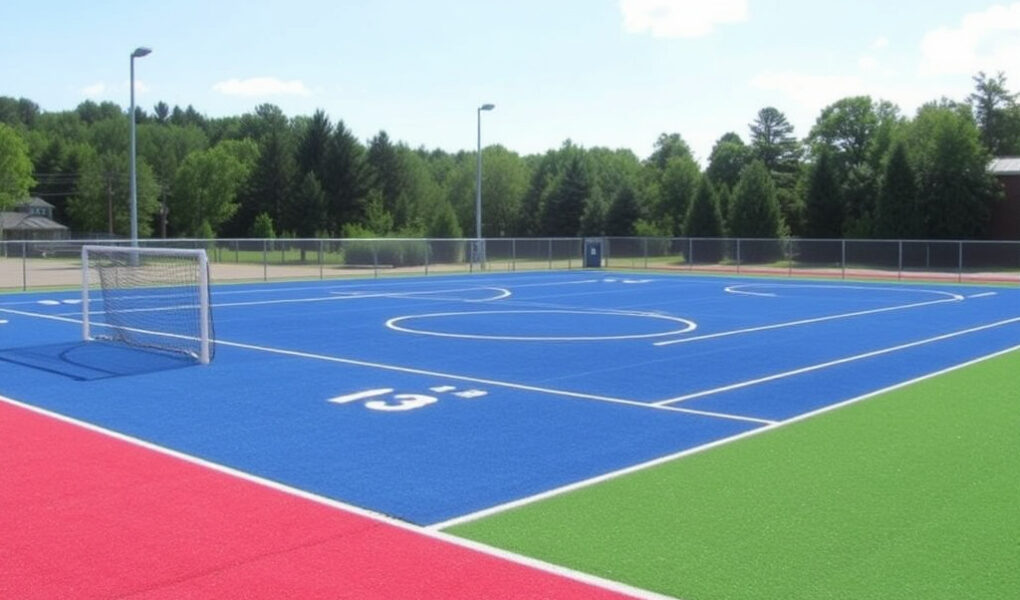
A community organization may spend months designing a youth soccer, baseball, football, or multi-sport program, only to discover that the field where the program will operate is unsafe, poorly lit, inaccessible, or owned by another organization that has not approved renovations. The organization may then search for youth sports facility and field improvement grants, assuming that a compelling description of the children it serves will be enough to secure construction funding.
Facility funders usually require much more. They may expect proof that the applicant owns or controls the site, contractor estimates, matching funds, photographs, permits, maintenance plans, community-access agreements, and evidence that the project can be completed within a realistic period. Some opportunities support only one sport. Others are restricted to particular cities, school districts, states, regions, or low-income communities. Several well-known sports foundations do not accept unsolicited proposals for every project.
This guide focuses specifically on youth sports field improvement grants, sports facility renovation grants, mini-pitch funding, sports-lighting support, and capital grants for community athletic spaces. It is written for nonprofits, schools, municipalities, community-based organizations, faith-based organizations, youth leagues, and grant professionals preparing facility projects.
Funding amounts, deadlines, application routes, and eligibility rules may change. Confirm every requirement through the official program page before committing staff time or project funds.
What Youth Sports Facility and Field Improvement Funders Actually Support
Youth sports facility funding is different from a normal program grant. A program grant may pay for coaches, uniforms, participant transportation, league fees, or youth-development activities. A facility grant generally supports a physical asset that will continue serving the community after the grant period ends.
Depending on the funder, eligible projects may include:
- Artificial or natural-turf installation.
- Baseball and softball infield reconstruction.
- Drainage, grading, irrigation, fencing, and dugouts.
- Soccer mini-pitches and small-sided playing areas.
- Sports lighting and electrical infrastructure.
- Court resurfacing and line marking.
- Accessibility improvements.
- Safety barriers, goals, backstops, and field equipment.
- Conversion of abandoned spaces into community sports facilities.
- Construction or renovation of multi-use indoor and outdoor athletic spaces.
Funders frequently prioritize facilities serving children from low-income communities, girls, youth with disabilities, rural communities, communities of color, and neighborhoods with limited access to safe recreation. They may also prefer projects that combine the facility with mentoring, academic support, leadership development, health education, workforce exposure, or other youth-development activities.
Common exclusions include routine maintenance, debt repayment, land purchases that have not been approved, work completed before the award, professional stadium development, facilities with highly restricted public access, team travel, tournament expenses, and projects without secure site control. Some programs exclude scoreboards, spectator seating, restrooms, batting cages, or other items they consider nonessential.
The applicant must also understand the difference between a direct grant and a partnership route. A nonprofit may apply directly to one program, while another opportunity may require a school, municipality, parks department, local affiliate, or property owner to lead the application.
Organizations seeking uniforms, balls, protective equipment, or portable training materials should also review our supporting guide to sports equipment grants and product donations for nonprofits. Organizations serving girls or historically excluded populations can read sports grants for girls and underserved youth programs.

Verified Youth Sports Facility and Field Improvement Grants
1. Game On–Community Places to Play Initiative
What it supports: The DICK’S Sporting Goods Foundation and Local Initiatives Support Corporation, or LISC, support the creation and renovation of indoor and outdoor multi-use youth sports facilities. Awards generally range from $50,000 to $100,000, and projects require matching support.
Who may qualify: Community-based nonprofit organizations leading renovation projects in low- to moderate-income communities. Schools and parks or recreation departments may participate when collaborating with eligible nonprofit partners. Universities and college campuses are not eligible.
Geographic eligibility: Projects across the United States that meet the community and income requirements.
Current status: Open application as of August 1, 2026. Proposals are due August 15, 2026.
Important restrictions: Applicants should be prepared for a minimum 1:1 match, community-access expectations, organizational-capacity review, and capital-project documentation.
What applicants should prepare: Site-control evidence, project budget, construction estimates, matching-fund documentation, facility-use plan, youth-development strategy, implementation schedule, photographs, and evidence of community need.
Official source: LISC Game On–Community Places to Play Initiative
2. The Soccer Fund
What it supports: The U.S. Soccer Foundation and Musco Sports Lighting established the Soccer Fund to provide financial support for Mini-Pitch System projects and soccer-lighting projects of different sizes.
Who may qualify: The public application requests organizational, project, partnership, site-control, underserved-community, fundraising, and construction information. The form does not publish a simple universal list of eligible legal structures, so applicants should confirm their eligibility with the program before investing heavily in the application.
Geographic eligibility: The application is structured for United States projects.
Funding amount: No standard award range is published on the public application.
Current status: Rolling application with quarterly reviews. Remaining 2026 review dates are September 30 and December 31.
Application route: Applicants must first obtain a budget estimate from a local Musco representative and then complete the Soccer Fund application.
Important restrictions: Applicants must provide an executed ownership document, lease, or shared-use agreement. A Musco budget estimate is required.
What applicants should prepare: Site-control documentation, project photographs, field dimensions, construction timeline, Musco estimate, fundraising record, partnership information, and a clear explanation of how the project will serve participants with limited financial resources.
Official source: The Soccer Fund application
3. MLB-MLBPA Youth Development Foundation
What it supports: The foundation supports amateur baseball and softball programs in underserved communities. Eligible capital activities can include building or renovating fields and practice facilities and installing lighting.
Who may qualify: The application identifies several possible applicant categories, including IRS-recognized nonprofit organizations and public schools. Applicants outside the United States should review the international requirements carefully.
Geographic eligibility: United States and international organizations may be considered.
Funding amount: No single standard award range is published. Requests should be based on documented project costs and organizational capacity.
Current status: Rolling application. Applications are accepted throughout the year.
Application route: Organizations submit the official foundation application and supporting documentation.
Important restrictions: The proposal must have a direct and meaningful connection to youth baseball or softball. A general community center project with only a minor sports component is unlikely to demonstrate sufficient alignment.
What applicants should prepare: Organizational history, youth-participation data, project budget, field plans, financial information, letters of support, construction estimates, program outcomes, and evidence of access for underserved youth.
Official sources: MLB Youth Development Foundation information and official grant application
For a broader list of federal, foundation, corporate, equipment, and program funding sources, read our complete guide: Sports Grants for Nonprofits: Verified Funding for Youth Programs, Teams, Facilities, and Equipment.
GET VERIFIED FUNDING UPDATES AND PRACTICAL GRANT GUIDANCE
Grant opportunities, deadlines, eligibility rules, and application routes can change. Join the Grant Writing Academy newsletter for verified funding directories, grant research guidance, application strategies, templates, and new resources.
JOIN THE GRANT WRITING ACADEMY NEWSLETTER
4. FC Cincinnati Foundation Soccer Field Grant Program
What it supports: Partial funding for new soccer fields, mini-pitches, and field-related improvements that expand inclusive community access.
Who may qualify: Nonprofits, recreation centers, schools, and even for-profit organizations may be considered when they provide a convincing plan for long-term community access welcoming people of different ages and abilities.
Geographic eligibility: The official page describes projects within the foundation’s community but does not publish a detailed county list. Confirm location eligibility before preparing a complete proposal.
Funding amount: No standard award range is published.
Current status: Periodic application. Applications are reviewed twice each year, with deadlines of May 31 and November 30. The next published deadline is November 30, 2026.
Important restrictions: The foundation acts as a supporting partner rather than the sole project funder. Grant funds are not released until the project is fully funded.
What applicants should prepare: Complete project budget, confirmed additional funding, site-control evidence, accessibility plan, community-use schedule, maintenance plan, and realistic completion timeline.
Official source: FC Cincinnati Foundation Soccer Field Grant Program
5. T-Mobile Friday Night 5G Lights
What it supports: This national competition provides a major football-field upgrade and related improvements to a selected high school. It is not a general nonprofit capital grant.
Who may qualify: High schools in United States towns with populations of 150,000 or fewer. An authorized school representative, such as a teacher, coach, or administrator, must submit the entry.
Funding amount: The grand prize includes a $1 million football-field upgrade and additional school-facility support.
Current status: Open competition. Applications are accepted through September 18, 2026.
Application route: An authorized school official submits the school’s story and supporting entry through the official application system.
Important restrictions: Nonprofits and youth leagues cannot apply independently. They may support a school’s application through community evidence, partnerships, photographs, and letters.
Official source: T-Mobile Friday Night 5G Lights
6. NFL Foundation Grassroots Program
What it supports: Capital improvements to neighborhood football fields, including major renovation and construction projects. Awards can reach $250,000.
Who may qualify: Projects must be sponsored by eligible nonprofit organizations and meet community-use and program requirements.
Funding amount: Up to $250,000, generally with a 1:1 match.
Current status: Closed as of March 30, 2026. Monitor the official page for the next announced cycle.
Important restrictions: Applicants should not treat this as a general sports grant. The project must have a strong football-field connection, community access, matching support, and construction readiness.
What applicants should prepare: Site-control documents, matching-fund commitments, engineering or design information, contractor estimates, youth-program details, maintenance plans, and evidence that the field will remain accessible to the community.
Official source: NFL Foundation Grassroots Program
7. Minnesota Twins Fields for Kids
What it supports: Matching grants of $1,000 to $15,000 for baseball and softball field construction or renovation. Eligible work includes sod, infields, fencing, and dugouts.
Who may qualify: Eligible 501(c)(3) organizations, schools, and local government units operating youth baseball or softball programs.
Geographic eligibility: Minnesota, Iowa, North Dakota, South Dakota, western Wisconsin, and Southwest Florida.
Current status: Closed for 2026. Monitor the official page for the next announced cycle.
Important restrictions: Lighting, bleachers, grandstands, restrooms, batting cages, scoreboards, and routine maintenance are excluded. Applicants need matching resources equal to or greater than the requested grant.
Official source: Minnesota Twins Fields for Kids
How to Determine Whether Your Organization Is a Strong Fit
A powerful mission does not correct an eligibility problem. Before applying, complete the grant-readiness assessment for nonprofit organizations and answer this Funding Fit Checklist:
- Does the opportunity support our exact sport and facility type?
- Is our organization an eligible legal entity?
- Is the project located within the approved geography?
- Do we own the property or have a long-term lease or shared-use agreement?
- Can the facility remain accessible to the intended community?
- Do we have the required cash or in-kind match?
- Is the total project cost realistic and supported by current estimates?
- Have we secured required permits, approvals, and environmental reviews?
- Can we complete the project within the funder’s timeline?
- Does the project primarily benefit children and young people?
- Can we document participation barriers and community demand?
- Do we have qualified contractors and project-management capacity?
- Can we maintain, insure, and operate the improved facility?
- Can we collect participation, access, and outcome data?
- Does the funder accept unsolicited applications?
Faith-based organizations should confirm that they satisfy the legal and site requirements and that the funded facility will be used for the approved community sports purpose. Do not assume that nonprofit status alone establishes eligibility.
How to Prepare a Competitive Facility Improvement Application
Begin with the problem the facility creates, not with a general statement that sports are beneficial. Explain whether poor drainage cancels practices, broken fencing creates safety risks, inadequate lighting prevents evening use, inaccessible surfaces exclude children with disabilities, or limited field capacity forces the organization to reject participants.
Use recent local evidence: waiting lists, field-inspection reports, photographs, participant surveys, injury or cancellation records, school data, parks assessments, crime or safety information, and credible population statistics.
Connect every construction activity to a youth outcome.
Weak:
“Our organization needs funding to renovate its old soccer field so more children can play.”
Stronger:
“During the 12-month project period, the organization will convert an unsafe, underused court into an illuminated mini-pitch serving at least 240 young people ages 8–18 each year. The project will include site preparation, sport surfacing, fencing, goals, LED lighting, accessibility improvements, and a shared-use schedule providing free community access for at least 20 hours each week.”
The application should include:
- Proof of ownership, lease, or shared-use authority.
- Photographs and a clear description of current conditions.
- Contractor estimates and a detailed capital budget.
- Permits, designs, surveys, or engineering information where required.
- Matching-fund commitments.
- Construction and procurement schedule.
- Safeguarding, insurance, and risk-management procedures.
- Community-access and programming plan.
- Maintenance and replacement plan.
- Measurable outputs, such as hours of access, participants served, practices hosted, and reductions in cancellations.
- Letters from schools, municipalities, leagues, residents, and youth partners.
Use a grant proposal template for nonprofit applications to organize the narrative and a grant budget template with a budget narrative to explain each cost.
STOP MANAGING YOUR FUNDER RESEARCH IN RANDOM DOCUMENTS
Finding a promising funder is only the beginning. You still need to record eligibility, deadlines, award ranges, relationship activity, application status, reporting dates, and renewal opportunities.
The Grant Pipeline Command Center helps nonprofits and grant professionals organize funder research and manage the full funding pipeline in one practical system.
JOIN THE NEWSLETTER FOR THE PRODUCT RELEASE
How to Build a Strategic Funding Pipeline for Your Sports Facility
Do not depend on one grant to pay for the entire project. A $400,000 field renovation might combine a $100,000 foundation grant, municipal capital funds, a corporate sponsorship, donated labor, contractor discounts, community fundraising, and an individual-donor campaign.
Track every prospect in a grant research tracker and funding pipeline system. Record eligibility, status, next deadline, match requirement, award range, site-control rules, relationship history, exclusions, and next action.
Priority A: Apply or Prepare Now
Include funders with confirmed eligibility, strong program alignment, realistic award sizes, and active or upcoming deadlines.
Priority B: Build the Relationship
Include local foundations, corporate sponsors, sports teams, invitation-only funders, municipalities, and property partners requiring communication before a request.
Priority C: Monitor
Include closed programs, future cycles, opportunities requiring stronger matching funds, and funders for which the organization is not yet construction-ready.
Review the pipeline monthly. Remove outdated prospects, document rejection feedback, prepare reusable attachments, plan letters of inquiry, and begin renewal preparation before the facility project is completed.
Organizations needing wider support can review our grant research and proposal-development services.
NEED FUNDERS MATCHED TO YOUR ORGANIZATION?
A public article cannot account for every detail of your organization, including your legal structure, location, population, program design, budget, funding history, and current readiness.
Grant Writing Academy provides customized funder research to help organizations identify and prioritize potential opportunities that may align with their work. Research may include eligibility notes, official links, deadlines, restrictions, application routes, and recommended next steps.
REQUEST CUSTOMIZED FUNDER RESEARCH
Customized funder research identifies potential matches but does not guarantee eligibility, invitations, or grant awards.
Frequently Asked Questions
1. Can a new nonprofit apply for youth sports facility grants?
A new nonprofit may qualify when the funder does not impose a minimum operating-history requirement, but facility funders will still examine project readiness. New organizations may need stronger partners, experienced board members, secure site control, detailed estimates, financial controls, and evidence that they can maintain the facility. A school, municipality, established nonprofit, or parks department may be a stronger lead applicant when the new organization lacks property ownership or construction experience.
2. Can faith-based organizations qualify for sports field improvement grants?
They may qualify when they meet the funder’s nonprofit, geographic, program, and property requirements. The organization should clearly separate the proposed community sports project from worship activities and explain who can use the facility. Confirm whether the funder permits faith-based applicants rather than assuming that every 501(c)(3) organization is automatically eligible.
3. Can these grants pay for land purchases or complete facility construction?
Some capital programs may support major construction, but many prefer renovation of an existing facility with established site control. Land acquisition, pre-award expenses, routine maintenance, professional facilities, and unrelated buildings may be excluded. Read the eligible-cost section carefully and obtain written clarification when a major expense is not specifically addressed.
4. What documents are normally required?
Common documents include proof of nonprofit status, board list, financial statements, project budget, contractor estimates, photographs, ownership or lease documents, shared-use agreements, permits, construction schedule, maintenance plan, insurance information, safeguarding procedures, matching-fund evidence, and letters of support. Larger projects may require architectural drawings, engineering reports, environmental information, or formal procurement procedures.
5. How should an organization approach an invitation-only or partnership-based funder?
Do not send a full proposal when unsolicited applications are not accepted. Begin by identifying shared priorities, local relationships, previous grantees, and possible introduction routes. Send a concise inquiry describing the organization, location, young people served, facility problem, project cost, confirmed support, and community benefit. The immediate objective is to determine whether the funder welcomes a conversation, not to pressure it into accepting an unauthorized request.
Conclusion
A verified funding opportunity is only the beginning of a youth sports facility project. The organization must still confirm legal eligibility, geography, site control, matching requirements, eligible costs, public-access expectations, and construction readiness.
The strongest application will connect each physical improvement to a measurable benefit for young people. It will show who will use the facility, how barriers will be reduced, how safety and accessibility will improve, and how the organization will operate and maintain the space after the grant ends.
A focused pipeline of six well-matched prospects is more valuable than a list of fifty funders that do not support the location, sport, applicant type, or project stage. Verify official information before applying, prioritize quality over application volume, and obtain professional research or proposal support when the organization lacks the capacity to evaluate complex capital opportunities.
BUILD A STRONGER FUNDING PIPELINE WITH ONGOING SUPPORT
The Grant Writing Academy Founding Membership is designed for nonprofit leaders, grant writers, consultants, faith-based organizations, and mission-driven teams that need ongoing help with funder research, grant readiness, opportunity evaluation, proposal development, grant budgets, application review, and funding systems.
Founding Members receive monthly coaching, practical tools, strategic guidance, and continuing accountability throughout the year.
EXPLORE THE GRANT WRITING ACADEMY FOUNDING MEMBERSHIP
Similar Recommended Articles
- Football Equipment Grants for Youth Nonprofits and Community Teams.
- Baseball and Softball Equipment Donation Programs for Nonprofits.
- Sports Grants for Girls and Underserved Youth Programs.
- Youth Sports Facility and Field Improvement Grants.
- Grants for Adaptive Sports Equipment and Inclusive Recreation.